 Chris Light / CC BY-SA 4.0 via Wikimedia Commons
The Story
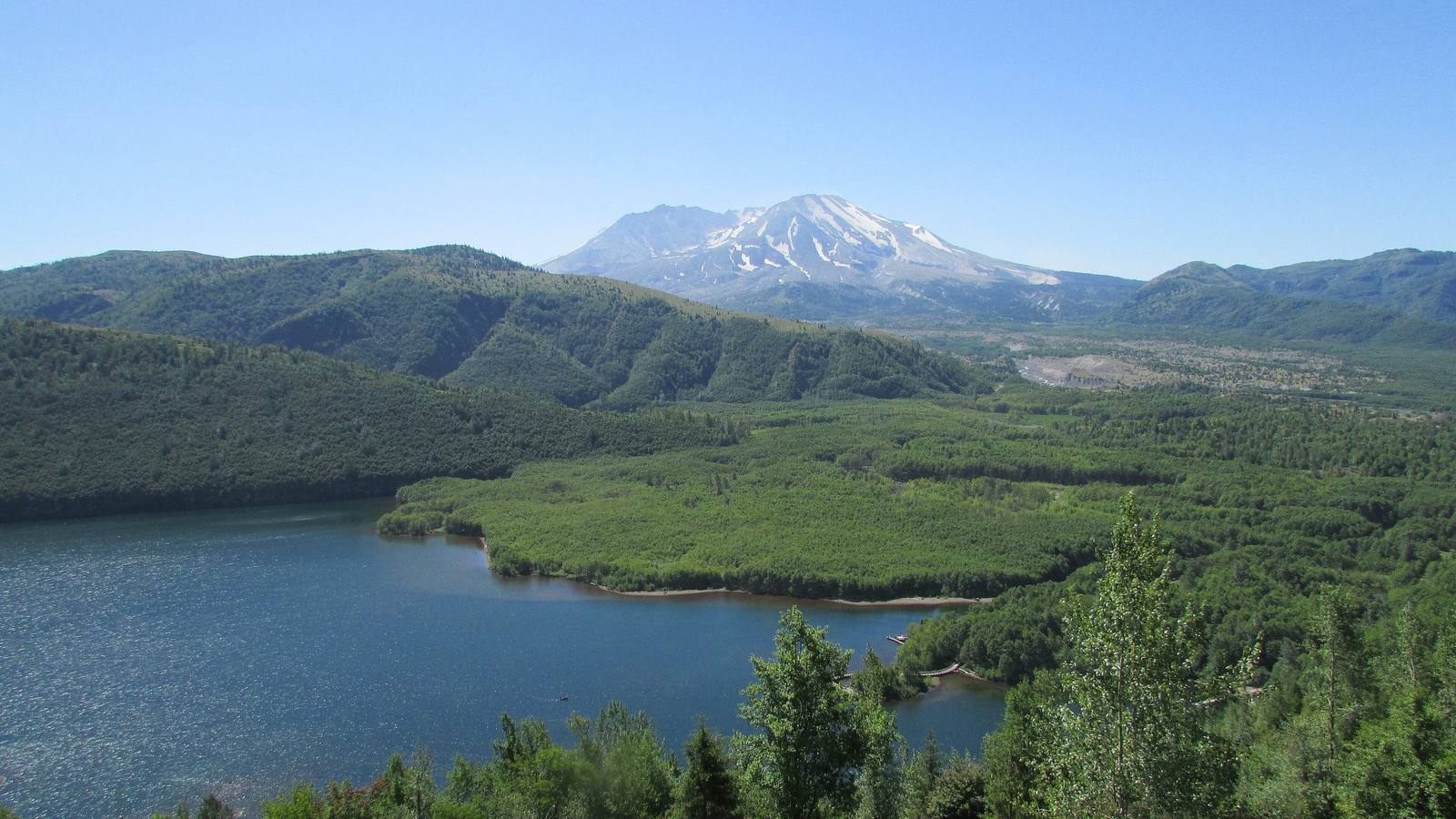
Before May 18, 1980, Coldwater Creek ran down a forested valley into the North Fork of the Toutle River. That morning the north face of Mount St. Helens slid away, and the avalanche of rock and ice poured down the Toutle and piled hundreds of feet deep across the creek's mouth. The water backed up behind the new dam, and Coldwater Lake is what it made. The lake is still young enough that its shores show the grey of the deposit, with standing dead snags on the slopes above and alder and willow coming back among them.
On the ridge to the east, about six miles from the crater, the U.S. Geological Survey kept an observation post called Coldwater II. David Johnston, a thirty-year-old volcanologist, had the watch that morning. At 8:32 he radioed his colleagues in Vancouver with the last words anyone heard from him: "Vancouver! Vancouver! This is it!" The lateral blast crossed the ridge seconds later. His body was never found. The ridge carries his name now, and the observatory built on it in 1997 looks straight into the crater.
The road to that observatory has been cut since May 2023, when a landslide of 1980 debris took out the highway bridge at the Spirit Lake outlet. The lake, the learning center on the bluff above it and the short trail along the shore are open, and the Hummocks Trail nearby wanders among the mounds of mountain the avalanche left behind.
Visitor Info
On the Map
Nearby
The closest stops worth working into your route