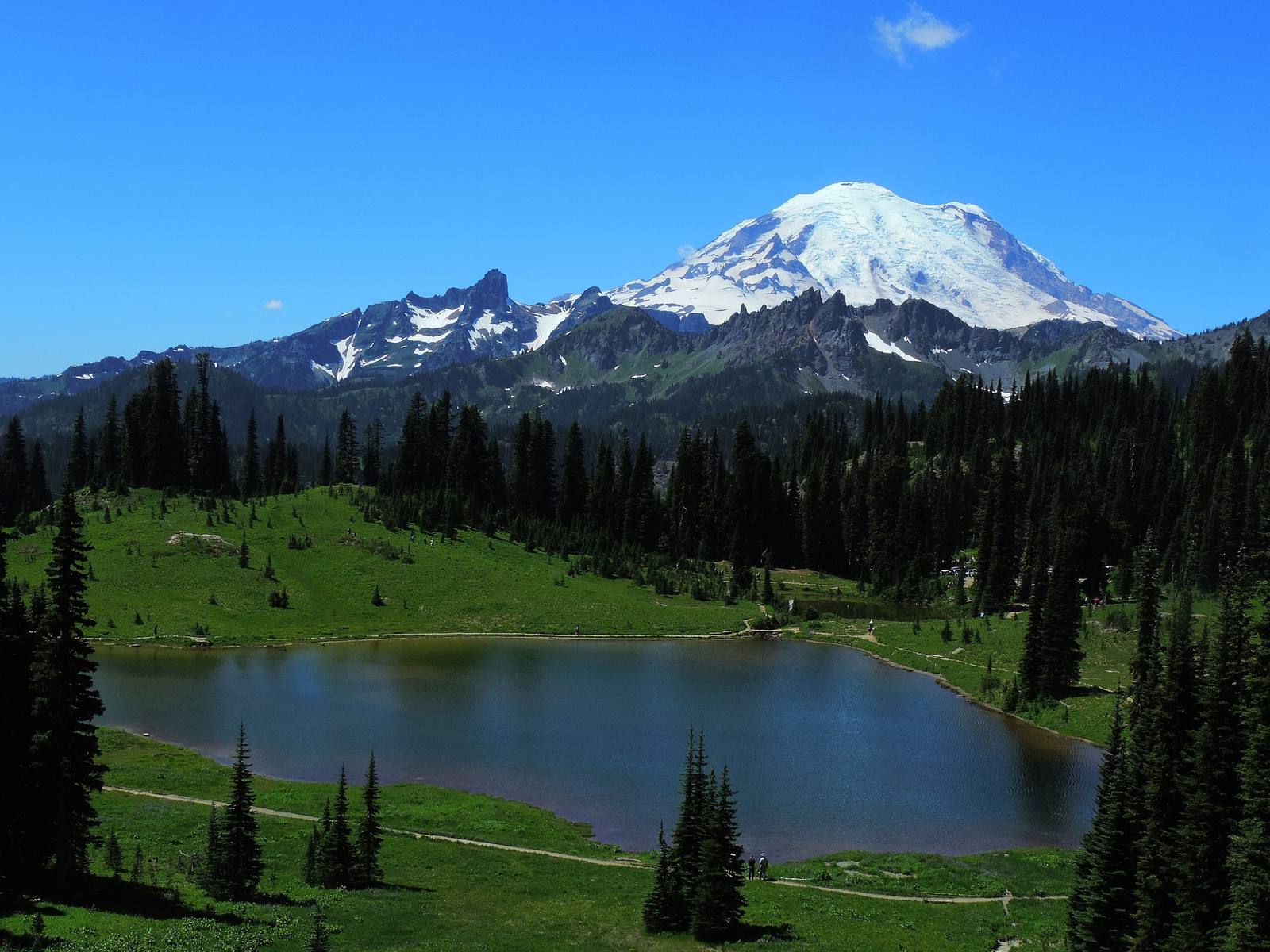
Mount Rainier & the South Cascades
Puyallup, Nisqually, Cowlitz and Klickitat country — Mount Rainier and its record snows, the mudflows under Orting, Mount St. Helens, and the Washington bank of the Gorge to Maryhill.
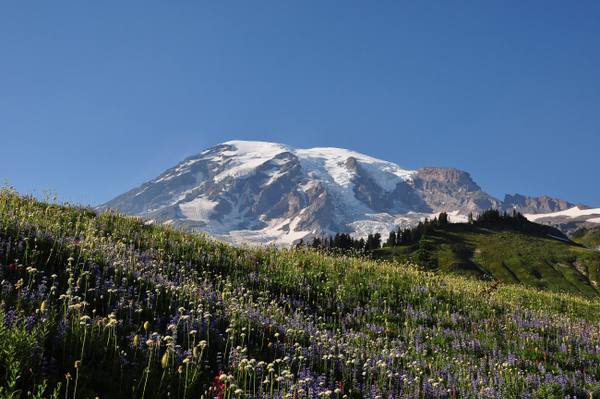
The mountain is Təqʷubəʔ to the Puyallup and their Lushootseed-speaking neighbors, usually written Tahoma or Tacoma; George Vancouver named it in 1792 for a friend, Rear Admiral Peter Rainier, who never saw it. Congress made it the fifth national park in March 1899. At Paradise, on its south slope at 5,400 feet, 1,122 inches of snow fell in the winter of 1971–72, a world record that held for more than twenty-five years.
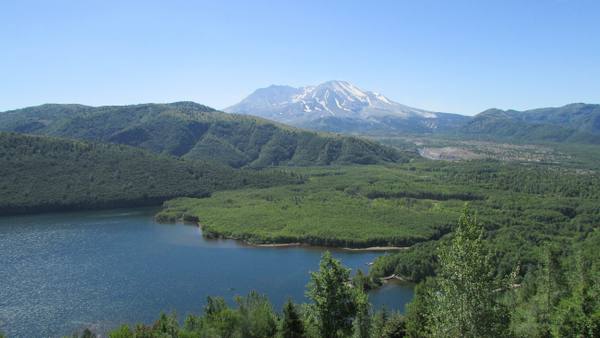
The danger Rainier poses to the towns below it is less lava than mud. About 5,600 years ago the Osceola Mudflow poured off its northeast flank and down the White River valley as far as Commencement Bay; some six centuries ago the Electron Mudflow buried the valley where Orting now stands. Sirens tied to sensors on the mountain stand along the river valleys, and Orting's schoolchildren practice the walk to high ground. Fifty miles south, on May 18, 1980, the north face of Mount St. Helens collapsed in the largest landslide in recorded history and the eruption that followed killed fifty-seven people. Congress set the mountain aside as a national volcanic monument in 1982.
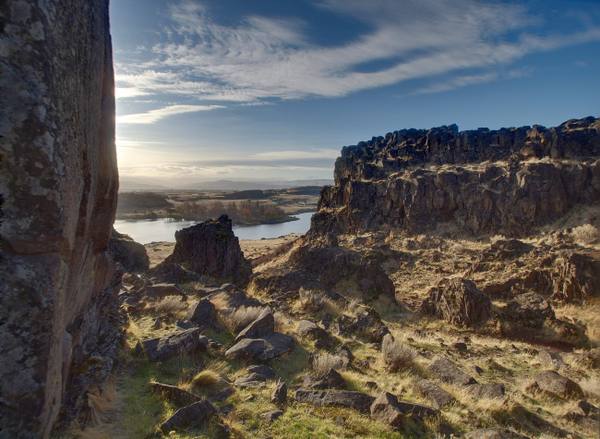
The Washington bank of the Columbia Gorge is the quieter road, State Route 14, past Beacon Rock and through the rain shadow into open grass and basalt. At Maryhill, east of the mountains, the road builder Sam Hill raised a full-size concrete replica of Stonehenge as a memorial to the men of Klickitat County killed in the First World War. A Quaker who took the original for a place of human sacrifice, he dedicated its altar stone on July 4, 1918, before the war was over, and finished the circle in 1929.
What to See in Mount Rainier & the South Cascades
4 places across the region, grouped by what they are.
Geology & Rock Formations
Historic Sites
Towns & Gateways
Scenic Drives through Mount Rainier & the South Cascades
Stories from Mount Rainier & the South Cascades
The Three Kichis
In 1834 three Japanese sailors came ashore near Cape Flattery after fourteen months adrift. The Hudson's Bay Company ransomed them and sent them around the world. Their own country fired on the ship that brought them home.
The Marines on South Tahoma
In December 1946 a Marine Corps transport vanished in a storm with thirty-two men aboard. A ranger found it the next summer, high on a glacier on Mount Rainier. The men are still there.
Mount Rainier & the South Cascades rewards the unhurried. Pick a base, fan out, and let the country between the headline stops surprise you.
← Explore more of Open Road Guide