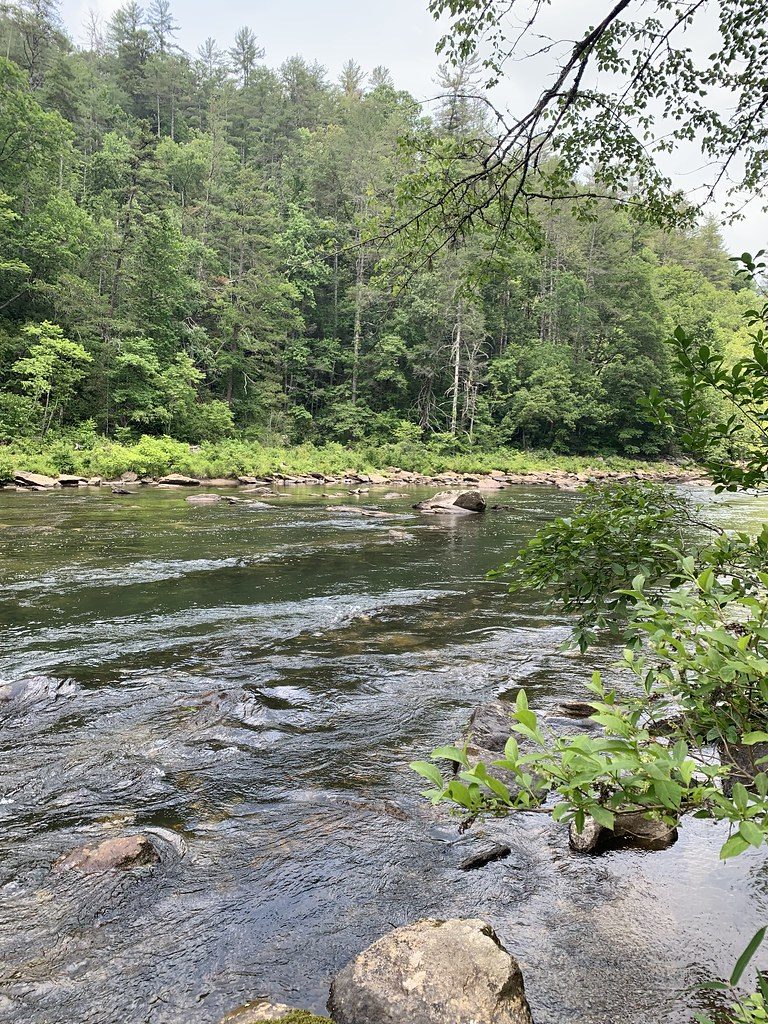
 anon4809 / CC0 1.0 via Flickr
The Story
The Chattooga rises in springs near Cashiers, North Carolina, and for most of its forty miles to Lake Tugaloo it is the line between Georgia and South Carolina, dropping almost half a mile as the mountains give way to the Piedmont. At least three Cherokee trails crossed it, and a Cherokee town called Chattooga stood near where SC 28 now bridges the river; archaeologists and the Forest Service excavated its council house between 1989 and 1994. William Bartram and Andre Michaux both described its plants and animals in the late 1700s.
Scattered white farms came after 1830, and by the early 1900s logs cut from the hills were floated down it to the mills. The 1911 Weeks Law let the Forest Service buy the cutover land that became the Sumter, Chattahoochee and Nantahala national forests, and on May 10, 1974, Congress made the Chattooga a National Wild and Scenic River, with a protected corridor along both banks. Most of it is classed as wild. It was also the river of the 1972 film Deliverance.
The US 76 bridge, on the way from Westminster to Clayton, has a river-access parking lot on the South Carolina side, and the river below runs through the wild, rocky gorge country of the lower Chattooga. Anyone floating the river must carry a free self-registration permit from the boxes at the put-ins. If you are not a strong paddler, go with an outfitter, or just walk down and watch.
Visitor Info
On the Map
Nearby
The closest stops worth working into your route
Historical markers nearby
Roadside plaques and monuments within a short detour