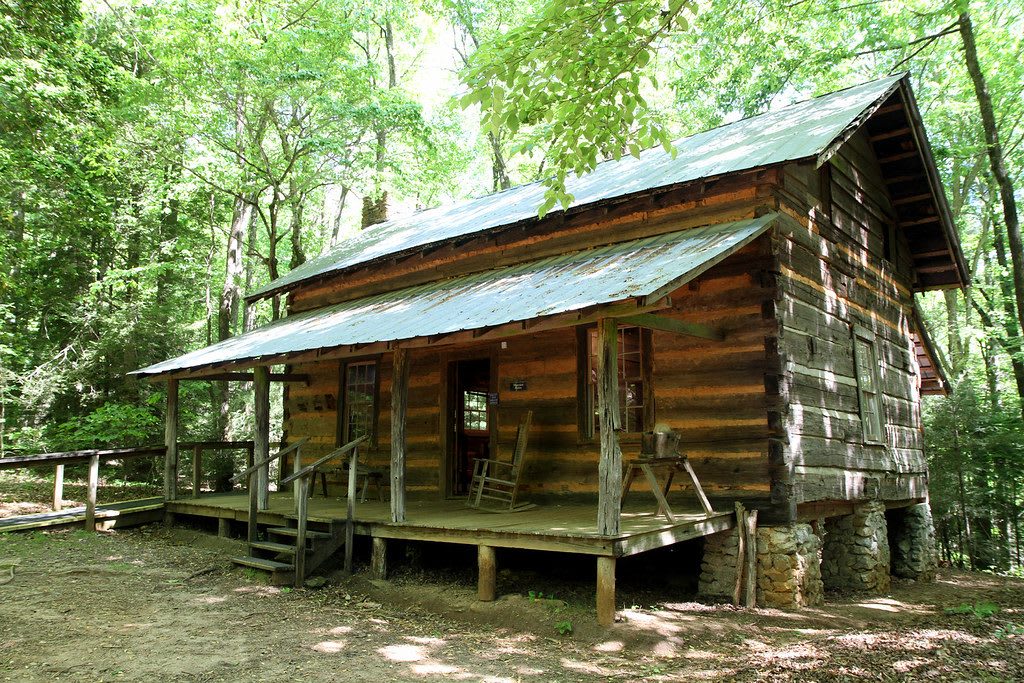
 anoldent / CC BY-SA 2.0 via Flickr
The Story
In the fall of 1966 an English teacher at the Rabun Gap-Nacoochee School gave his restless students a project: interview the older people of Rabun County and set down how they lived. They named their magazine Foxfire, after the blue-green glow of fungus on rotting logs, and the first issue, in March 1967, sold on the sheriff's account of catching the robbers of a 1936 bank holdup. Over the years students recorded planting by the signs, log building, granny midwives, hog killing, corn shuckings, ghost stories and music, in the words of the people who knew them.
Doubleday began gathering the articles into books in 1972, and The Foxfire Book became a national bestseller, the first of a long series. In 1974 the students used the royalties to buy land on the side of Black Rock Mountain, and they moved old log buildings onto it and spent years restoring them. The program went to the public high school in Clayton in 1977, and the Foxfire Fund still runs the magazine with students. Its method, letting students lead their own learning, spread by one historian's estimate to classrooms in forty-seven states.
The village holds more than twenty log buildings, among them cabins, a working blacksmith shop and a row of child-sized cabins, furnished with the tools and household goods of mountain life from the 1820s to the 1940s. The Foxfire Archive, nearly sixty years of interviews, photographs and film, is kept on the grounds and opens to researchers by request.
Visitor Info
On the Map
Nearby
The closest stops worth working into your route
Historical markers nearby
Roadside plaques and monuments within a short detour