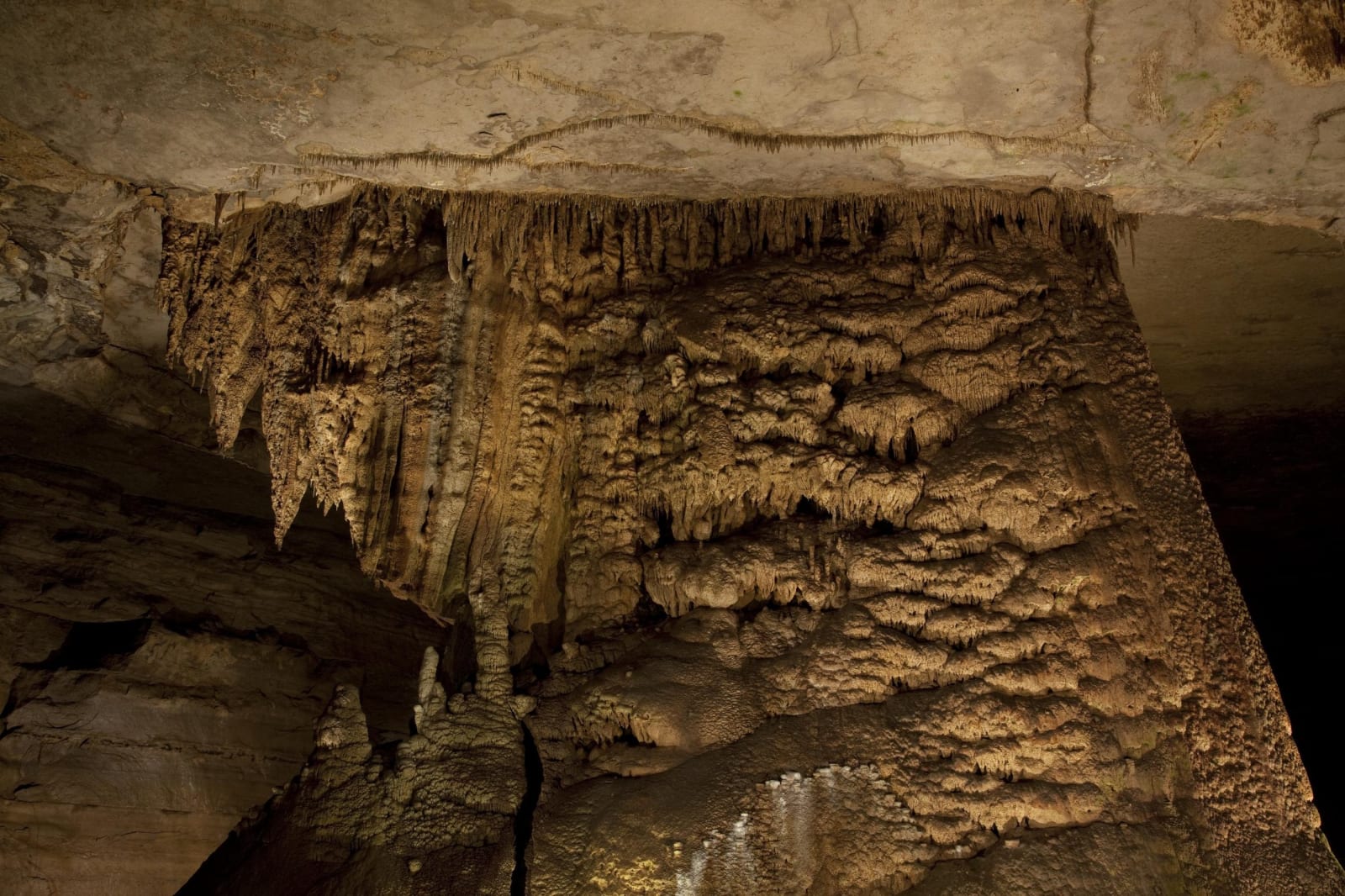
 Carol M. Highsmith / public domain via Library of Congress
The Story
The cave formed in Mississippian limestone of the Cumberland Plateau, laid down 350 to 320 million years ago. Digs at its mouth show that Native people used it as long as 8,000 years ago. Later it was known simply as Bats Cave.
Jay Gurley, a local businessman, opened it as a private attraction in 1955 and renamed it after his wife said the ceiling looked like a cathedral. It became a National Natural Landmark in 1972. Two years later the Gurleys lost it at auction, and it stayed in private hands until the state bought the cave and 461 acres in 1987. Funding delays held up the opening until 2000. In between, Disney filmed Tom and Huck inside.
You notice the entrance first, more than 125 feet wide and 25 feet high, then a ranger leads you more than a mile along a paved, lighted path that slopes and twists into the hill. The Big Room runs 792 feet long and 200 feet wide. Goliath, a stalagmite 45 feet tall and 243 feet around, stands near another that is 35 feet tall and three inches thick, and a 135-foot wall of flowstone looks like a frozen waterfall. Mystery River runs through the passages and floods some of them after heavy rain. The Crystal Room and other fragile chambers stay closed to protect their white calcite. Bring a layer even in July.
Visitor Info
On the Map
Nearby
The closest stops worth working into your route
Historical markers nearby
Roadside plaques and monuments within a short detour