 Lithistman / CC BY-SA 3.0 via Wikimedia Commons
The Story
The cemetery came first. The people buried on Boot Hill were, as the museum describes them, lost buffalo hunters, strangers, thieves, cowboys and people with little means; those with family or money went to the post cemetery at Fort Dodge, among them Ed Masterson, the best-known lawman to die in the town.
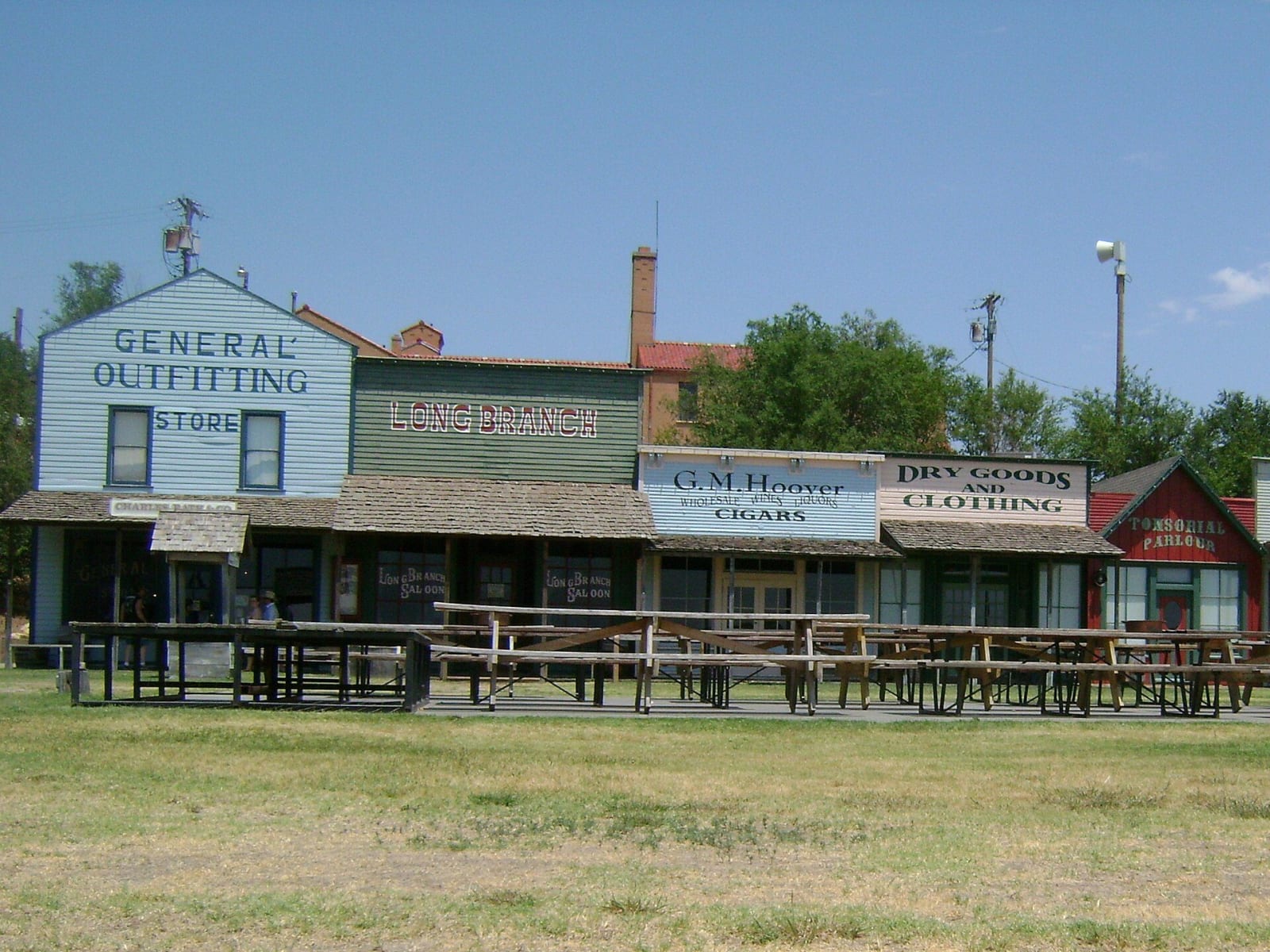
The Dodge City Jaycees founded the museum in 1947 in a 3,000-square-foot building on the hill. Its heart is an older collection. Chalkley Beeson, a cattleman and saloon owner, began gathering it in the 1870s, and in 1932 his son Merritt and Merritt's wife, Elizabeth, opened the Beeson Museum in the basement of their house. After Merritt died in 1956, Elizabeth kept the museum open until 1964, when Boot Hill acquired most of it. The collection now runs past 60,000 objects, photographs and documents, most from the 1870s to the 1920s and most owned by the town's first residents. The replica of Front Street went up from 1958, and the 1865 Fort Dodge jail, a steam engine and a Catholic church moved in later.
By the 1930s the town had spent decades trying to live down its past, until the 1939 film Dodge City and then Gunsmoke, on television from 1955 to 1975, made it a destination. The museum is plain that Gunsmoke was shot on a Hollywood set. Its People of the Plains galleries and the Kansas Cowboy Hall of Fame are open year-round, and gunfights, the Long Branch Variety Show and a country dinner run daily from Memorial Day to mid-August.
Visitor Info
On the Map
Nearby
The closest stops worth working into your route
Historical markers nearby
Roadside plaques and monuments within a short detour