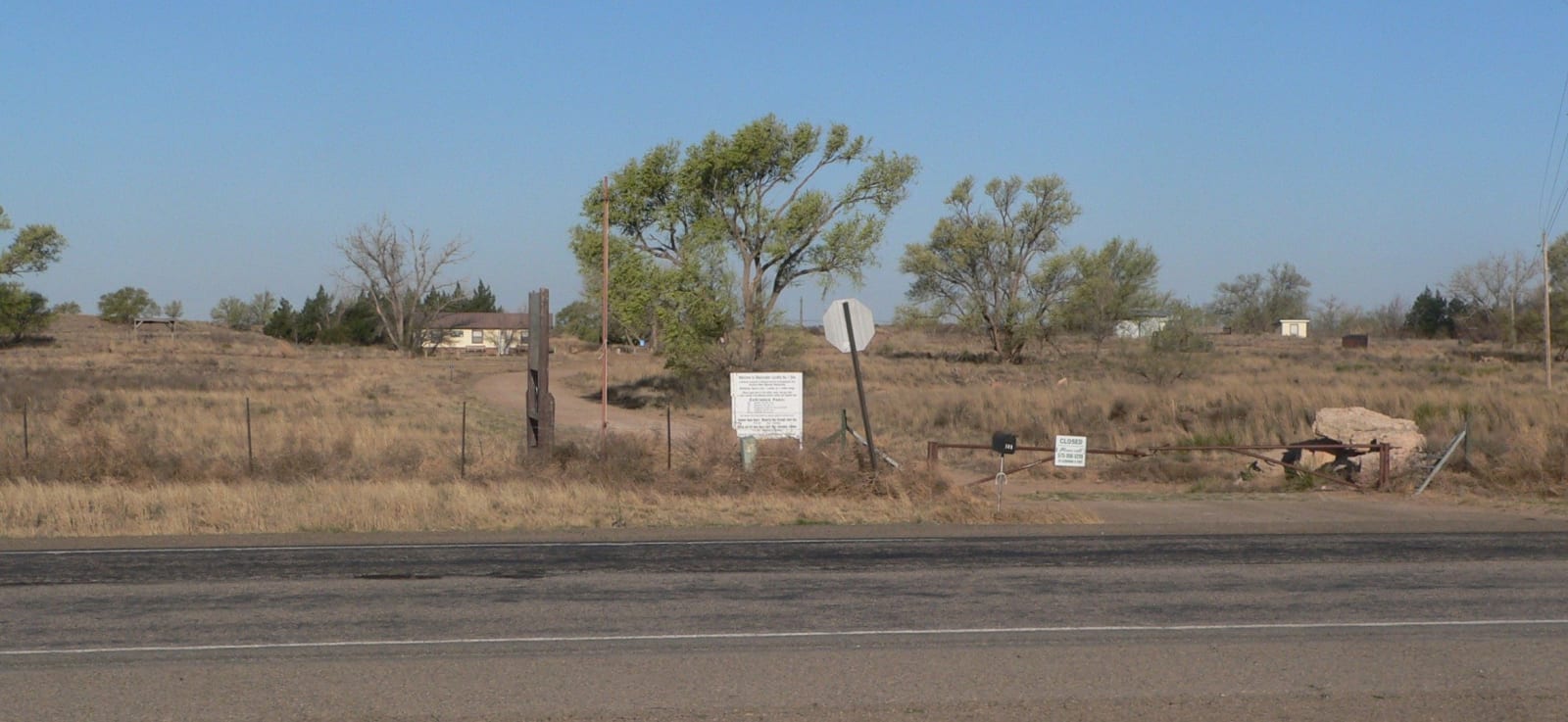
 Ammodramus / CC0 via Wikimedia Commons
The Story
Some thirteen thousand years ago a shallow lake lay here at the head of what is now Blackwater Draw, and mammoths and bison came to it to drink. People came to hunt them. The fluted spear points found among the bones became the type for the Clovis culture, named for the town nearby.
In February 1929 Ridgely Whiteman, a nineteen-year-old from Clovis, found bones and a point eroding out of the draw and wrote to the Smithsonian; little came of it. In 1932 the state highway department began digging gravel here for road building and turned up a heap of mammoth bones. Edgar Howard of the University of Pennsylvania began excavating that year, and for decades afterward archaeologists worked just ahead of the mining, which ran into the 1970s and left two great pits through the old basin. A state park was proposed in the 1950s and stopped by the gravel interests that controlled the ground. The site was made a National Historic Landmark in 1961, and Eastern New Mexico University bought 157 acres of it in 1978.
The stone in the points came from far away, Alibates flint from near Amarillo and obsidian from the Valles Caldera among it. Folsom hunters and later peoples used the place for thousands of years, and it holds what is described as the oldest known well on the continent. Clovis was long taken to be the first culture in the Americas; older finds since, among them the footprints at White Sands, have overturned that.
The university runs the site, where a building shelters one excavation, and keeps the finds at the Blackwater Draw Museum in Portales. Hours at both are limited; check before going.
Visitor Info
On the Map
Nearby
The closest stops worth working into your route