 FritsAir / CC BY-SA 3.0 via Wikimedia Commons
The Story
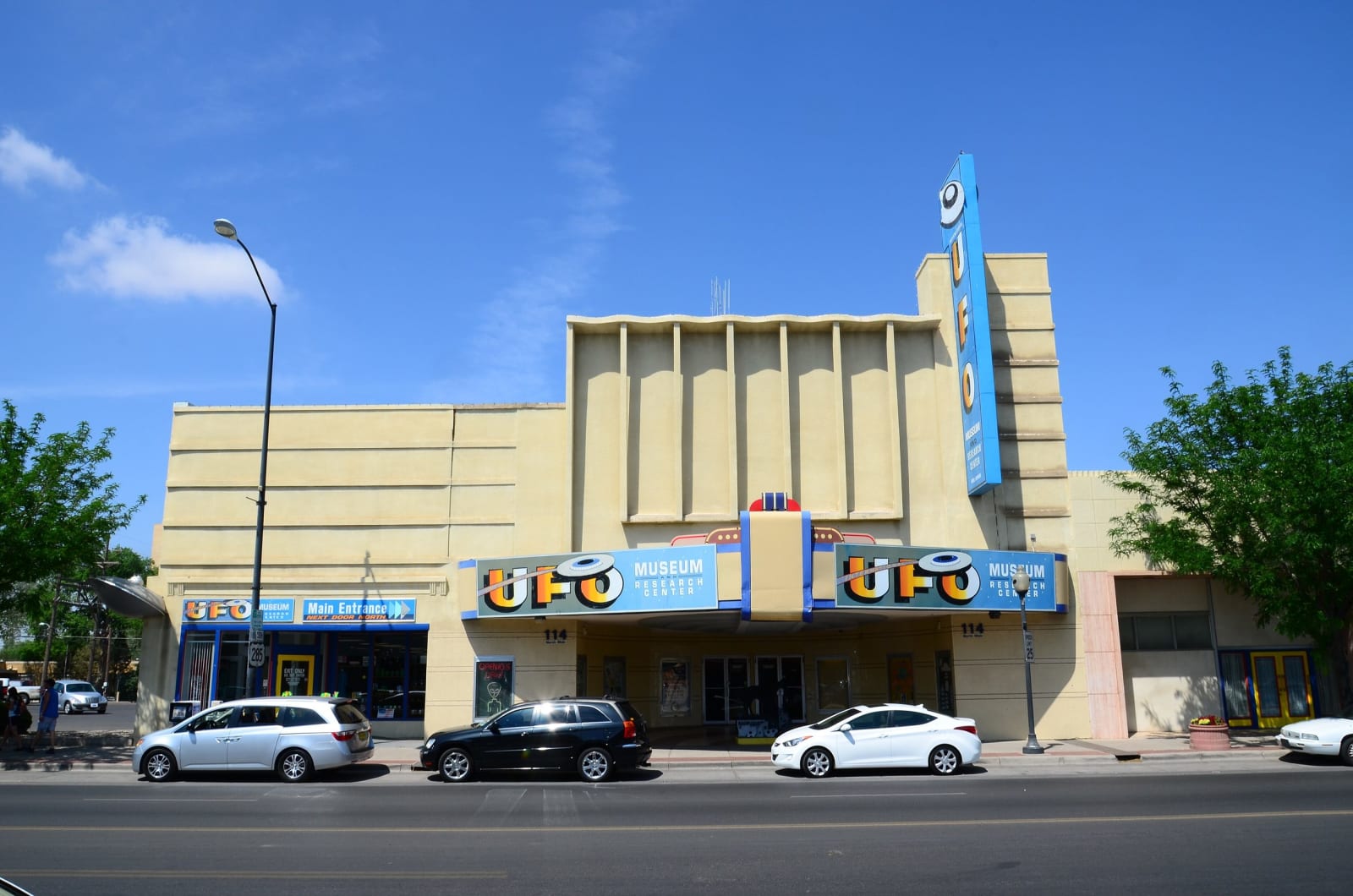
The International UFO Museum and Research Center fills the old Plains Theater at 114 North Main Street in downtown Roswell, a movie house from the 1930s remodeled for exhibits, with the store next door bought to add space.
Its founders were part of the story it tells. Walter Haut was the public information officer at Roswell Army Air Field who put out the July 1947 press release saying the army had recovered a flying disc. Glenn Dennis was a local mortician whose accounts, told decades later, became part of the crash story. With the realtor Max Littell they incorporated the museum in 1991, opened in three borrowed offices in a bank building, outgrew one storefront after another, and settled in the theater.
Haut's own place in the story kept shifting. The first book on Roswell, published in 1980, described him as not a witness; later books made him one, though not to the debris itself. After his death in 2005, a sealed affidavit he had signed at the museum was published in 2007, telling a much larger story than he had told in life. It had been drafted by a UFO researcher and emailed to his family, and it has been disputed ever since.
Inside are documents, photographs and signed statements from people connected with the events of July 1947, a timeline of those weeks, exhibits on crop circles, Area 51 and abductions, and a large research library. The museum presents the case for a crash rather than the Air Force's balloon explanation, and it anchors the town's UFO festival every July.
Visitor Info
On the Map
Nearby
The closest stops worth working into your route