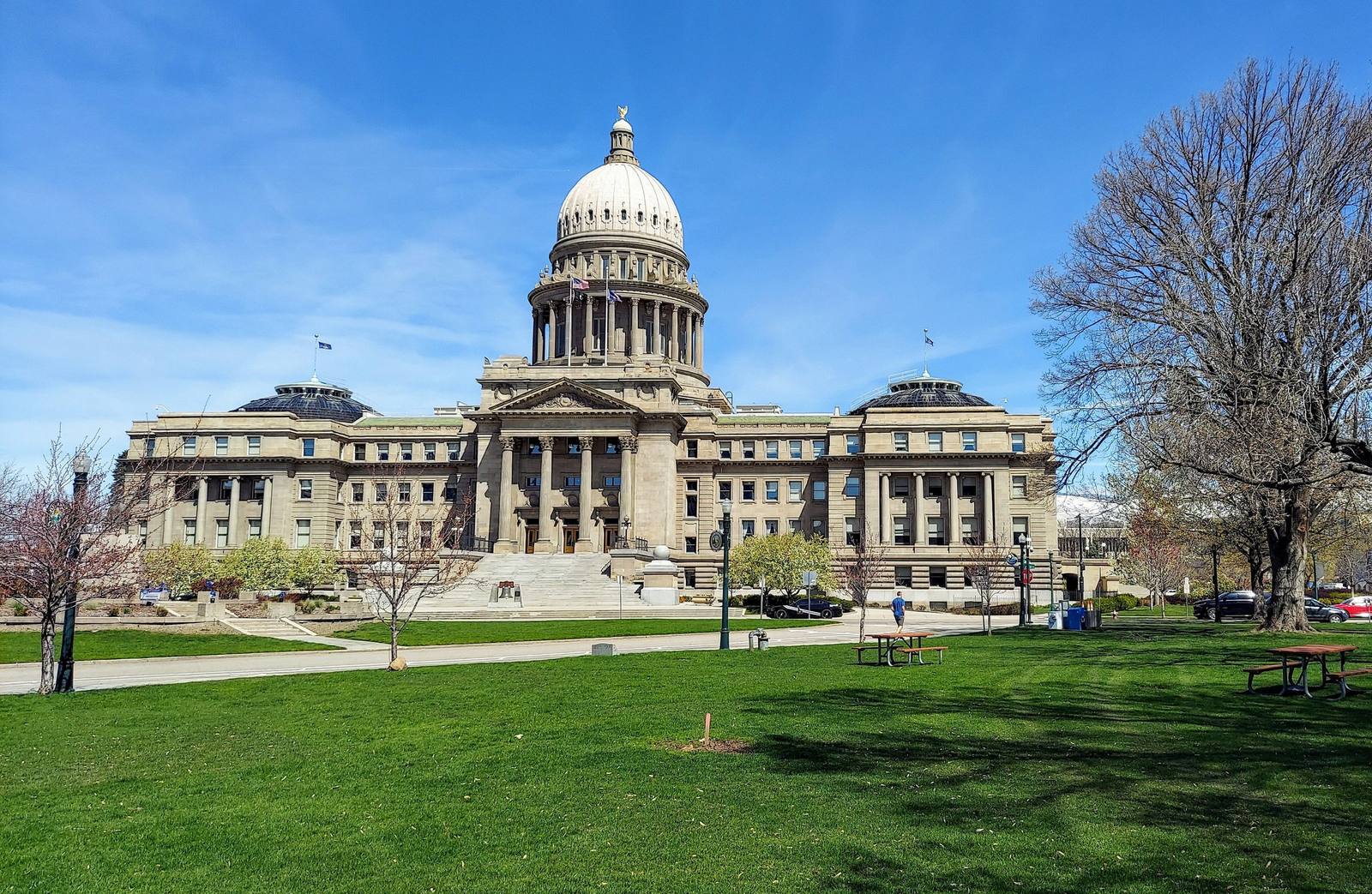
 Indies1 / CC BY-SA 4.0 via Wikimedia Commons
The Story
The Idaho State Capitol is heated from underneath. Along the foot of the Boise foothills, water warmed deep in the rock rises close to the surface, and it has been used for as long as people have lived in the valley. In 1892 a house on Warm Springs Avenue became the first in the country heated entirely by it. Since 1982 the state has pumped water from about 3,000 feet down to warm the Capitol and the office buildings around it, and Idaho's remains the only state capitol in the country heated that way.
The walls came out of the same foothills. Most of the superstructure is sandstone from the state quarry at Table Rock, above the territorial prison, and convicts from the penitentiary moved the ten-ton blocks. Work began in 1905; the dome and central block were finished in 1912 and the House and Senate wings in 1920. Inside, the architects John Tourtellotte and Charles Hummel set white marble beside scagliola, a plaster of selenite, glue and pigment worked to pass for stone, so that the rotunda would fill with daylight. They called it a Capitol of Light.
The last addition went down instead of out. A restoration completed in 2010 added two legislative wings underground, planned at two levels each and cut back to one when the recession arrived. The old trees on the grounds were cleared for the excavation, and exhibits inside now tell what stood there, including trees planted by three presidents.
The building is open to the public every day and the self-guided tour is free. From the rotunda floor to the copper eagle on the dome, regilded in 2005, is 208 feet.
Visitor Info
On the Map
Nearby
The closest stops worth working into your route
Historical markers nearby
Roadside plaques and monuments within a short detour