 Monotropa uniflora / public domain via Wikimedia Commons
The Story
For decades Arcata sent its partly treated sewage straight into Humboldt Bay. When a 1974 state policy barred wastewater discharges into bays and estuaries, the answer proposed the next year was a regional plant for the towns around the bay: expensive, energy-hungry, and built on piping the wastewater around the shore. Arcata balked.
Two experiments at its old treatment plant gave the town another answer. A Humboldt State fisheries professor, George Allen, had shown that salmon and trout could be raised in treated wastewater. Then Robert Gearheart, an environmental engineer, and his students built a pilot run of narrow test marshes to show that cattails and bulrushes, and the microbes living on them, could finish the cleaning. It took years of argument with the water boards. In 1983 the state let Arcata build a full-scale system, and since 1986 the town's wastewater has passed through constructed marshes before it is disinfected and released.
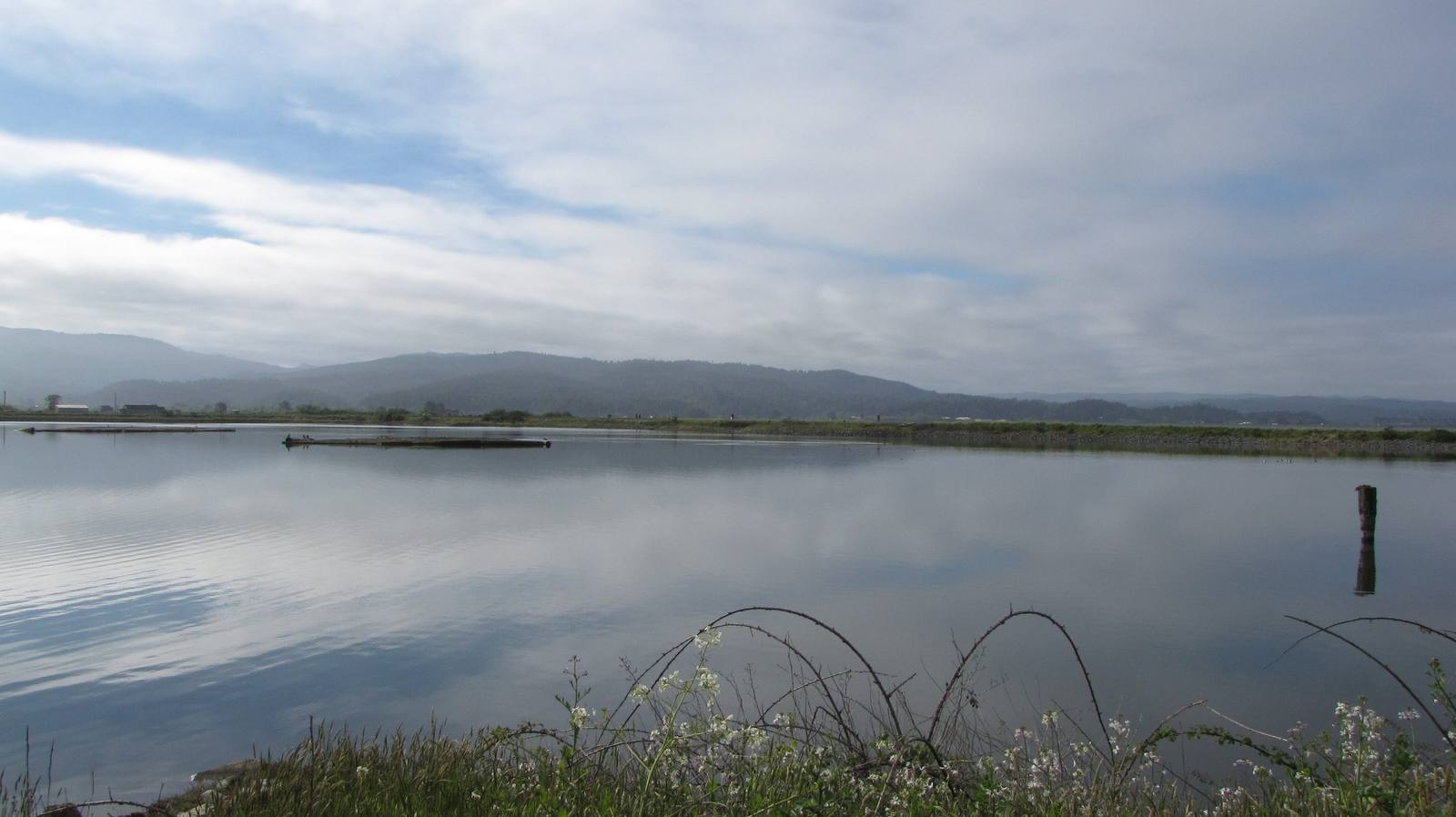
What grew up around the treatment cells was never designed as a destination. Diked pasture and waste ground along the bay became freshwater and salt marsh, and the sanctuary now draws birders for the shorebirds and waterfowl that winter here.
The trails are flat and short. The interpretive center on South G Street explains the plumbing, and volunteer docents lead walks.
Visitor Info
On the Map
Nearby
The closest stops worth working into your route
Historical markers nearby
Roadside plaques and monuments within a short detour