The Story
Anasazi State Park Museum preserves one of the largest Ancestral Puebloan communities ever found west of the Colorado River, and it does so in the most improbable of locations — the tiny town of Boulder, Utah, a place so remote that it did not have a paved road until 1971. The village, known as the Coombs Site, was home to roughly 200 people between AD 1160 and 1235, and the ruins sit directly behind the museum building, partially excavated and open to visitors who want to walk among the stone walls of a community that thrived here eight centuries ago.
The name of the park uses the term Anasazi, which has fallen out of favor in recent decades. The word comes from the Navajo language and has been variously translated as "ancient ones" or "ancient enemies," and many indigenous peoples — particularly the Hopi and Pueblo communities who are the cultural descendants of these ancient builders — prefer the term Ancestral Puebloan. The park retains its original name for continuity, but the museum's interpretive materials reflect the updated terminology and the cultural sensitivities surrounding it.
The Coombs Site was excavated by the University of Utah in the 1950s and 1960s, and the findings reshaped understanding of Ancestral Puebloan settlement patterns in Utah. Prior to this excavation, most archaeologists assumed that Ancestral Puebloan communities were concentrated in the Four Corners region — southeastern Utah, southwestern Colorado, northwestern New Mexico, and northeastern Arizona. The Coombs Site demonstrated that substantial communities existed well to the west, on the other side of the Colorado River, in a landscape that was thought to be marginal for the agricultural practices these communities depended on.
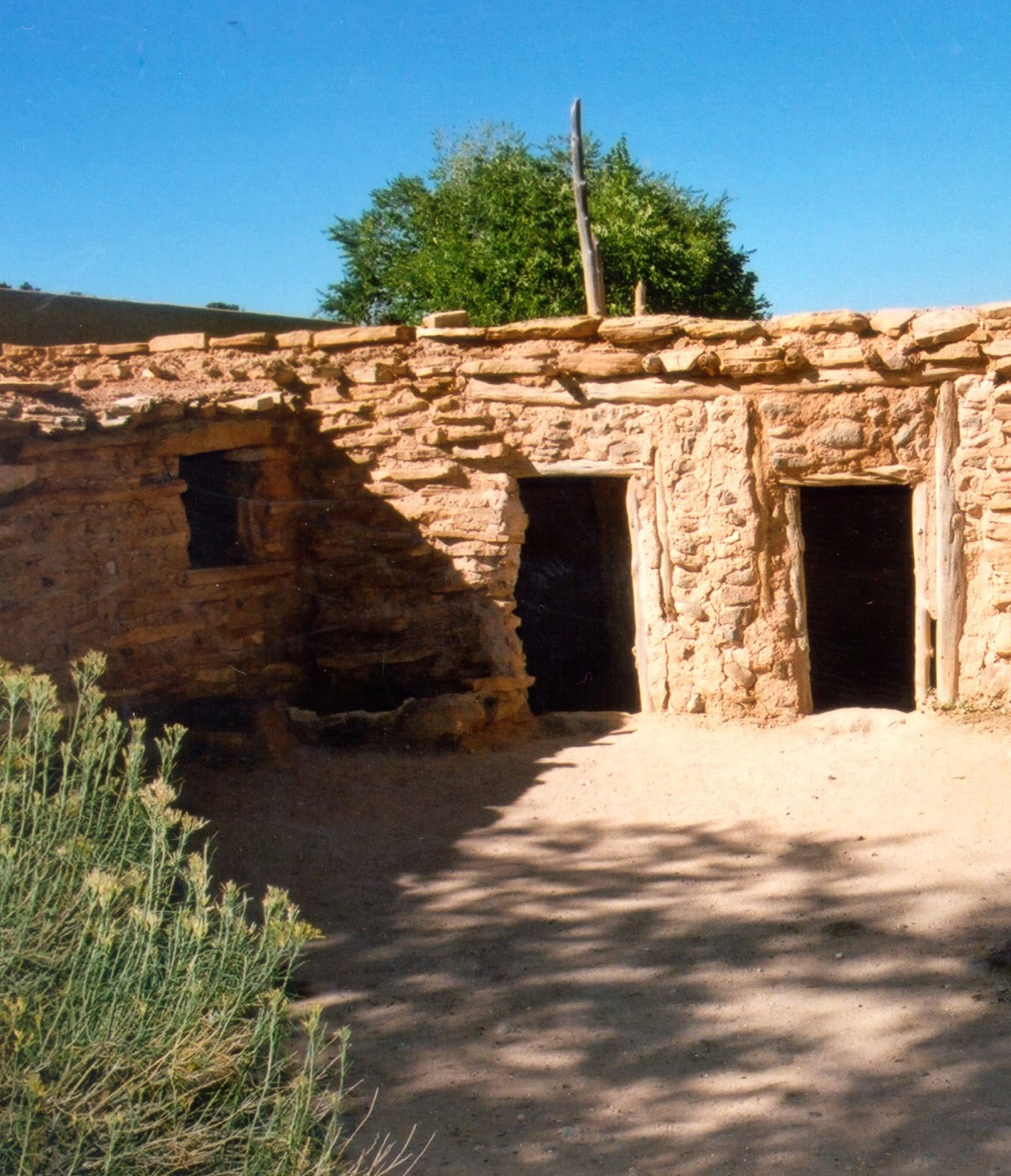
The village consisted of nearly 100 structures, including residential rooms, storage rooms, and at least one kiva. The architecture is typical of the Kayenta branch of the Ancestral Puebloan tradition — stone masonry walls with mud mortar, timber roof beams, and interconnected room blocks that grew organically as the community expanded. The site was occupied for roughly 75 years — a relatively short period that suggests the community may have been established by people migrating from the Four Corners region during a period of environmental or social stress, and abandoned when conditions changed again.
The museum is small but well-curated, with exhibits that explain the excavation, the architecture, the material culture, and the daily life of the village's inhabitants. Pottery, stone tools, bone implements, and ornamental objects are displayed alongside reconstructions and diagrams that help visitors visualize the complete village as it would have appeared in the 1200s. A life-sized replica of a six-room dwelling has been constructed near the ruins using traditional materials and techniques, giving visitors a tangible sense of the scale and construction methods of the original buildings. You can step inside the replica, look up at the timber and brush roof, and appreciate the craftsmanship required to build a weather-tight structure from stone, mud, and wood in a landscape with limited resources.
The ruins themselves are accessible via a short path behind the museum. The excavated walls rise a few feet above ground level — enough to define room layouts and doorways but not enough to suggest the full height of the original structures, which were likely one to two stories tall. Walking among the walls, you can trace the outlines of individual rooms, identify storage areas by their smaller dimensions, and see how the room blocks were organized around shared courtyards and work areas. The scale of the village — nearly 100 rooms for a community of 200 people — suggests a well-organized society with designated spaces for living, storage, food preparation, and communal activity.
The museum's location in Boulder places it along Highway 12, one of the most scenic drives in America, and the combination of archaeological significance and extraordinary scenery makes it a natural stop for travelers between Capitol Reef and the Grand Staircase-Escalante region. The town of Boulder itself adds to the experience — its isolation, its small population, and its end-of-the-road character give you a sense of the remoteness that defined this location for the Ancestral Puebloans and for the Mormon pioneers who settled here centuries later.
The park is open year-round, with slightly reduced winter hours. Admission is modest, and the visit — museum, ruins, and replica dwelling — takes about an hour. The museum is small enough that it never feels crowded, even during peak season, and the staff are knowledgeable and welcoming.
Anasazi State Park Museum is the kind of place that recalibrates your understanding of a landscape. Boulder today feels like the edge of nowhere — a tiny town at the end of a road that used to be a mule trail. But 800 years ago, it was the center of a community that farmed, traded, built in stone, created pottery, and maintained connections across hundreds of miles of canyon country. The ruins behind the museum are the physical evidence of that community, and standing among them you realize that this landscape has been home to people for far longer than its current emptiness suggests.
Visitor Info
On the Map
A story featuring this place
Go deeper into the history and character of this stop
Nearby
The closest stops worth working into your route
Historical markers nearby
Roadside plaques and monuments within a short detour