Route 66 is almost always told as an arrival story. The road crosses the desert, tips over Cajon Pass, and drops into orange groves and ocean air, and the whole hard trip pays off in the last hour. That is the version on the postcards, and for a great many people it was true.
For two months in 1936, California tried to make sure it would not be true for everyone.
Two-Gun Davis draws a line
On February 3, 1936, the chief of the Los Angeles Police Department, James E. Davis, dispatched 136 of his officers to sixteen points of entry along the state line. They fanned out across nine counties, to the highway and rail crossings coming in from Arizona, Nevada, and Oregon, with orders to stop trains, cars, buses, and people on foot, and to turn back anyone who could not demonstrate a means of supporting themselves. The newspapers called it the Bum Blockade. Davis, an expert marksman known as Two-Gun, described the targets as people who roam the country "seeking green pastures in which to forage." He billed the whole thing as crime prevention.
Read that again with a map in front of you. The Los Angeles police were operating three hundred miles and more outside the city limits, at the Colorado River and the Oregon line, in counties that had not asked for them. Davis had written to the border-county sheriffs asking them to deputize his men. Three said yes.
What it looked like at the checkpoint
The standard for who belonged in California was left to the individual officer, which is another way of saying there was no standard. Travelers were questioned, fingerprinted, and had their clothing and luggage described in reports. In Hornbrook, up on the Oregon line, eight men were held overnight in an abandoned hotel converted into a makeshift jail, given half a loaf of bread apiece, and put on a freight car back to Oregon the next day. One of them was a wallpaper hanger going to see his sister.
At Blythe, on the Colorado River, officers stopped a Hollywood dialogue director coming home from a prospecting trip because he was dusty and unshaven and wearing boots. He asked by what authority they were stopping him in a town two hundred miles from Los Angeles. They detained him for asking.
Someone put up a billboard near the Nevada line outside Reno, with a cartoon policeman swinging a baton: STOP. LOS ANGELES CITY LIMITS.
The objections came fast
This was not a case of a society that saw nothing wrong. The state attorney general said the blockade was illegal. The Los Angeles City Council demanded to know by what authority the chief was sending officers outside the city. The California Highway Patrol objected that the LAPD was operating in its jurisdiction. The American Civil Liberties Union went to court, arguing what now seems obvious — that Americans are citizens of the country, not of one state that can bar the door.
The Los Angeles Times, for its part, backed the blockade on its editorial page and attacked the officials calling it unlawful.
In the end it was not struck down. It was defunded. Los Angeles taxpayers noticed they were paying to police a border five hundred miles away, complained loudly about the bill, and the operation wound up after roughly two months, before any court could rule on it. Davis claimed his men had turned back some eleven thousand people. Historians have never been able to make that number stand up, and it was in his interest to inflate it.
The law behind it lasted longer
The blockade ended; the thinking did not. California kept a statute on the books, known plainly enough as the anti-Okie law, making it a misdemeanor to knowingly bring a nonresident indigent person into the state.
In 1939 a Californian named Fred Edwards drove to Texas and came back with his unemployed brother-in-law, Frank Duncan. For that he was convicted and given a six-month suspended sentence. His appeal reached the Supreme Court, and on November 24, 1941, the Court struck the law down unanimously in Edwards v. California. Justice Byrnes wrote for the Court that the statute was an unconstitutional burden on interstate commerce — moving people is commerce. Four justices thought that reasoning was too small for what was at stake and wrote separately to say the real principle was simpler: the right to move freely through your own country belongs to citizenship itself, and no state gets to charge admission to the poor.
What it changes about the drive
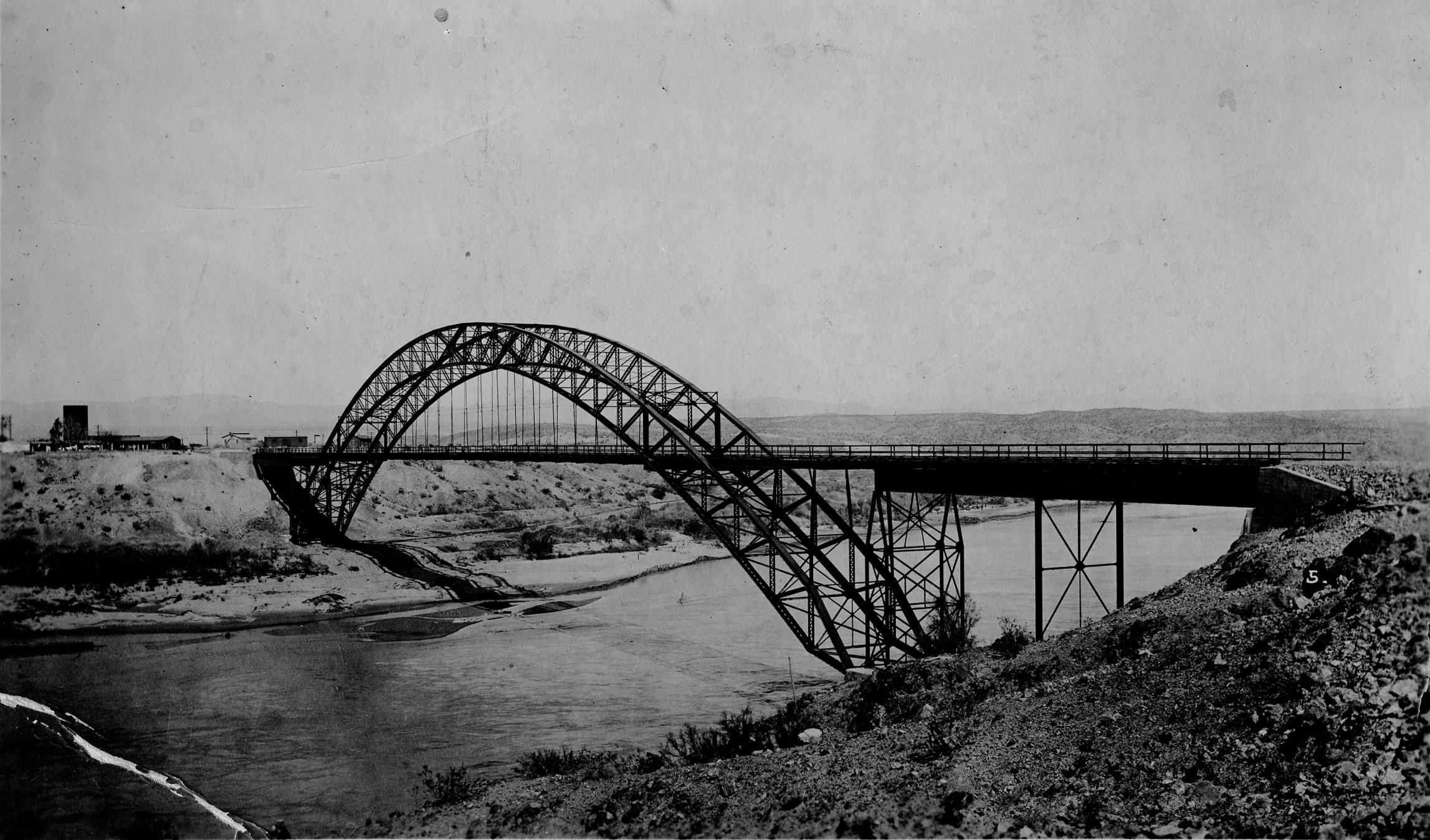
The families this was aimed at were already on the road. They had crossed the Colorado at Needles in the dark to beat the heat, and the desert stretch beyond it — the one they feared most — was the last hard thing between them and the work they had been promised. Then some of them reached the line and found a Los Angeles policeman deciding whether they looked prosperous enough to continue.
It is worth carrying that up the grade. Barstow and the pass and the long descent into the basin are genuinely one of the great arrivals in American travel, and the ending at the Santa Monica Pier has earned its sign. But the road did not deliver the same thing to everybody who drove it, and in 1936 the state briefly stationed men on the shoulder to make that official. Route 66 in California is a road about arriving. For two months it was also a road about being told to turn around, and the difference came down to how you looked when you got there.