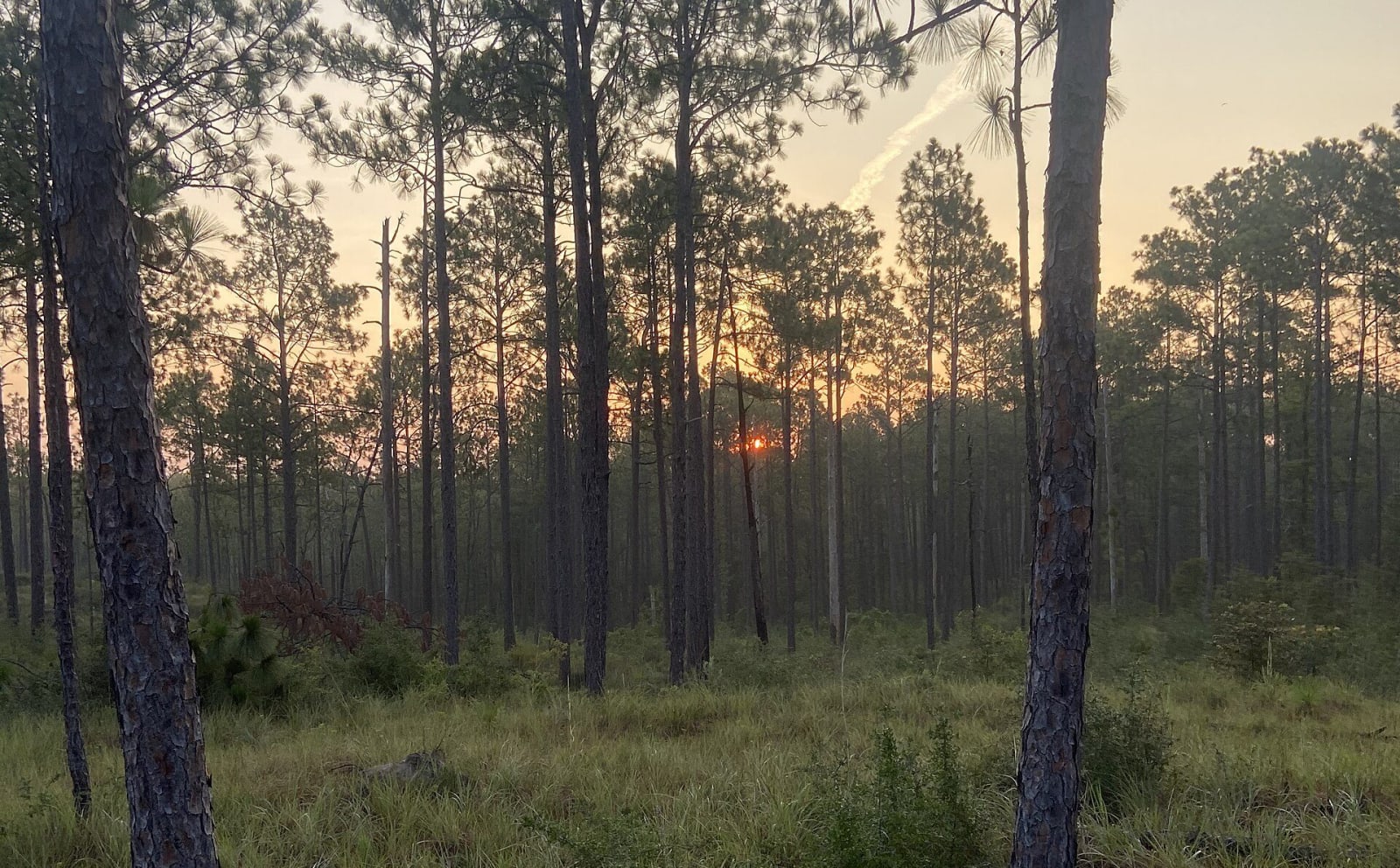
The sun rises through tall longleaf pines over a grassy clearing in the Kisatchie Hills Wilderness, with two bark-ridged trunks in the foreground.
U.S. Forest Service, Southern Region / Public domain via Wikimedia Commons
Louisiana · Region

Natchitoches, the Cane River & Kisatchie

Fort St. Jean Baptiste, Los Adaes, Oakland and Melrose on Cane River, Fort Jesup, Colfax's memorial and Kisatchie's longleaf hills in northwest Louisiana.

10 places to explore

The Natchitoches, a Caddo people, had a village on the Red River when Louis Antoine Juchereau de St. Denis built two huts there in 1714, and the French fort that followed, rebuilt at Fort St. Jean Baptiste, lived on Caddo trade. Spain founded a mission for the Adai in 1717 and the presidio of Los Adaes, capital of Texas from 1729 to 1770. The Kichai, who called themselves Kitsatchie, gave Kisatchie its name, and Longleaf Vista looks over the hills.

Cane River's cotton was picked by enslaved people. At Oakland and Magnolia the park names Charles, Solomon Wilson and Solomon Williams and the 36 who left Oakland with Union soldiers in 1864. Marie Thérèse Coincoin, born enslaved and freed in 1778, is the root of the Creoles of color whose church, St. Augustine, still holds Mass at Isle Brevelle, and Melrose holds her son Louis's buildings. In Colfax a 2023 memorial names 57 of the Black men killed at the courthouse on April 13, 1873.

To the west, Fort Jesup held the Neutral Ground between Louisiana and Spanish Texas, and Toledo Bend covers Pine Flat, a Black community of Sabine Parish, along with homes of Choctaw-Apache families. Natchitoches keeps its brick Front Street on the old river channel, left five miles from the Red River.

What to See in Natchitoches, the Cane River & Kisatchie

10 places across the region, grouped by what they are.

Natural Areas
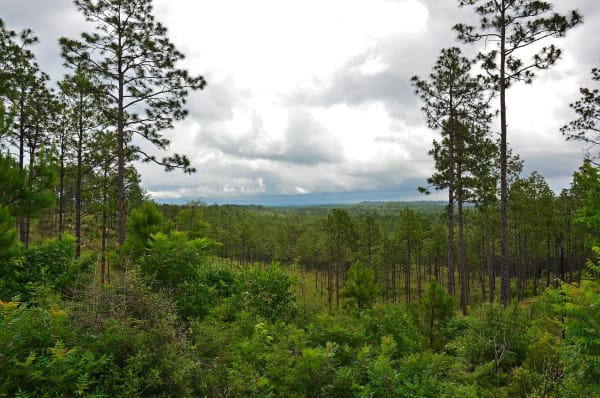
Tall longleaf pines frame a view over a forested valley and distant ridges under a heavy, cloudy sky at Longleaf Vista.

Kisatchie National Forest: Longleaf Vista

Derry

A free ridge-top overlook and 1.5-mile loop above the 8,700-acre Kisatchie Hills Wilderness on the Longleaf Trail Scenic Byway, in the forest Caroline Dormon helped win in 1930.

View details →

Hikes & Trails

North Toledo Bend State Park

Zwolle

A 900-acre park on the Louisiana shore of the 186,000-acre Toledo Bend Reservoir, with trails, disc golf and cabins, near the flooded sites of Pine Flat and other Sabine Parish communities.

View details →

Historic Sites

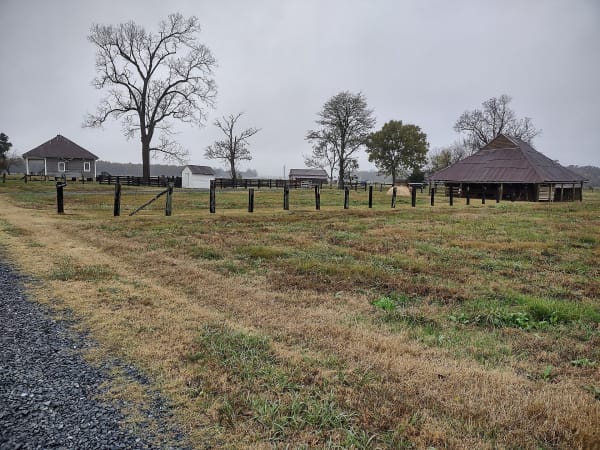
Plantation outbuildings at Oakland on a gray November day, among them a hip-roofed shed on posts, with bare pecan trees and a post fence across the grass.

Cane River Creole National Historical Park

Natchitoches

Oakland and Magnolia, two Cane River cotton plantations kept as they stood, told through the enslaved families who worked them, the 1864 and 1804 freedom seekers and the tenant farmers who stayed into the 1960s.

View details →

Colfax Massacre Memorial

Colfax

The 2023 granite memorial in Colfax to the Black men killed at the Grant Parish courthouse on April 13, 1873, which carries 57 names and replaced a state marker that called the massacre a riot.

View details →
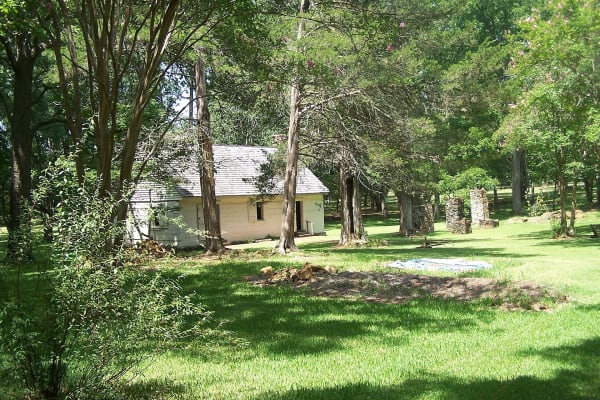
The whitewashed army kitchen with a shingle roof sits among trees on a mown lawn, with stone chimney ruins beyond it.

Fort Jesup State Historic Site

Many

The 1822 army post Zachary Taylor built to hold the Neutral Ground between Louisiana and Spanish Texas, with the one surviving kitchen, a reconstructed officers' quarters and a museum open Friday to Sunday.

View details →
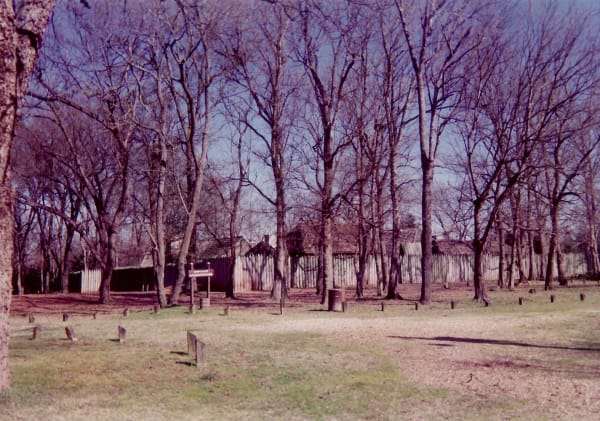
A pale palisade of pointed logs rises behind bare winter trees at the reconstructed fort, with low wooden markers set in the grass in front.

Fort St. Jean Baptiste State Historic Site

Natchitoches

A reconstruction of the 1716 French fort beside the Natchitoches village, with a palisade of nearly 2,000 pine logs, a chapel and storeroom, and living-history programs, open Wednesday to Sunday.

View details →
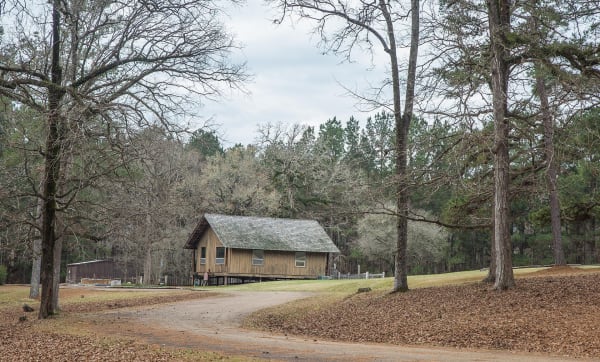
A plain wooden building with a shingled roof stands in a clearing among bare winter oaks and pines at Los Adaes.

Los Adaes State Historic Site

Robeline

The Spanish presidio that was the capital of Texas from 1729 to 1770, some 15 miles from French Natchitoches, now an archaeological site where Native pottery is the most abundant find.

View details →

Towns & Gateways

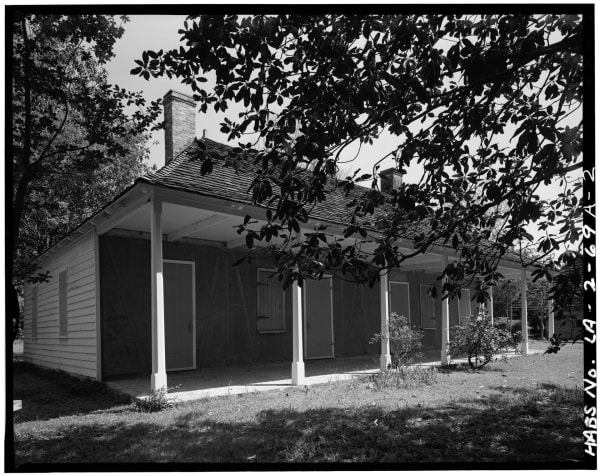
A long, low Creole building with a deep front gallery, white posts, shuttered doors and a hip roof with two brick chimneys, seen through the branches of a magnolia in a black-and-white survey photograph.

Melrose Plantation

Melrose

The Cane River estate built on land granted to Louis Metoyer, son of Marie Thérèse Coincoin, with the Yucca House and African House, later an artists' retreat; guided tours Thursday to Sunday.

View details →
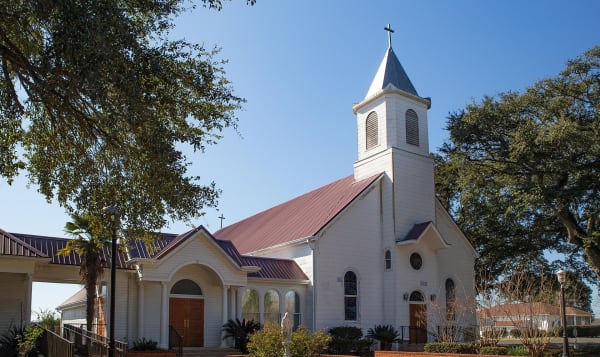
A white wooden church with a metal-roofed steeple and cross stands under live oaks, with a brick-edged fountain bed and a covered walkway beside it.

St. Augustine Church, Isle Brevelle

Natchez

The parish church at the heart of the Cane River Creoles of color, begun by Augustin Metoyer on his family's land and still holding Mass for the community that grew from Marie Thérèse Coincoin's children.

View details →

Architecture

Natchitoches Historic District

Natchitoches

The riverfront blocks of the oldest permanent settlement in the Louisiana Purchase, founded in 1714 at a Natchitoches village, with a brick-paved Front Street, Cane River frontage and the largest bousillage construction in the South.

View details →

Stories from Natchitoches, the Cane River & Kisatchie

History

Clementine Hunter at Melrose

A cotton picker and cook on Cane River began painting in her fifties, charged a quarter to look at her first pictures, and in 1955 covered the upper room of the African House with nine murals.

3 min read

Natchitoches, the Cane River & Kisatchie rewards the unhurried. Pick a base, fan out, and let the country between the headline stops surprise you.

← Explore more of Open Road Guide