 Historic American Buildings Survey / Public domain via Wikimedia Commons
The Story
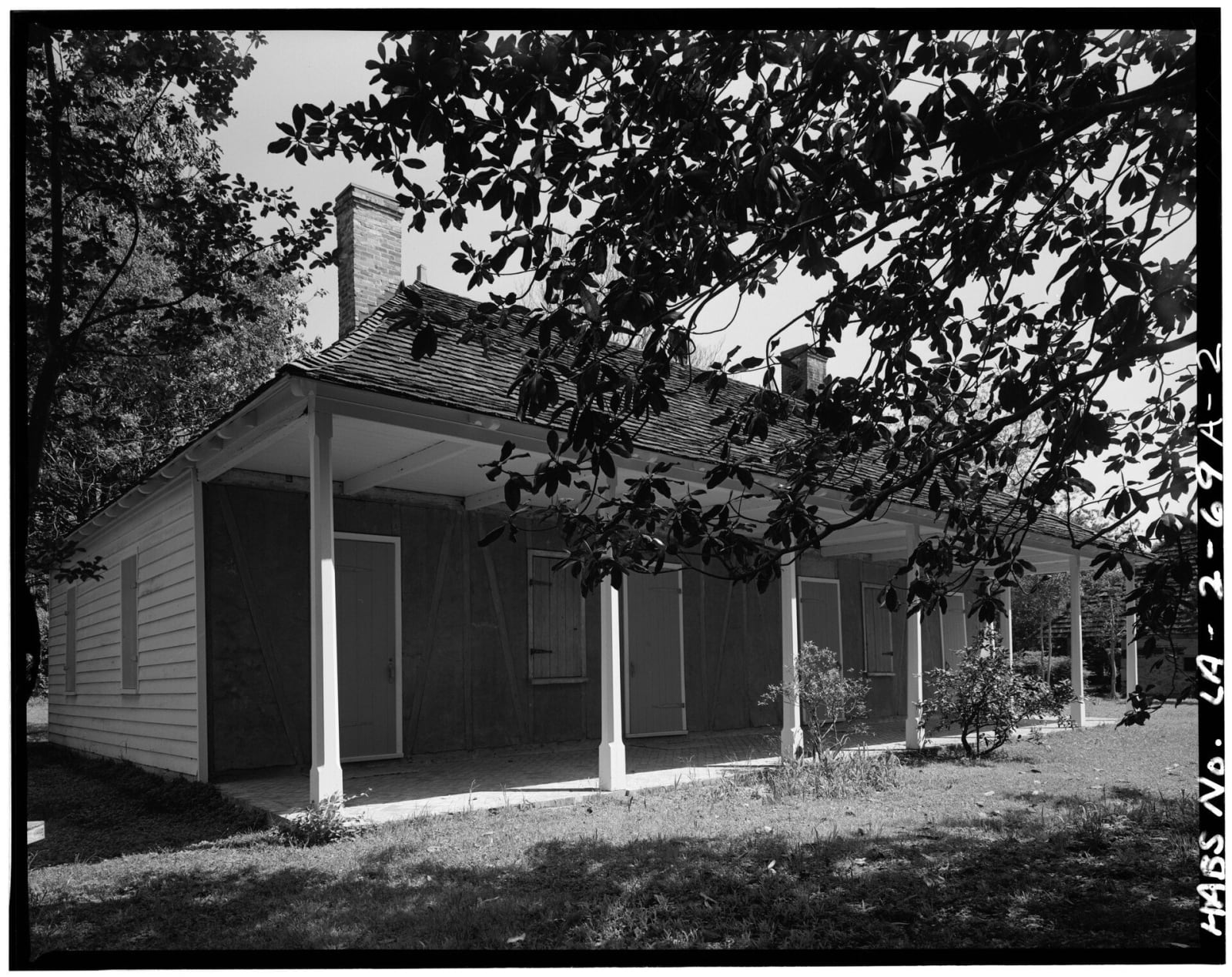
Melrose begins with Marie Thérèse Coincoin, born enslaved in 1742 in the household of St. Denis, the founder of Natchitoches. Claude Thomas Pierre Metoyer bought and freed her in 1778, and their ten children are the foundation of the Isle Brevelle Creole community along Cane River. Records show the Melrose tract was granted to her son Louis Metoyer, who built most of the surviving buildings, among them the Yucca House, put up between 1796 and 1814, and the African House. The Metoyers were free people of color and they held enslaved people. The National Park Service's regional brochure says the African House served as a storehouse and as a jail for enslaved people described as rebellious.
Money trouble forced a sale in 1847 to the Hertzog family, owners of Magnolia, and the site's own account includes a freedmen's school founded by Fanny Hertzog. Cammie Garrett Henry later made Melrose an artists' retreat that hosted William Faulkner and Lyle Saxon. Clementine Hunter, who worked in the fields and then as a cook before she painted, covered the upper room of the African House with murals.
Melrose is a National Historic Landmark, designated in 1974 and run by the Association for the Preservation of Historic Natchitoches. It stands at 3533 Highway 119, with guided tours Thursday to Sunday, as listed in 2026.
Visitor Info
On the Map
Nearby
The closest stops worth working into your route
Historical markers nearby
Roadside plaques and monuments within a short detour