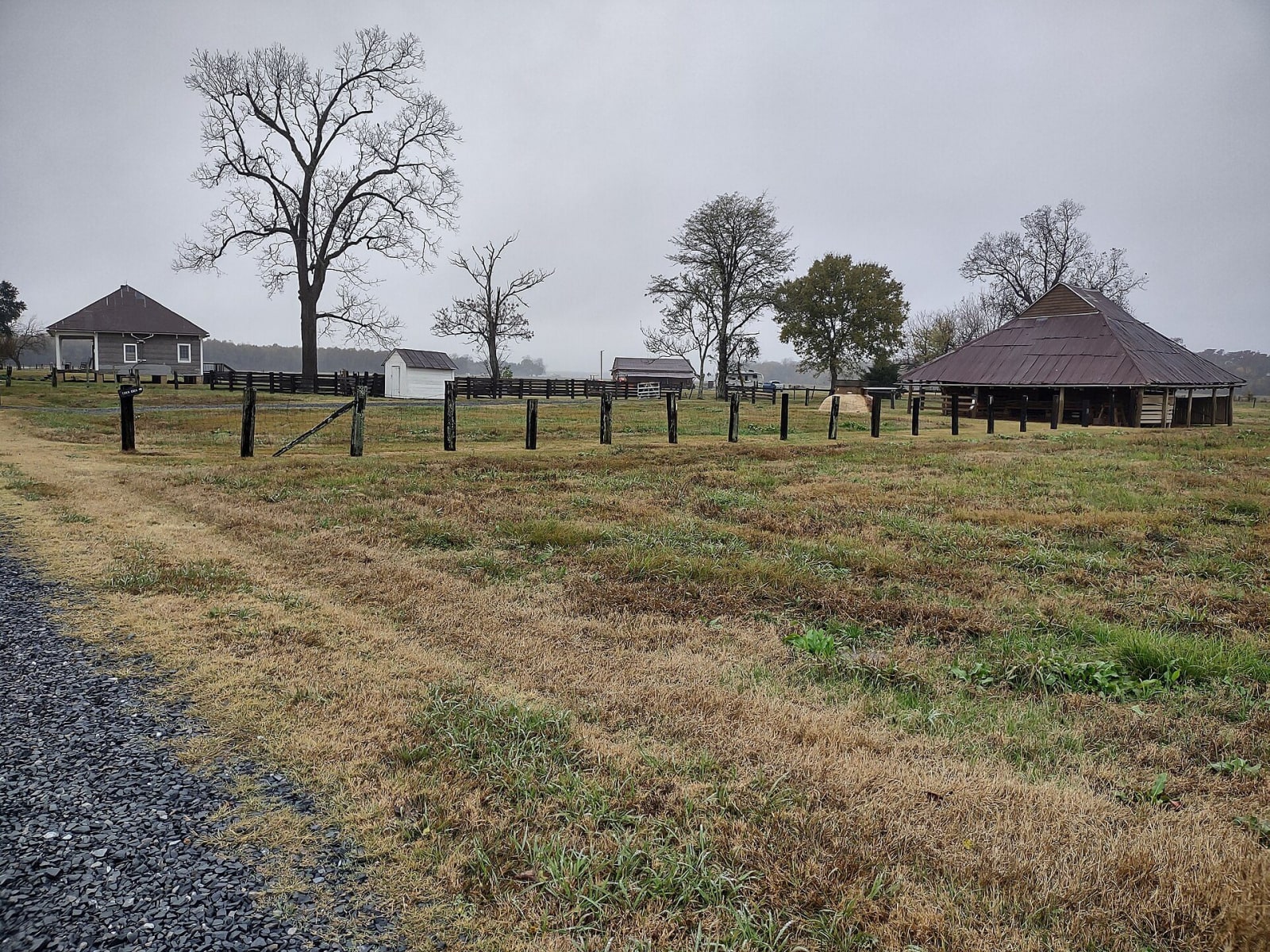
 Hog Farm / CC BY-SA 4.0 via Wikimedia Commons
The Story
Oakland Plantation was founded on a 1785 Spanish land grant by Jean Pierre Emanuel Prud'homme and his wife Catherine Lambre, and the National Park Service counts 38 enslaved people there in 1795, nearly 145 within fifty years and nearly 160 by the Civil War. Enslaved carpenters framed the raised Creole house in cypress in 1821. The park names others: Charles, a coach driver; the carpenters Solomon Wilson, Bob and Lens; and the blacksmith Solomon Williams. At Magnolia, which Ambrose LeComte II and Julia Buard established in 1835, LeComte enslaved 235 people. Brick cabins built around 1845 were divided down the middle to house two families around a shared fireplace.
Freedom was taken as well as waited for. In 1864, during the Red River Campaign, 36 enslaved people left Oakland with United States soldiers, among them Edmo, Andrew, Charles, Cesaire, Jules Russel, Seraphine Edmonds and Collins Page. That year retreating troops burned the Magnolia house. Sharecropping began at Oakland as early as 1868, and the last tenant family left in the early 1960s. Nearly 60 historic buildings remain, and the park describes a Creole culture of Native American, French, Spanish and African roots that cuts across racial categories.
Admission is free. Oakland and Magnolia are open Wednesday to Sunday from 9 a.m. to 3:30 p.m., and the Oakland main house opens on weekends, as the park lists in 2026.
Visitor Info
On the Map
Nearby
The closest stops worth working into your route
Historical markers nearby
Roadside plaques and monuments within a short detour