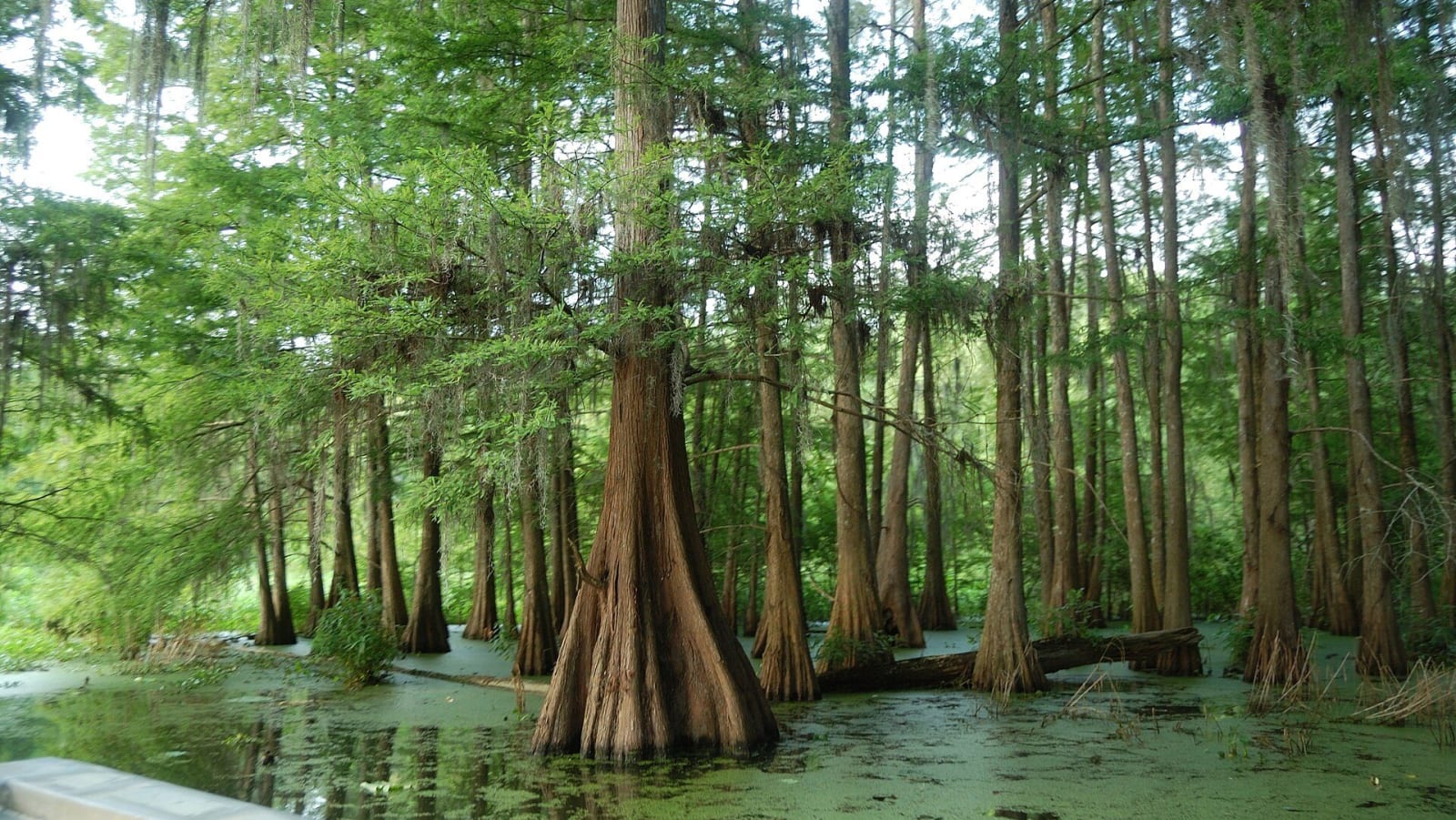
Bald cypress with flared trunks stand in green duckweed water under a leafy canopy at Lake Martin.
Pierre5018 / CC BY-SA 4.0 via Wikimedia Commons
Louisiana · Region

Lafayette & Cajun Country

Swamp and rookery at Lake Martin, the Atchafalaya Basin, St. Martinville's Acadian church, Shadows-on-the-Teche, Avery Island and Vermilionville in Cajun Country.

10 places to explore

The Atakapa-Ishak are the people of this country, and the Chitimacha lived in the Atchafalaya Basin, where their villages at Bayou Chene included Namu Katsi, the Village of Bones, and Kushuh Namu, Cottonwood Village. The Atchafalaya Welcome Center on I-10 tells the Basin's story, and Cypress Island Preserve at Lake Martin keeps nearly 10,000 acres of swamp and a rookery of egrets, spoonbills and alligators.

The Acadians reached the Attakapas country in the 1760s, and St. Martin de Tours in St. Martinville, founded in 1765, is the Mother Church of the Acadians. Longfellow-Evangeline State Historic Site keeps Maison Olivier and a farmstead with slave quarters, and the African American Museum tells of enslaved people and free people of color. At Shadows-on-the-Teche in New Iberia the Weeks family enslaved 1,112 people, among them Charity Polk. On Avery Island, the Marsh plantation held enslaved people before Tabasco.

Vermilionville in Lafayette interprets Native, Acadian, Creole and African-descended life on Bayou Vermilion. On the prairie, the Prairie Acadian Cultural Center in Eunice tells the Cajun story free of charge, and in Opelousas the Venus House belonged to Marie Francois Venus, a free Creole woman of color.

What to See in Lafayette & Cajun Country

10 places across the region, grouped by what they are.

Natural Areas
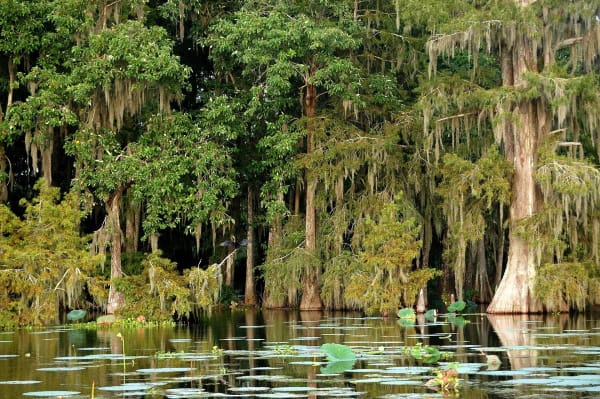
Bald cypress draped in Spanish moss rise from dark water covered with lily pads at Lake Martin, with an anhinga drying its wings.

Cypress Island Preserve at Lake Martin

St. Martinville

Nearly 10,000 acres of bottomland hardwood and cypress-tupelo swamp at the south end of Lake Martin, owned by The Nature Conservancy, with a boardwalk and a rookery of egrets, spoonbills and alligators.

View details →
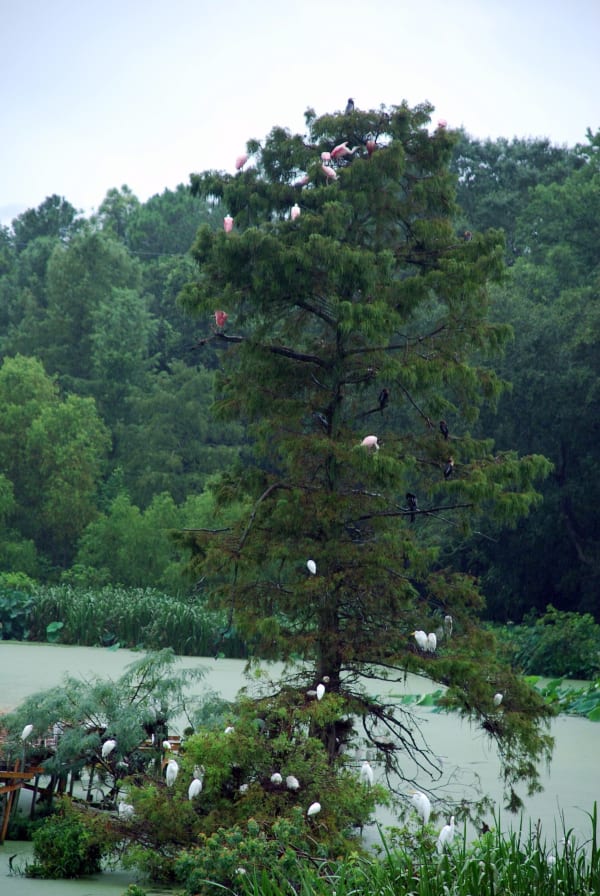
Roseate spoonbills, egrets and anhingas roost in a tall bald cypress above green water in Bird City, Jungle Gardens, Avery Island.

Jungle Gardens and Avery Island

Avery Island

A 170-acre garden and wildfowl refuge on a Gulf Coast salt dome, founded by Edward Avery McIlhenny, on an island that was a Marsh sugar plantation worked by enslaved people before Tabasco and the 1862 salt works.

View details →

Historic Sites

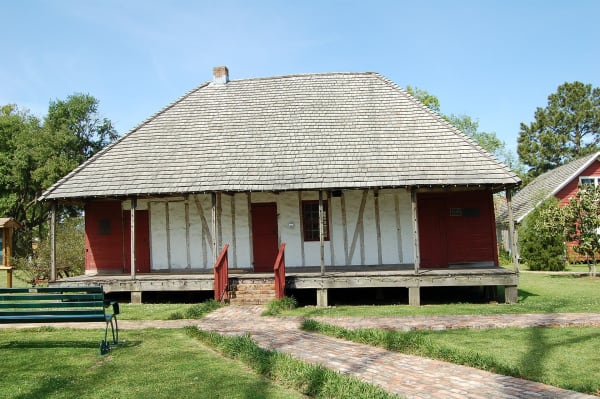
The Venus House at Le Vieux Village, a low Creole house with a wide hipped shingle roof, whitewashed mud-and-timber walls and a gallery.

Le Vieux Village and the Venus House

Opelousas

A heritage park in Opelousas built around the Venus House of about 1791, the home of a free Creole woman of color, Marie Francois Venus, with an old schoolhouse, Methodist church and the visitor center's zydeco music exhibit.

View details →
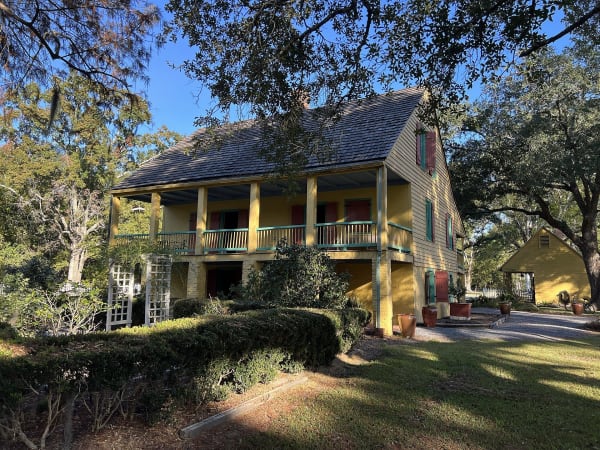
Maison Olivier, a yellow raised Creole cottage with a long two-story gallery, under live oaks at Longfellow-Evangeline State Historic Site.

Longfellow-Evangeline State Historic Site

St. Martinville

A bayou-side state site on former Attakapas hunting ground, with a raised Creole cottage of about 1815, a reproduction 1800 farmstead and its slave quarters, and the story behind Longfellow's Evangeline.

View details →
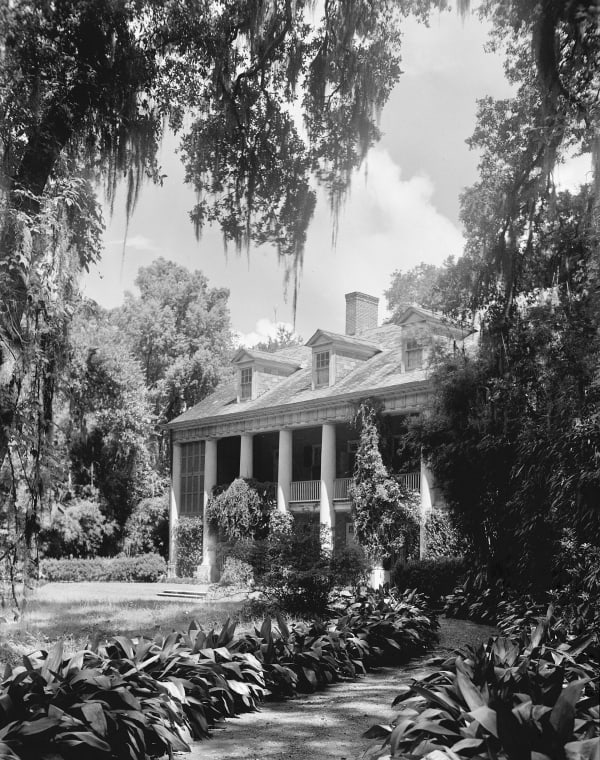
A black-and-white view of Shadows-on-the-Teche through hanging Spanish moss, its white columns and dormers behind a path lined with broad-leaved plants.

Shadows-on-the-Teche

New Iberia

A National Trust site in New Iberia built 1831 to 1834 for sugar planters David and Mary Weeks, now interpreted around the 1,112 people the Weeks family enslaved, among them Charity Polk, Amos, Patty, Isaac and Louisa.

View details →

St. Martin de Tours Catholic Church

St. Martinville

The Mother Church of the Acadians, founded in 1765 on St. Martin Square in St. Martinville, with a late 1870s Lourdes grotto and, a block away, the Evangeline Oak on Bayou Teche.

View details →

Towns & Gateways

African American Museum, St. Martinville

St. Martinville

A museum in the St. Martinville Cultural Heritage Center on the arrival of Africans in Southwest Louisiana, slavery, the free people of color and Reconstruction, with the fourteen-panel exhibit The Shackles of Memory.

View details →

Prairie Acadian Cultural Center

Eunice

A National Park Service center in Eunice on the Cajun prairie, with exhibits on the Acadians who settled the prairies, a Courir de Mardi Gras display, free music and cooking demonstrations, and the shuttered Liberty Theatre nearby.

View details →
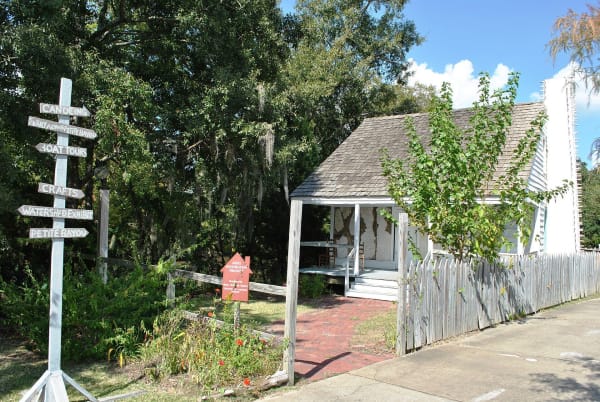
A white cottage with a gallery at Vermilionville beside a wooden signpost pointing to canoeing, boat tours, crafts and Petite Bayou, under live oaks.

Vermilionville

Lafayette

A living-history village of about 23 acres on Bayou Vermilion in Lafayette, opened in 1990 to interpret the Native peoples, Acadians, Creoles and people of African descent of the Attakapas region.

View details →

Attractions

Atchafalaya Welcome Center

Breaux Bridge

A state welcome center inside the Atchafalaya Basin, the nation's largest river swamp, with exhibits on Basin history and life, a film, a crawfishing boat and French-speaking staff.

View details →

Scenic Drives through Lafayette & Cajun Country

Scenic Byway

The Bayou Teche Byway: Breaux Bridge to Franklin

About 52 miles of the Bayou Teche Byway, from Breaux Bridge by LA-31 and LA-182 through St. Martinville, New Iberia and Charenton to Franklin.

52 mi · 1.4 hrs

Stories from Lafayette & Cajun Country

History

Amédé Ardoin's Accordion

A Creole accordionist from Evangeline Parish cut six songs in New Orleans in 1929 with a white fiddler, and his last years come down to us in conflicting accounts.

3 min read

Lafayette & Cajun Country rewards the unhurried. Pick a base, fan out, and let the country between the headline stops surprise you.

← Explore more of Open Road Guide