 Jan Kronsell / CC BY-SA 3.0 via Wikimedia Commons
The Story
Avery Island is the largest of five salt domes along the Louisiana coast and rises 163 feet, the highest point on the Gulf Coast. Radiocarbon dates place Native people here by 2500 BC, and later groups boiled spring water for salt and left thousands of pottery shards. Plaquemine-culture people used the main site, later called Salt Mine Valley, from at least 1000 to 1300 CE.
In 1818 John Marsh and William Stone founded a sugar plantation here, bringing enslaved and indentured Black people from New York and New Jersey. The Avery family papers hold bills of sale for enslaved people, medical accounts for them, and a May 1856 record of John C. Marsh freeing several enslaved people under agreements with their fathers. Salt works for the Confederacy struck solid rock at 16 feet in May 1862, and Union forces destroyed the works in April 1863. In 1866 formerly enslaved people returned to work the plantation under contracts. Edmund McIlhenny made his first pepper crop in 1868.
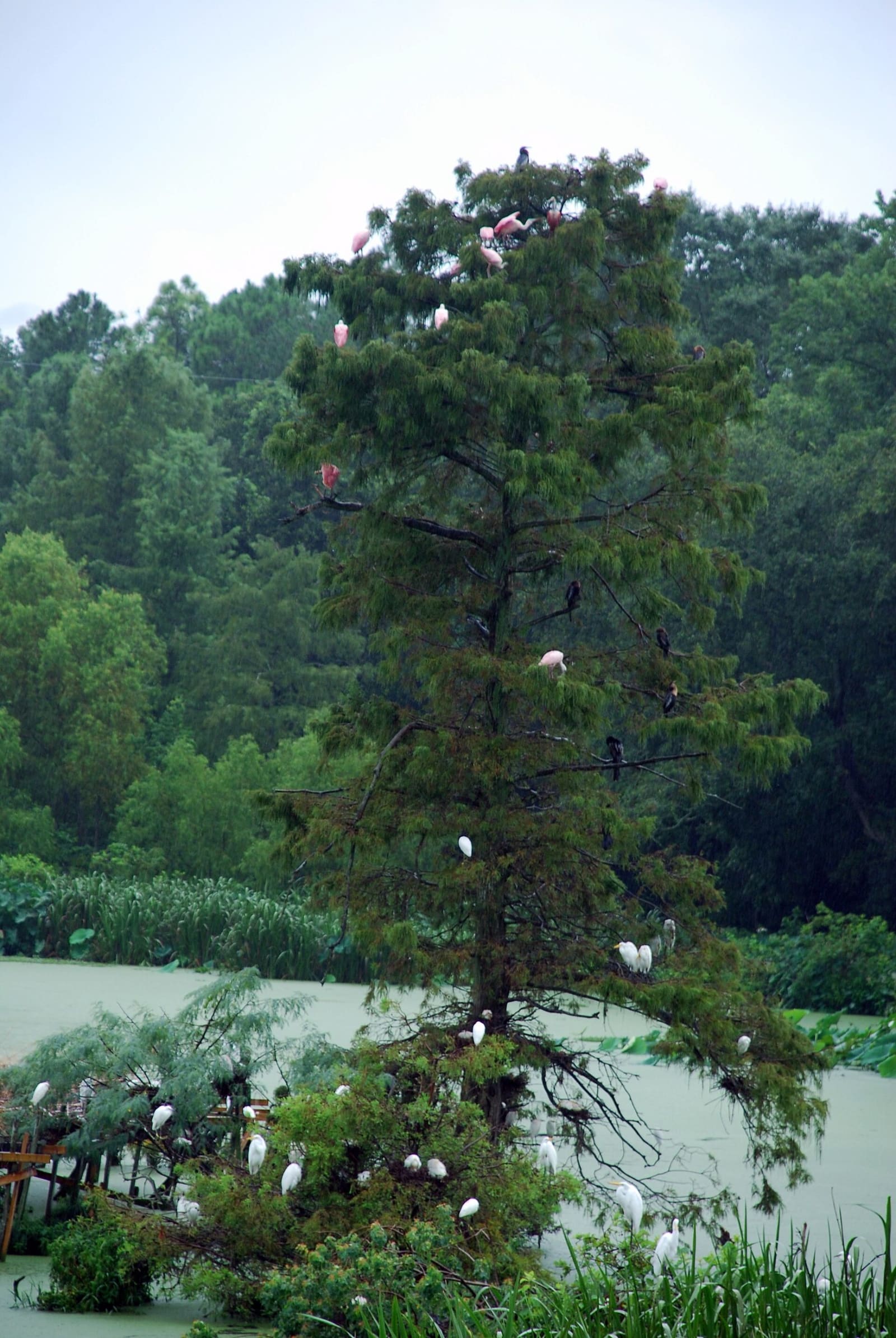
Edward Avery McIlhenny raised eight captive egrets in 1895 and released them; they returned with others, and thousands of egrets still return to Bird City each year from early spring to late summer. Jungle Gardens, 170 acres of azaleas, camellias and live oaks, has been open to the public since 1935 at Highway 329.
Visitor Info
On the Map
Nearby
The closest stops worth working into your route
Historical markers nearby
Roadside plaques and monuments within a short detour