Home / Louisiana / Lafayette & Cajun Country / Shadows-on-the-Teche
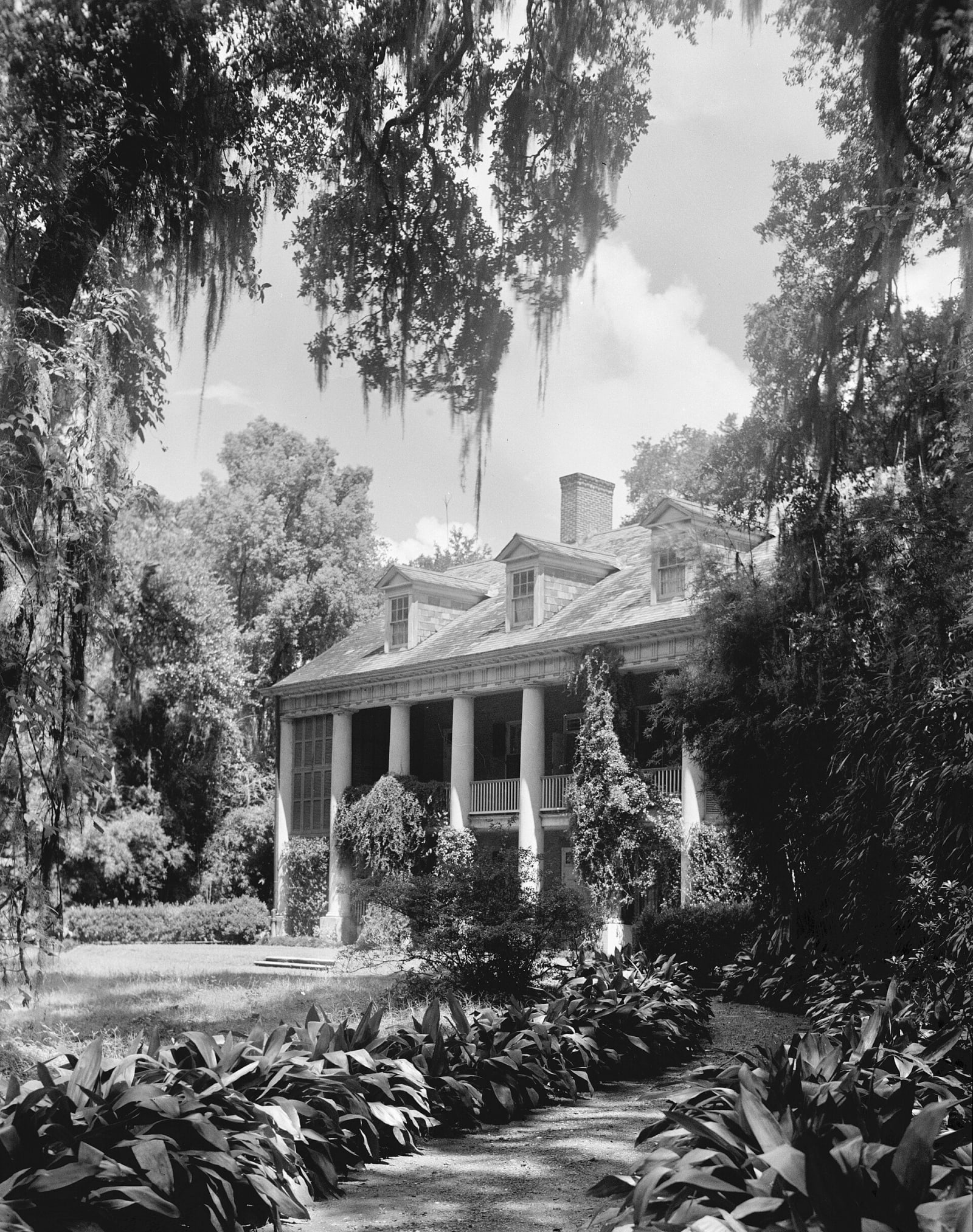
A black-and-white view of Shadows-on-the-Teche through hanging Spanish moss, its white columns and dormers behind a path lined with broad-leaved plants.Richard Koch, Historic American Buildings Survey / Public domain (Library of Congress) via Wikimedia Commons
🏛️Historical

Shadows-on-the-Teche

Part ofLafayette & Cajun Country
On this driveThe Bayou Teche Byway: Breaux Bridge to Franklin

A National Trust site in New Iberia built 1831 to 1834 for sugar planters David and Mary Weeks, now interpreted around the 1,112 people the Weeks family enslaved, among them Charity Polk, Amos, Patty, Isaac and Louisa.

⏱
Duration
One to two hours.
🎟
Admission
Prices are on shadowsontheteche.org (listed as an image, FY25); advance purchase recommended.
📅
Best Season
Visitor center Thursday to Saturday 10 a.m. to 4 p.m.; guided tours Thursday to Saturday, call to confirm times; closed Thanksgiving, Christmas Eve, Christmas Day, New Year's Eve and New Year's Day.

The Story

The Shadows was built between 1831 and 1834 on Bayou Teche as a townhome for sugar planters David and Mary Weeks. Enslaved people owned by the Weeks family built it, working under the carpenter James Bedell and the mason Jeremiah Clark. The family enslaved about 25 people at the house and about 200 at Grand Cote, the sugar plantation on what is now Weeks Island; by the Civil War they owned nine Louisiana plantations and had enslaved 1,112 people. The 1835 inventory of David Weeks's property lists husbands and wives as movable property, among them Amos and Patty and Isaac and Louisa.

Charity Polk was born enslaved at Grand Cote around 1820 to 1823 to a mother named Hannah, with siblings Mahala, Theorick and Maria. Moved to the Shadows by 1846, she worked as a domestic, gardener and seamstress, and bore at least thirteen children, three of them (Sidney, Charles and Charlotte) at the house. By 1870 she and her daughters lived in New Iberia near the Shadows; she died in 1900. An exhibit wall lists about 700 enslaved people identified by researchers.

William Weeks Hall, the family's great-grandson, restored the house from 1922 and left it to the National Trust in 1958. Tours led by a public historian cover enslaved life, labor and freedom. The site is at 320 E. Main Street, open Thursday to Saturday.

Visitor Info

⏱
Time Needed
One to two hours.
🎟
Admission
Prices are on shadowsontheteche.org (listed as an image, FY25); advance purchase recommended.
📅
Best Season
Visitor center Thursday to Saturday 10 a.m. to 4 p.m.; guided tours Thursday to Saturday, call to confirm times; closed Thanksgiving, Christmas Eve, Christmas Day, New Year's Eve and New Year's Day.
🛣️
Highway
LA 182 (E. Main Street)

On the Map

Nearby

The closest stops worth working into your route

cultural8.2 mi away
African American Museum, St. Martinville
A museum in the St. Martinville Cultural Heritage Center on the arrival of Africans in Southwest Louisiana, slavery, the free people of color and Reconstruction, with the fourteen-panel exhibit The Shackles of Memory.
historical8.2 mi away
St. Martin de Tours Catholic Church
The Mother Church of the Acadians, founded in 1765 on St. Martin Square in St. Martinville, with a late 1870s Lourdes grotto and, a block away, the Evangeline Oak on Bayou Teche.
natural8.7 mi away
Jungle Gardens and Avery Island
A 170-acre garden and wildfowl refuge on a Gulf Coast salt dome, founded by Edward Avery McIlhenny, on an island that was a Marsh sugar plantation worked by enslaved people before Tabasco and the 1862 salt works.
historical9.1 mi away
Longfellow-Evangeline State Historic Site
A bayou-side state site on former Attakapas hunting ground, with a raised Creole cottage of about 1815, a reproduction 1800 farmstead and its slave quarters, and the story behind Longfellow's Evangeline.
natural15 mi away
Cypress Island Preserve at Lake Martin
Nearly 10,000 acres of bottomland hardwood and cypress-tupelo swamp at the south end of Lake Martin, owned by The Nature Conservancy, with a boardwalk and a rookery of egrets, spoonbills and alligators.
cultural18 mi away
Vermilionville
A living-history village of about 23 acres on Bayou Vermilion in Lafayette, opened in 1990 to interpret the Native peoples, Acadians, Creoles and people of African descent of the Attakapas region.

Historical markers nearby

Roadside plaques and monuments within a short detour

Marker0 mi away
Shadows-on-the-Teche
New Iberia
Marker0.1 mi away
Bayou Teche
New Iberia
Marker0.1 mi away
New Iberia Shipwreck
New Iberia
Marker0.1 mi away
George Rodrigue
New Iberia
Marker0.1 mi away
James Lee Burke
New Iberia
Marker0.1 mi away
William G. "Bunk" Johnson
New Iberia