 Jetheriot / CC0 via Wikimedia Commons
The Story
The land beside Bayou Teche was once hunting ground of the Attakapas, then part of a royal French land grant run as a vacherie, a cattle ranch. The first Acadians to settle in Louisiana lived at the edges of that ranch, on Bayou Teche and Bayou Tortue. When the grant was sold and divided, this section became an indigo plantation.
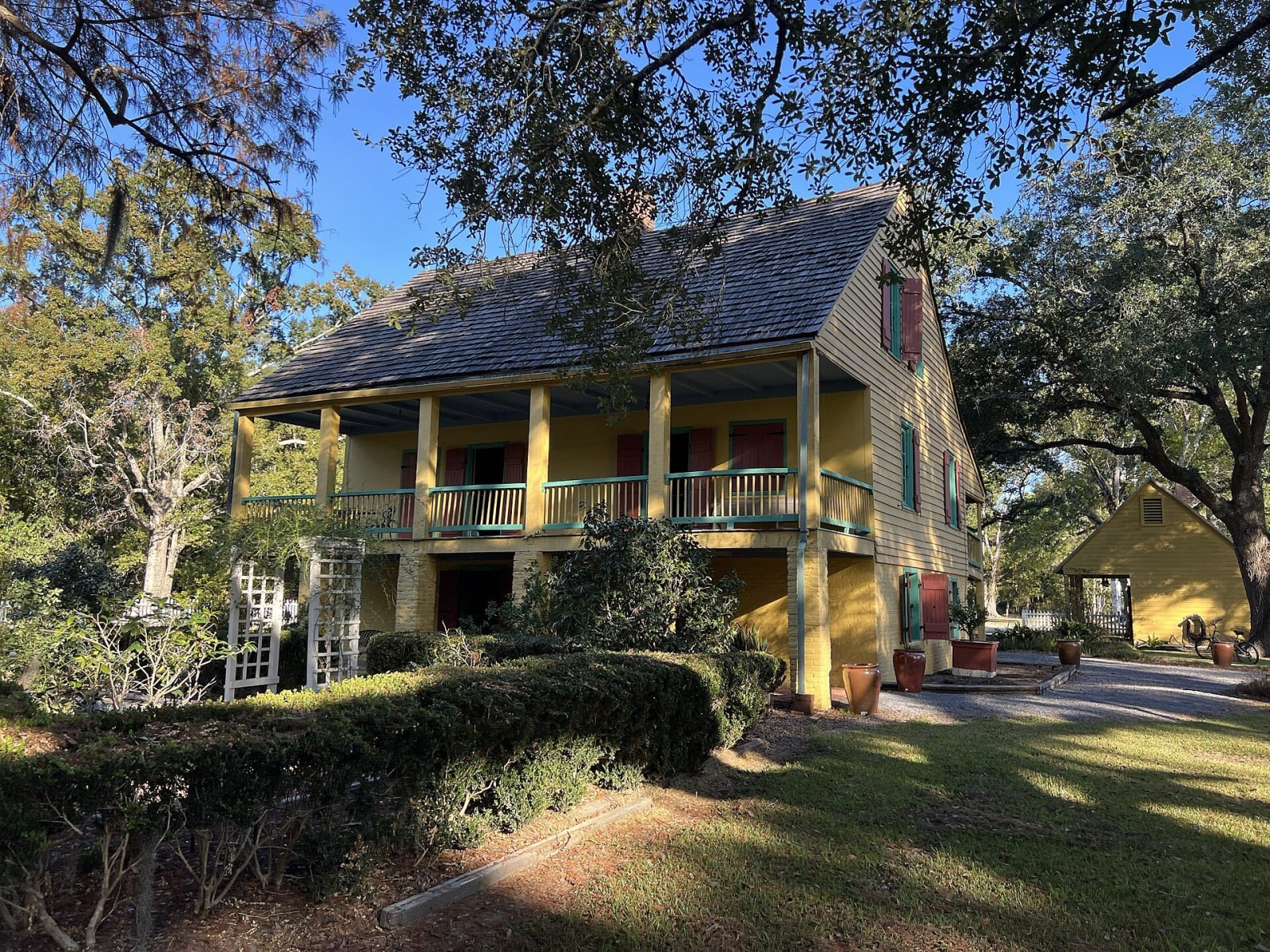
Maison Olivier, a raised Creole cottage, dates from about 1815. Pierre Olivier Duclozel de Vezin, a wealthy Creole, bought the property to raise cotton, cattle and eventually sugarcane, and his son Charles made improvements in the 1840s. A reproduction farmstead behind it shows a farm of about 1800, with an outdoor kitchen and bread oven, a barn, cattle and slave quarters. The state's interpretation names the people who shaped the Teche as Acadians, Creoles, Native peoples, Africans, enslaved people and free people of color, and the quarters stand as part of that account.
Longfellow's 1847 poem Evangeline made the 1755 expulsion of the Acadians known worldwide, and Judge Felix Voorhies's 1907 book Acadian Reminiscences tied the story to St. Martinville. The site opened as Louisiana's first state park in 1934, and Maison Olivier became a National Historic Landmark in 1974. It is at 1200 N. Main Street, open daily.
Visitor Info
On the Map
Nearby
The closest stops worth working into your route
Historical markers nearby
Roadside plaques and monuments within a short detour