 Elisa.rolle / CC BY-SA 4.0 via Wikimedia Commons
The Story
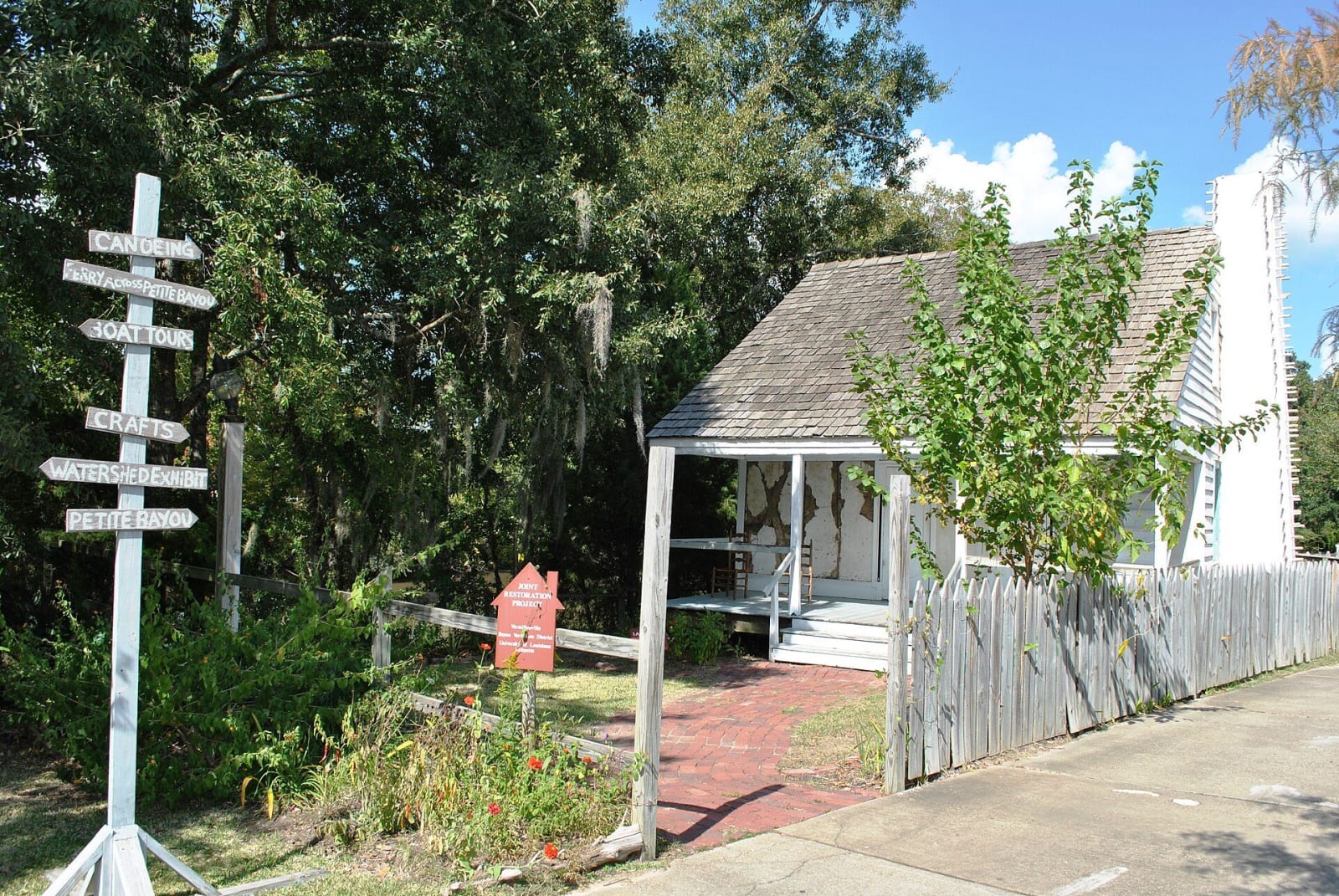
Vermilionville states its aim as increasing appreciation for the history, culture and natural resources of the Native Americans, Acadians, Creoles and peoples of African descent of the Attakapas region through the end of the 1800s. It opened in 1990 on about 23 acres along Bayou Vermilion, across from Lafayette Regional Airport, and holds seven historic homes that are either originals or replicas.
The Atakapa-Ishak, Choctaw, Chitimacha and Opelousa peoples were among the area's first inhabitants, and a Native trading outpost called Pinsahuk, or Pinhook, stood here before the town. The village includes a reconstructed Native American Common Ground, a trapper's cabin and boat shed, a schoolhouse and the Mouton Kitchen, with costumed interpreters, looms, a forge and spinning demonstrations. Sugar plantations here depended on enslaved Africans: in 1830 about 41 percent of Lafayette Parish was enslaved, and by 1860 about 49.6 percent. Free people of color were roughly 2.4 to 3 percent of the parish.
Creole here means a blend of French, African, Native American and Spanish peoples, and enslaved West Africans are part of the origin of jambalaya. Canoe and kayak launches on the bayou are part of the grounds, and La Cuisine de Maman, the village restaurant, can be visited with a ticket.
Visitor Info
On the Map
Nearby
The closest stops worth working into your route
Historical markers nearby
Roadside plaques and monuments within a short detour