Chaco & the Four Corners
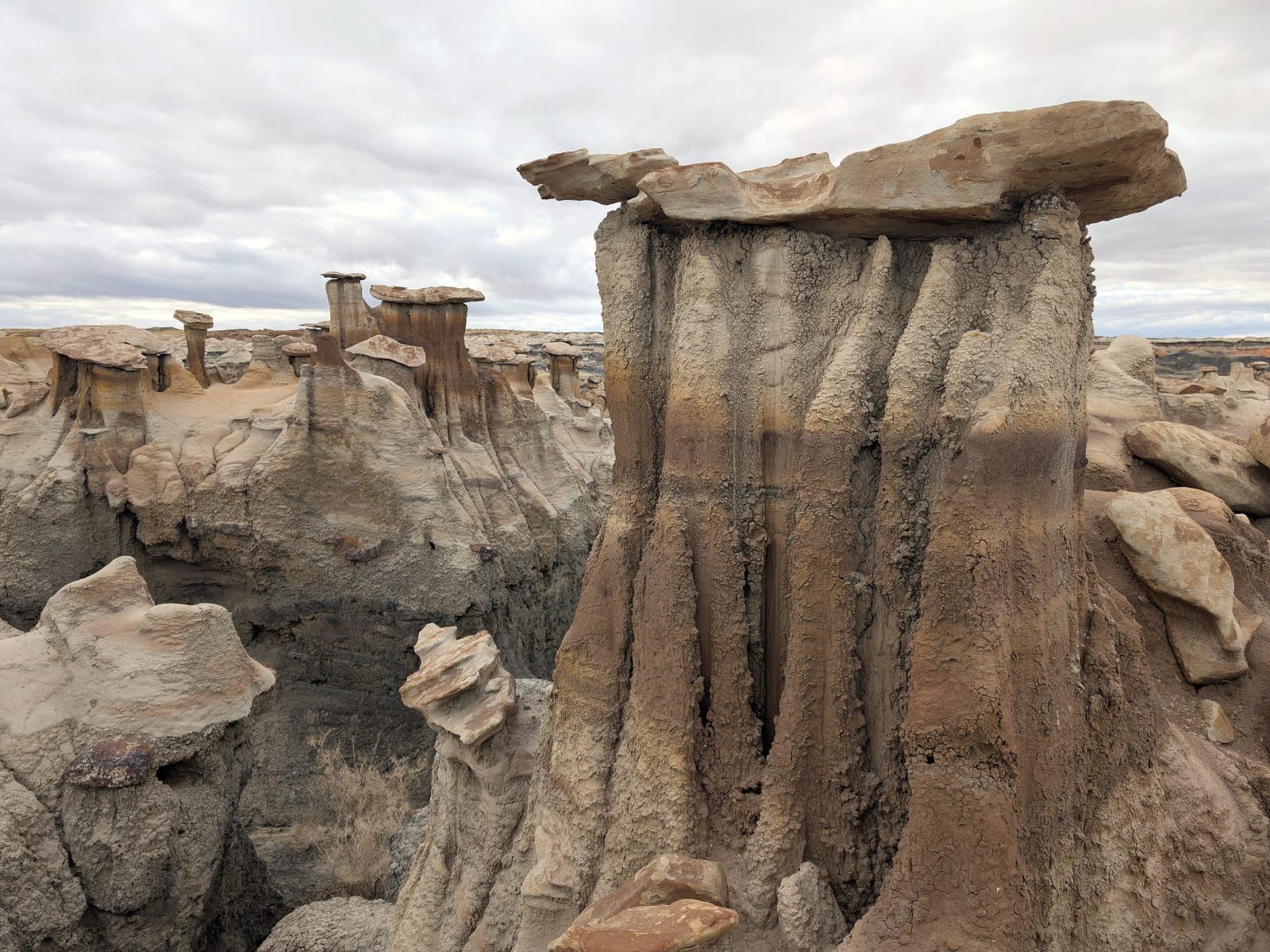
Chaco Canyon's great houses, Tsé Bitʼaʼí rising off the Diné plateau, Haak'u on its mesa, and the rock where Oñate carved his name in 1605.
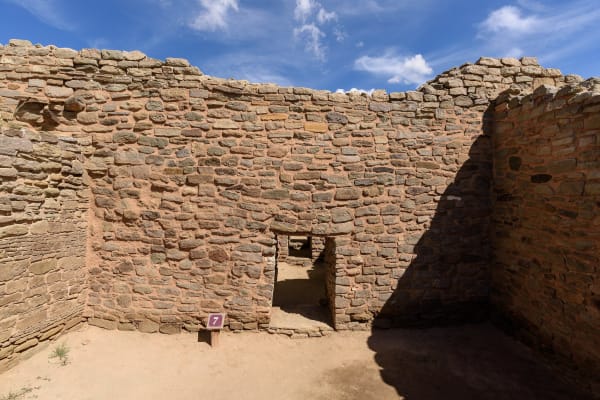
Between about 850 and 1150, Ancestral Puebloan people raised the great houses of Chaco Canyon, multistoried buildings of shaped sandstone with hundreds of rooms, laid out against the sun and the moon and joined to distant communities by straight roads cut across the desert. The Pueblos of the Rio Grande and the Hopi count the people of Chaco among their ancestors. To the northwest the plateau belongs to the Diné, and Tsé Bitʼaʼí, the rock with wings that the maps call Shiprock, stands up out of it alone.
South along the old trade routes are two of the oldest communities in the country. The A:shiwi, the Zuni people, met the first Spanish expedition at Hawikku in 1539 and killed its guide, Esteban; Coronado came the next summer. At Haak'u, which the maps call Acoma, people have lived on top of a sandstone mesa for some nine hundred years. In 1599, after Acoma fighters killed a party of his soldiers, Juan de Oñate had the pueblo attacked, hundreds of its people killed, and every surviving man over twenty-five sentenced to lose a foot.
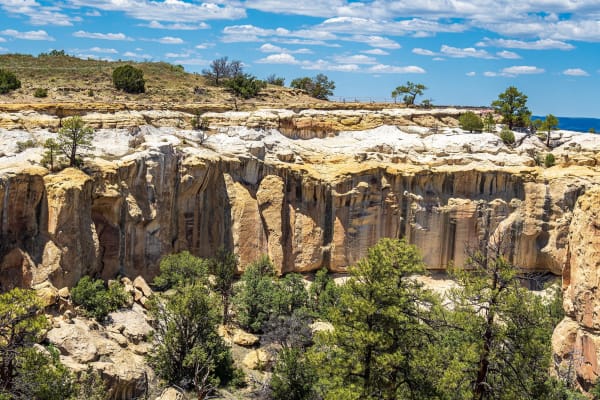
Oñate passed by El Morro six years later and carved his name into the sandstone above its pool, among petroglyphs far older than his. Travelers added theirs for the next two and a half centuries, Spanish governors, soldiers and, after 1849, Americans heading west. Gallup grew up on the railroad and Route 66 as the trading town for the Navajo Nation and Zuni, and still is.
What to See in Chaco & the Four Corners
5 places across the region, grouped by what they are.
Geology & Rock Formations
Historic Sites

Towns & Gateways
Scenic Drives through Chaco & the Four Corners
Stories from Chaco & the Four Corners
Chaco & the Four Corners rewards the unhurried. Pick a base, fan out, and let the country between the headline stops surprise you.
← Explore more of Open Road Guide