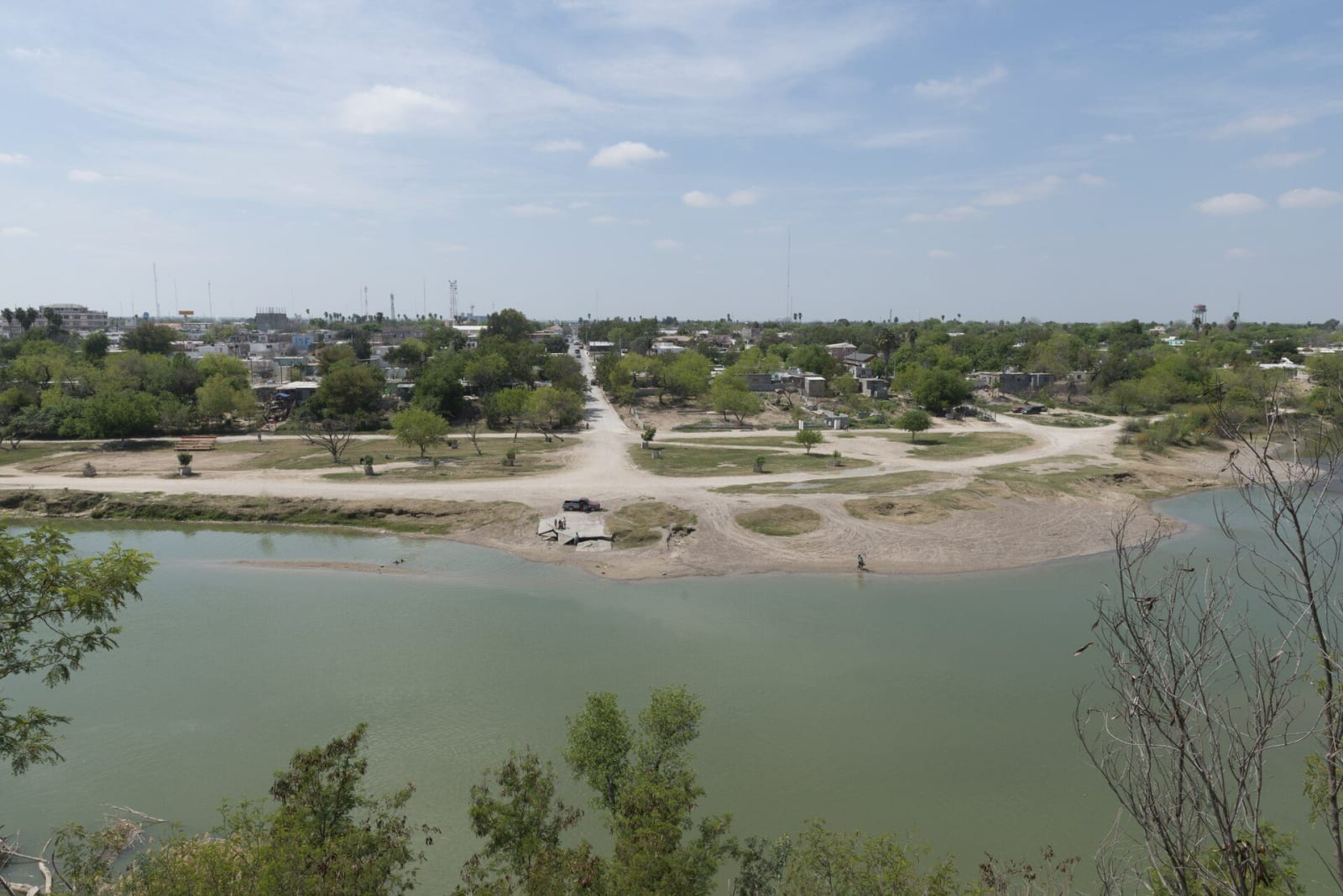
The Rio Grande curving below the bluffs at Roma, with the Mexican town of Ciudad Miguel Alemán spread along the far bank under a pale blue sky.
Carol M. Highsmith / public domain via the Library of Congress
Texas · Region

Brownsville, McAllen & the Lower Rio Grande Valley

Palo Alto Battlefield, Stillman House, Port Isabel Lighthouse, Laguna Atascosa, Santa Ana, Bentsen, La Lomita, Roma, Falcon State Park, Edinburg and Sarita.

11 places to explore

The lower Rio Grande was Comecrudo and Carrizo country, where bands hunted and gathered on both banks before Spanish ranchers came in the 1700s. The river forest they knew survives at Santa Ana, once Benigno Leal's 1834 grant, and at Bentsen, cut from a 1767 porción. Oblate missionaries rode ranch circuits from La Lomita, and steamboats made Roma a bluff-top port from about 1829 into the 1880s.

The border here was settled by war. On May 8, 1846, Taylor's flying artillery met Arista's army at Palo Alto, and the siege of Fort Texas, renamed Fort Brown, ended the next day at Resaca de la Palma. Charles Stillman laid out Brownsville in 1848, the county seat a year later, and built the house that is now a museum. The Port Isabel lighthouse, finished in 1852, served the supply depot and the Brazos Santiago trade.

Ranching and water came next. Mifflin Kenedy fenced 131,000 acres in 1868, and his family's ranch museum stands at Sarita, where Sarita Kenedy East's death in 1961 left much of the estate to a foundation. Falcon Dam, dedicated in 1953, flooded riverside towns and made a lake with a state park. Laguna Atascosa holds 417 bird species and the ocelot, and Edinburg's museum fills a 1910 jail with the valley's story.

What to See in Brownsville, McAllen & the Lower Rio Grande Valley

11 places across the region, grouped by what they are.

Natural Areas
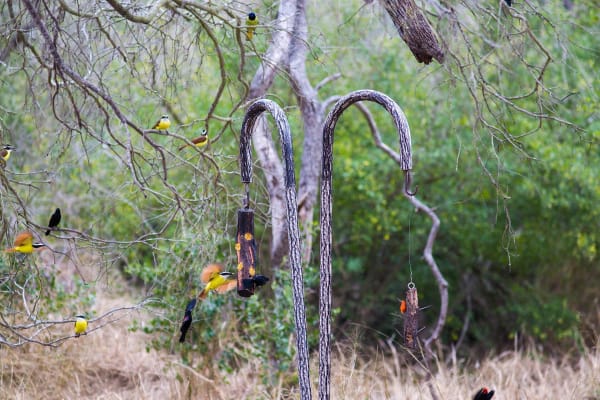
Great kiskadees and other birds perched in a bare mesquite and flying around two hanging feeders at a feeding station in Bentsen-Rio Grande Valley State Park.

Bentsen-Rio Grande Valley State Park

Mission

A 587-acre stand of Rio Grande woodland near Mission, once part of a Spanish porción, given to the state by the Bentsen family in 1944 and now headquarters of the World Birding Center.

View details →
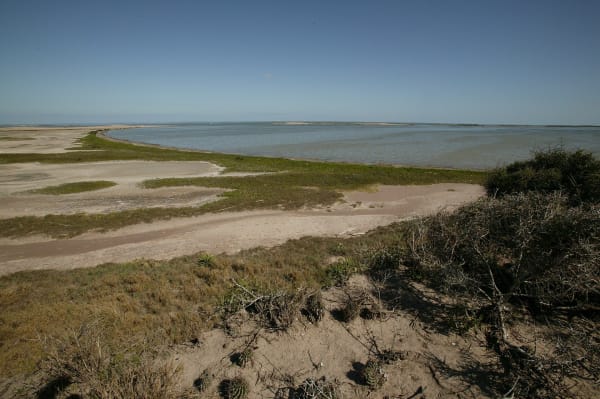
A wide view of the Bahia Grande shore at Laguna Atascosa, with a grassy sand flat curving along shallow water under a clear blue sky and thorny brush in the foreground.

Laguna Atascosa National Wildlife Refuge

Los Fresnos

A coastal refuge set up in 1946 for wintering redhead ducks, with 417 bird species recorded and, by the Fish and Wildlife Service's account, the largest ocelot population in the United States.

View details →
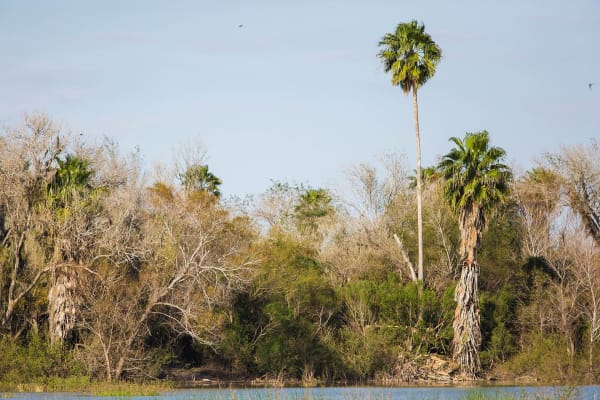
Tall Texas sabal palms and leafless brush rising above a lake edge in Santa Ana National Wildlife Refuge under a pale blue sky.

Santa Ana National Wildlife Refuge

Alamo

About 2,000 acres of river forest on the Rio Grande's north bank, the surviving part of Benigno Leal's 1834 land grant, kept as a refuge since 1943 where two bird migration routes meet.

View details →

Hikes & Trails

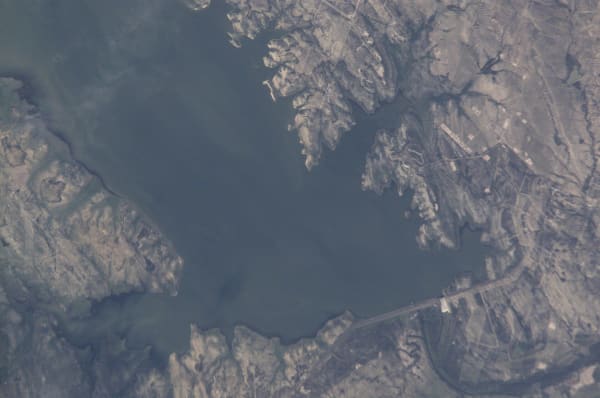
An astronaut photograph from the International Space Station looking straight down on Falcon Reservoir, with the dam running across the lower right corner and the lake edged by dry brushland.

Falcon State Park

Falcon Heights

A 576-acre state park at the foot of the Falcon International Reservoir, made by the dam Presidents Eisenhower and Ruiz Cortines dedicated in 1953, known for bass fishing, camping and brush-country birds.

View details →

Historic Sites

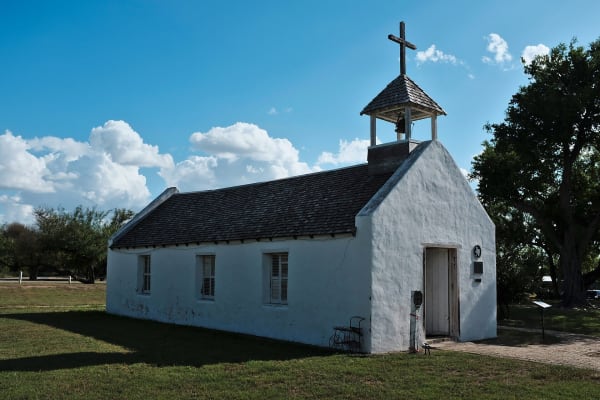
The whitewashed La Lomita Chapel with its dark shingle roof, small open bell tower and cross, seen from the front corner across a lawn with a large tree beside it.

La Lomita Chapel

Mission

A small sandstone chapel on the Rio Grande levee, built by Oblate missionaries in 1865 and rebuilt at this site in 1899, the landmark that gave the city of Mission its name.

View details →
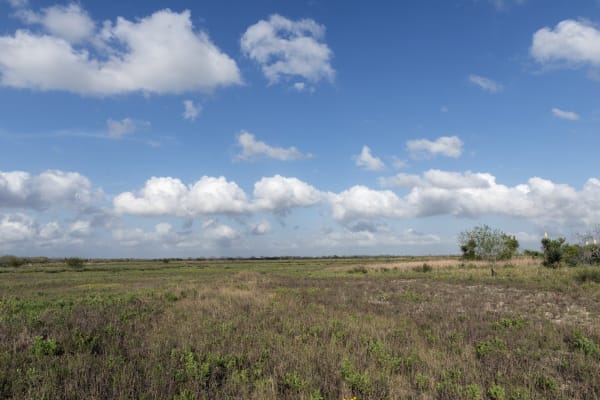
The open coastal prairie of Palo Alto Battlefield, low grass and scrub under a wide sky of cumulus clouds, with a few trees on the horizon.

Palo Alto Battlefield National Historical Park

Brownsville

A flat coastal prairie north of Brownsville where Taylor's army and Arista's Army of the North fought the first major battle of the Mexican War on May 8, 1846, now interpreted from both sides.

View details →
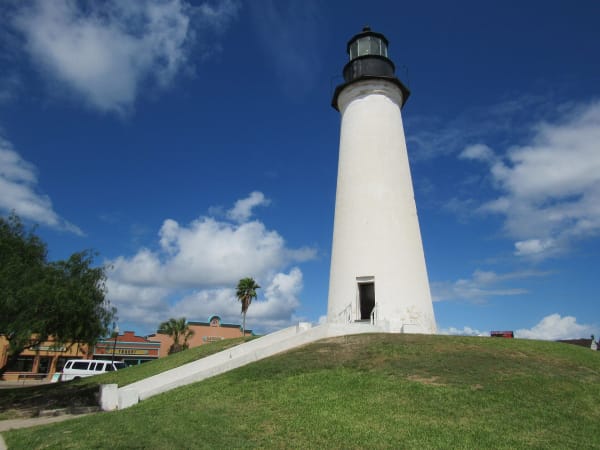
The white brick Port Isabel Lighthouse rising from a grassy mound under a deep blue sky, its black lantern room at the top and shops and palm trees at its foot.

Port Isabel Lighthouse State Historic Site

Port Isabel

A 72-foot brick tower finished in 1852 for the Brazos Santiago shipping lane, dark from 1905 until a reproduction lens was lit in 2022, and the only Texas lighthouse open to the public.

View details →
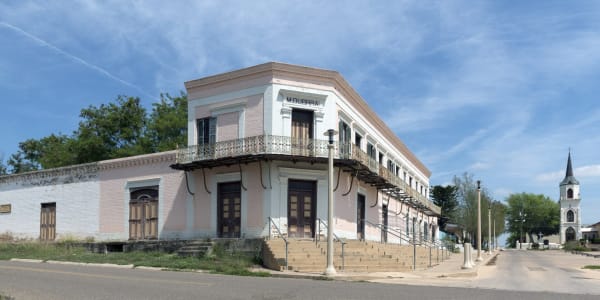
The two-story Manuel Guerra building in Roma, pink and white with an iron balcony and wide front steps, and the white tower of Our Lady of Refuge church at the end of the plaza.

Roma Historic District

Roma

A bluff-top Rio Grande steamboat port, now a National Historic Landmark District where Heinrich Portscheller's molded brick and walled stone compounds face Ciudad Miguel Alemán across the river.

View details →
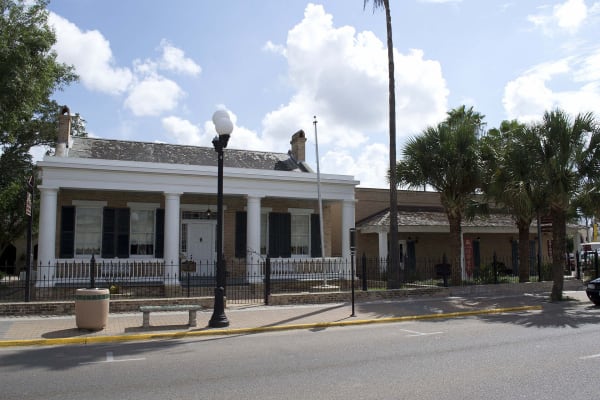
The Greek Revival Stillman House in Brownsville, a brick house with a white-columned front porch and dark shutters, with palms and a street in front.

Stillman House Museum

Brownsville

The 1850 Greek Revival house of Charles Stillman, who laid out Brownsville in 1848 beside the army's Fort Brown, and for a century the home of the Treviño family.

View details →

Towns & Gateways

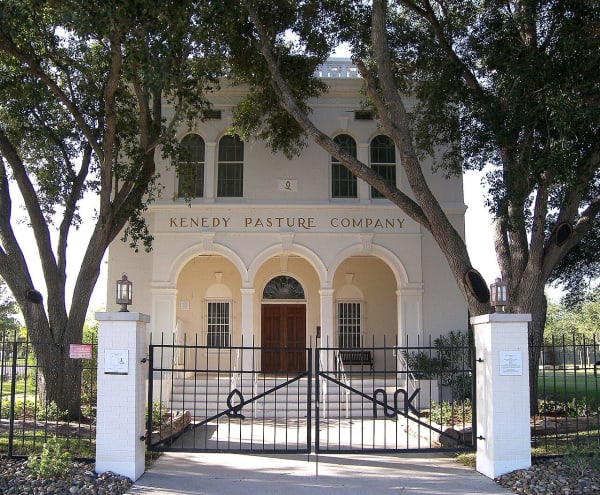
The cream-colored two-story Kenedy Pasture Company building in Sarita, with three arched porch openings, the company name across the front and an iron gate with the Kenedy brand, shaded by live oaks.

Kenedy Ranch Museum of South Texas

Sarita

A museum in the Kenedy Pasture Company's 1927 office in Sarita, telling how Mifflin Kenedy and three generations of his family shaped the Wild Horse Desert, with murals and an audio guide.

View details →
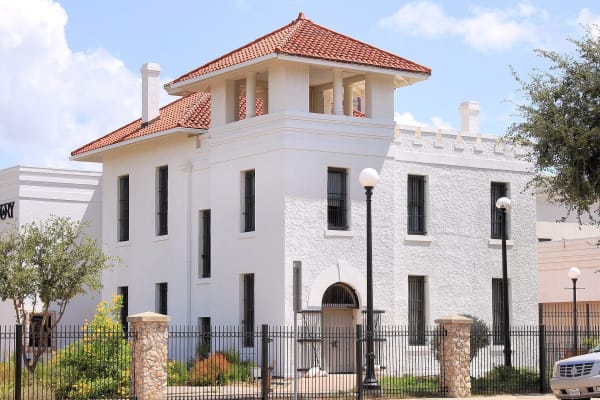
The old Hidalgo County jail in Edinburg, a white stuccoed two-story building with barred windows, a red tile roof and an open tower, behind an iron fence.

Museum of South Texas History

Edinburg

Edinburg's regional museum, begun in 1967 in the 1910 Hidalgo County jail and now telling the Rio Grande's story from fossils and native peoples through steamboats to the 20th century.

View details →

Brownsville, McAllen & the Lower Rio Grande Valley rewards the unhurried. Pick a base, fan out, and let the country between the headline stops surprise you.

← Explore more of Open Road Guide