 25or6to4 / CC BY-SA 3.0 via Wikimedia Commons
The Story
Charles Stillman was born in Wethersfield, Connecticut, in 1810 and reached Matamoros in 1828. There he built a web of businesses: cotton brokerage, real estate, a river shipping company, a freight line into the Mexican interior. In 1848 he bought part of the Garza grant north of the river, and with Samuel Belden laid out Brownsville beside the army post that Taylor's soldiers had named for Major Jacob Brown. The town company began selling lots that December, Brownsville became the Cameron County seat on January 13, 1849, and by 1850 it held three or four thousand people.
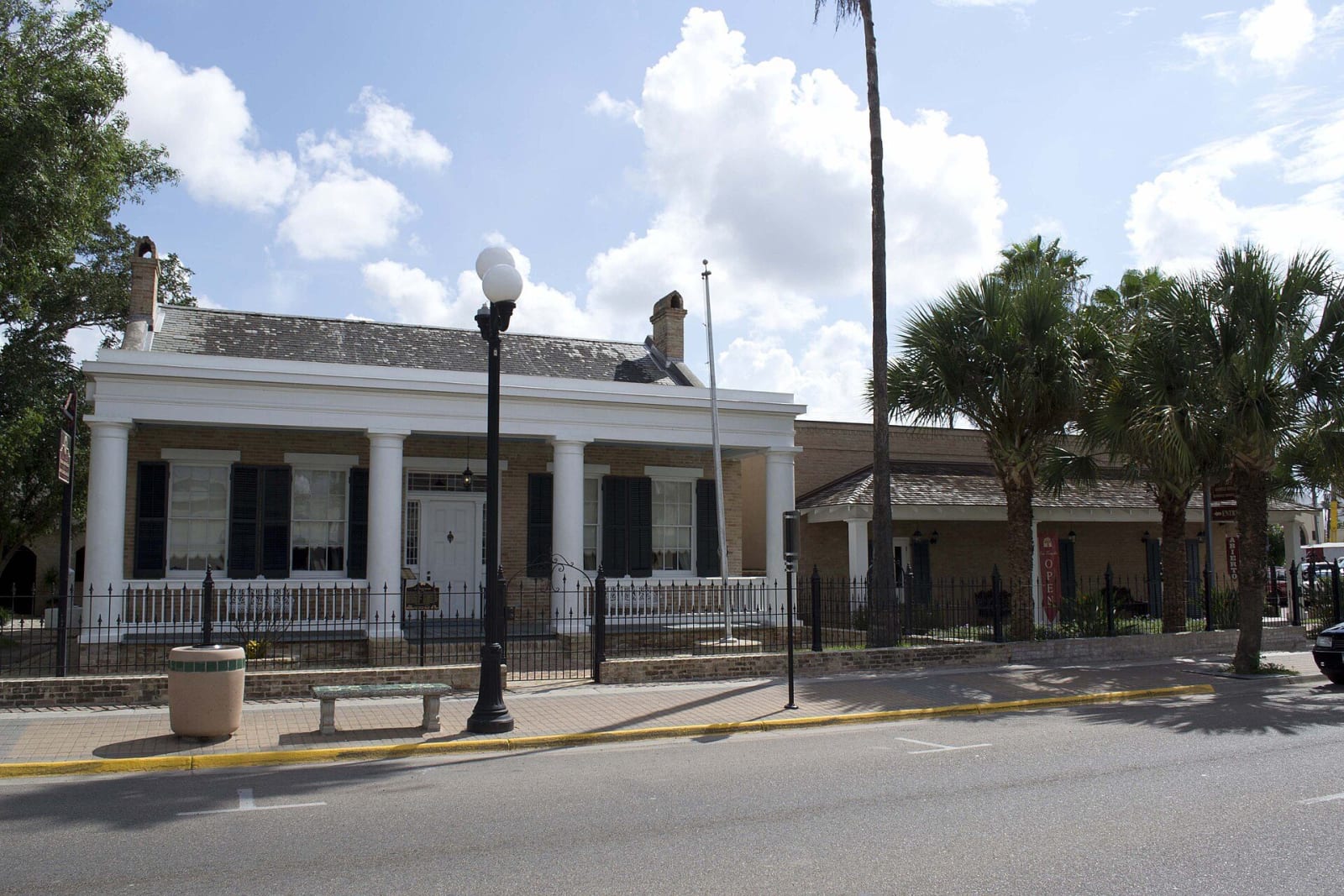
The house went up that year in the Greek Revival style, built by Henry Miller, who ran the nearby Miller Hotel, for Stillman and his bride Elizabeth. They lived in it until 1853. Miller sold it in 1858 to the merchant Manuel Treviño de los Santos Coy, and the Treviño family kept it until 1958. A historical marker records that Porfirio Díaz was entertained here in 1876 while planning his revolt, and that the house later served as the Mexican consulate.
From 1862 to 1865 Stillman, Richard King and Mifflin Kenedy carried Confederate cotton to Matamoros for gold. Stillman moved to New York for good in 1866, and his son James later controlled National City Bank. In 1958 Stillman's great-grandson Chauncey bought the house, restored it and gave it to the city. The Brownsville Historical Association runs it as a museum.
Visitor Info
On the Map
Nearby
The closest stops worth working into your route
Historical markers nearby
Roadside plaques and monuments within a short detour