 Andres Gonzalez / CC BY-SA 4.0 via Wikimedia Commons
The Story
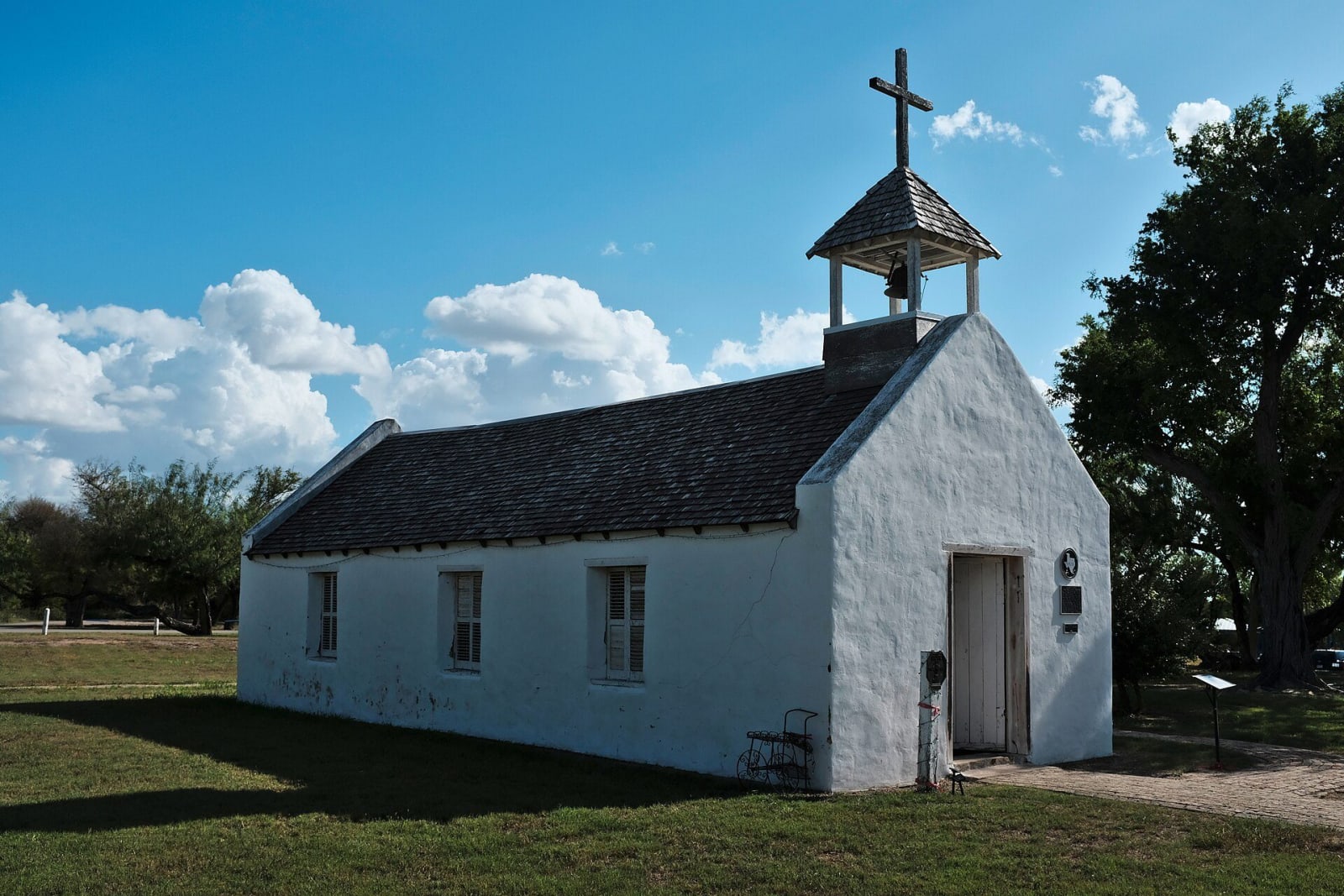
La Lomita means the little hill, a low rise in the flat river valley. Oblates of Mary Immaculate made pastoral stops at the ranch from at least 1852, and in 1861 two of them, Fathers Pierre-Fourier Parisot and Pierre-Yves Kéralum, received it as a gift: about twenty square miles. Missionaries on horseback, called the Cavalry of Christ, rode circuits of the ranches between Brownsville and Roma, and in 1865 they built a small chapel and quarters as a stop in the middle of the valley. The plaza grew to hold a store, stables, a blacksmith shop, about a dozen vaquero huts and a Wells Fargo station on the Brownsville-Laredo line.
After the Rio Grande shifted course, the settlement was rebuilt on its present ground in 1899. The first chapel measured 12 by 24 feet and was later lengthened to 40, with sandstone walls nearly two feet thick. A hurricane in 1933 destroyed most of the outbuildings; the chapel, an outdoor oven and a well survived. The Oblates sold 17,000 acres in 1907, the city of Mission was laid out on the old ranch and named for the chapel, and the order's novitiate moved to Sarita in 1961. The chapel is a Recorded Texas Historic Landmark and is on the National Register of Historic Places.
In October 2018 the federal government sued to take land around the chapel for a border barrier, and the local Catholic diocese contested the taking on religious-freedom grounds. In February 2019 Congress barred new barrier funds at La Lomita. The grounds are a park kept by the city of Mission.
Visitor Info
On the Map
Nearby
The closest stops worth working into your route
Historical markers nearby
Roadside plaques and monuments within a short detour