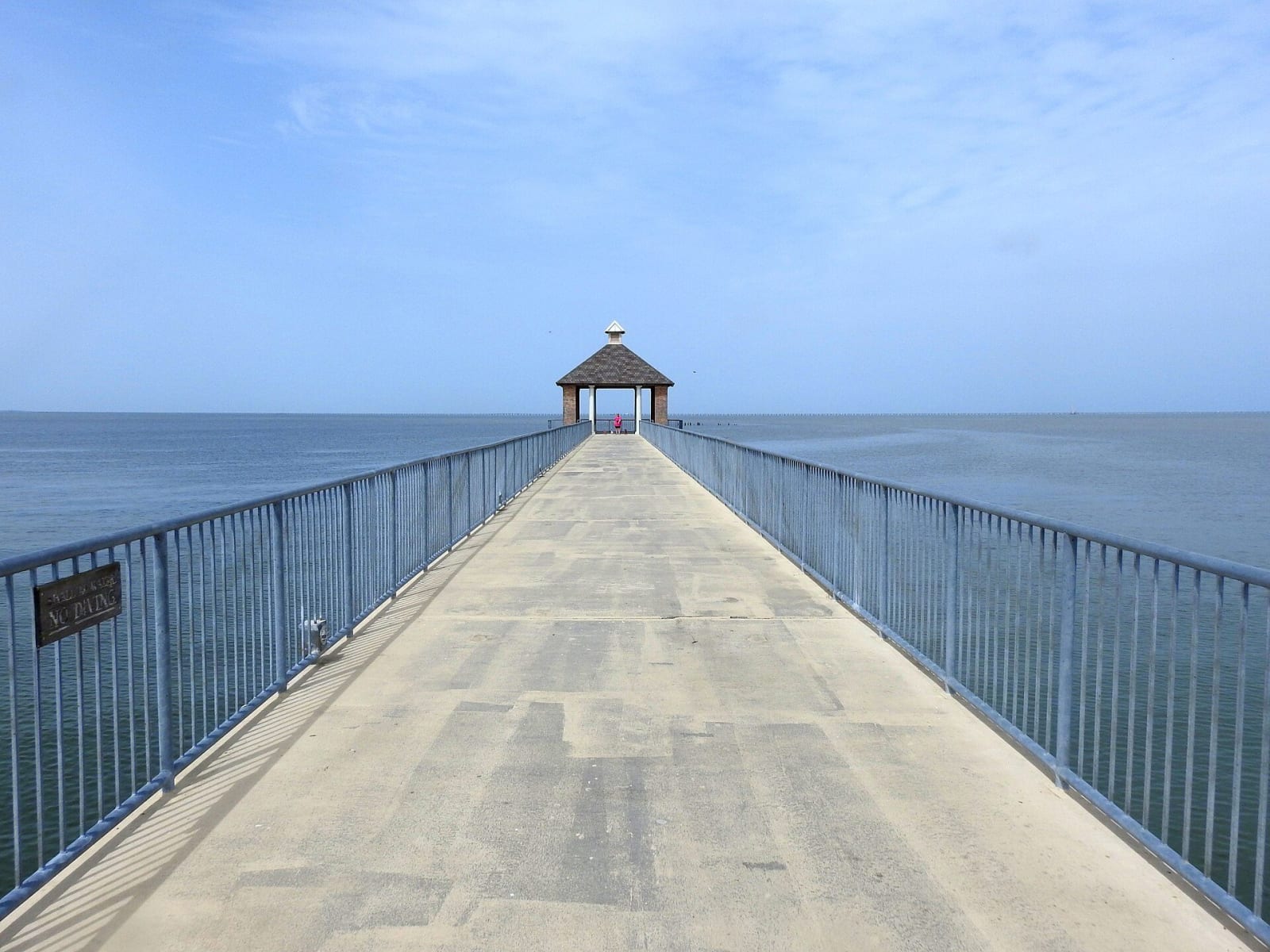
A long concrete pier running straight out over the flat blue water of Lake Pontchartrain at Fontainebleau State Park, with a small brick-pillared gazebo at its end under a pale sky.
Mark Holloway / CC BY 2.0 via Wikimedia Commons
Louisiana · Region

Baton Rouge, the Northshore & Plantation Country

Houma ground at the red pole, Tchefuncte and Choctaw shores, plantation cabins and records, Port Hudson's siege, two Baton Rouge capitols and a river swamp park.

10 places to explore

The Houma and the Bayougoula marked their hunting grounds with a red-stained pole on the Mississippi bluff in 1699, and the French named Baton Rouge for it; the Native name for the place was Istrouma. The Houma moved south after 1706, and the United Houma Nation was recognized by Louisiana in 1977. Farther east, the Tchefuncte lived on Cane Bayou 2,500 years ago, the Acolapissa settled on Bayou Castine in 1702 before the Houma took them in, and Choctaw families stayed on at Lacombe, all of it told at Fontainebleau State Park.

The river parishes ran on enslaved labor, and these places say so. Rosedown's 1862 succession list names Old Jim, Old Adam, Grace and Aggy. Oakley's two cabins belong to four Black families followed over a century, the Rural Life Museum keeps four cabins from Welham, and Marigny's plantation held 153 people in 1840. At Port Hudson in 1863 the Louisiana Native Guards went in on May 27, and Angola's museum shows how convict leasing took slavery's place.

Baton Rouge holds the state's politics in two buildings, Dakin's 1850 castle and Huey Long's 450-foot tower of 1932, with the Capitol Park Museum nearby. Tickfaw State Park offers a river floodplain to walk, with four ecosystems and an aquarium of Tickfaw River fish.

What to See in Baton Rouge, the Northshore & Plantation Country

10 places across the region, grouped by what they are.

Natural Areas
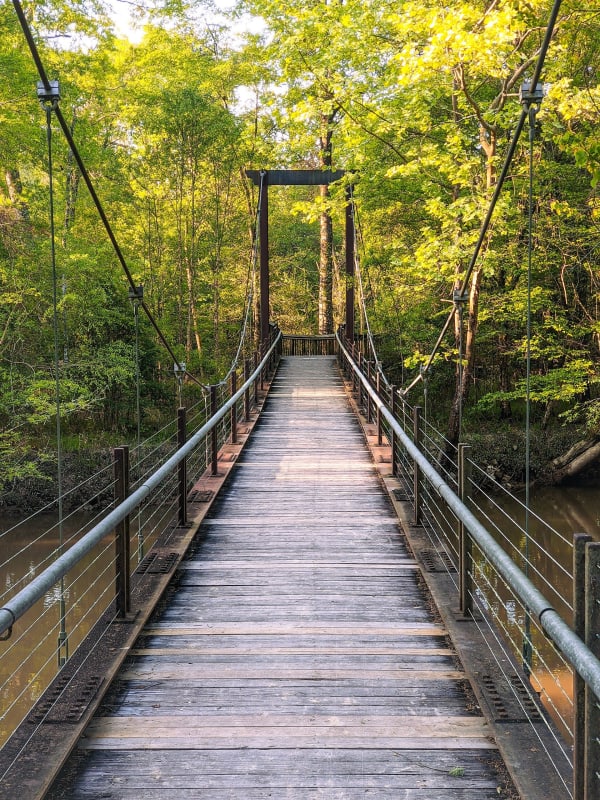
A wooden-decked suspension footbridge with steel cables stretching ahead through green spring woodland, with brown river water below on both sides.

Tickfaw State Park

Springfield

A floodplain park on the Tickfaw River, with cypress-tupelo swamp, bottomland hardwoods and about 4.75 miles of trails and boardwalks, plus a nature center with an 800-gallon river aquarium.

View details →

Historic Sites

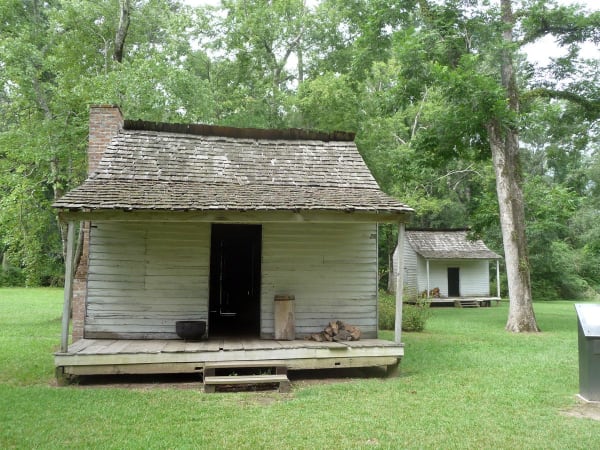
Two weathered white board cabins with shingle roofs, one in the foreground with a brick chimney and a cast-iron pot on its porch, and the second small cabin beyond it on a mown lawn.

Audubon State Historic Site

St. Francisville

Oakley House, where Audubon taught drawing and painted 32 birds in 1821, and the two cabins behind it where four Black families lived through slavery, Reconstruction and Jim Crow.

View details →
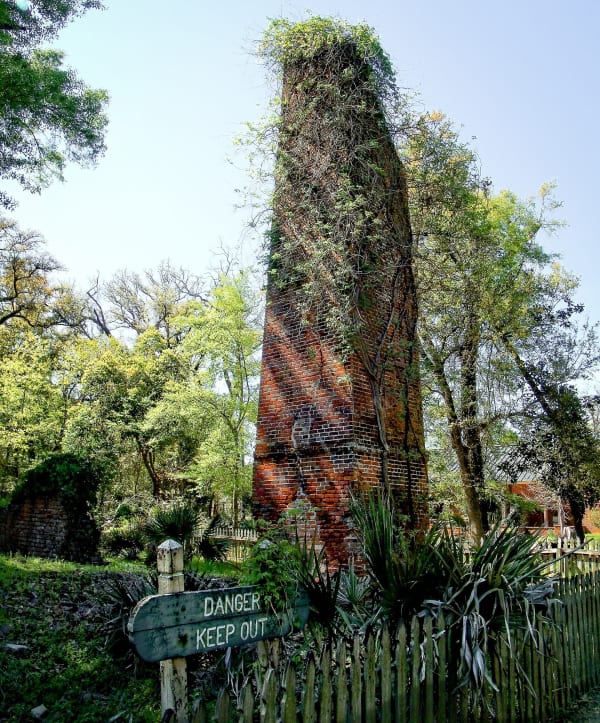
A tall brick sugar-mill chimney ruin rising above a picket fence and wild vines, with a hand-lettered DANGER KEEP OUT sign at its foot and green trees behind.

Fontainebleau State Park

Mandeville

Lakeshore park on the Northshore where Tchefuncte potters, Acolapissa and Choctaw lived, and where 153 people were enslaved at Marigny's sugar and brick plantation by 1840; the mill ruin still stands.

View details →

Louisiana State Penitentiary Museum

Angola

The Angola museum outside the penitentiary gate, opened in 1997 on the history of crime and punishment in Louisiana, on ground where convicts were leased out as what 64 Parishes calls legal slave labor.

View details →
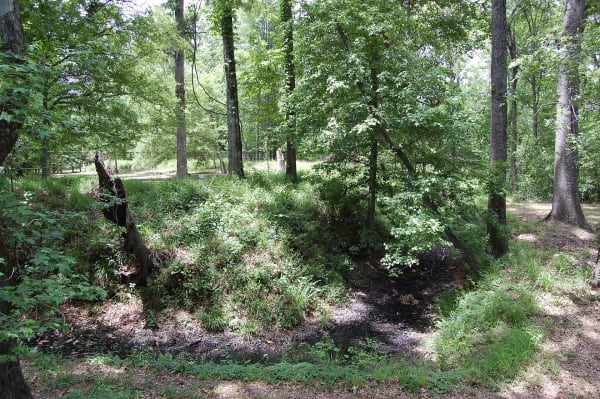
A grassed earthwork bank and a dry ditch in open hardwood forest at Port Hudson, the Fort Desperate works seen from outside, with sunlit woods beyond.

Port Hudson State Historic Site

Jackson

The 48-day siege of 1863 on the Mississippi bluffs, where the Louisiana Native Guards and Captain Andre Cailloux led the first assault; earthworks, a six-mile trail and a museum.

View details →
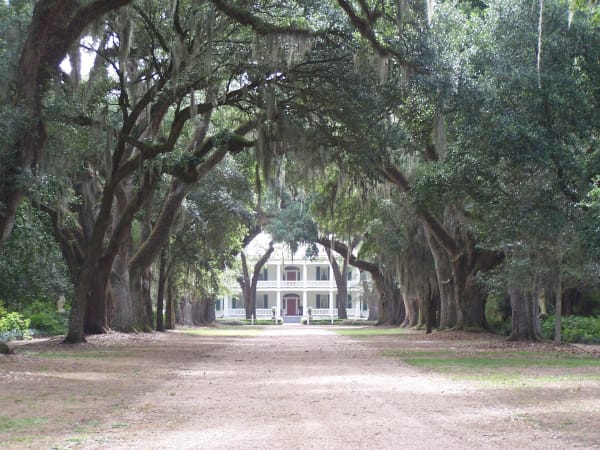
The white two-story front of Rosedown seen down a long avenue of live oaks hung with Spanish moss, with a pale gravel drive in the foreground.

Rosedown Plantation State Historic Site

St. Francisville

A cotton plantation worked by hundreds of enslaved people, whose names survive in an 1862 succession list; the Turnbull house and gardens, and the quarters nobody has yet found.

View details →

Towns & Gateways

Capitol Park Museum

Baton Rouge

The Louisiana State Museum in Baton Rouge: a shrimp trawler and a Civil War submarine, galleries on the slave market, resistance and Jim Crow, and the music from Armstrong to Chenier.

View details →
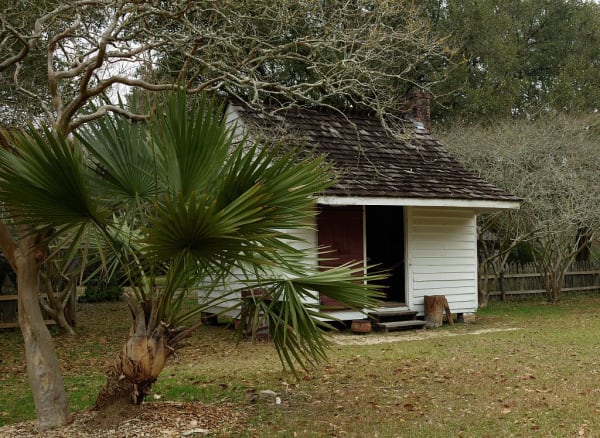
A small white-board cabin with a shingled roof and a brick chimney, its dark doorway open, seen past a sabal palm on a grassy lawn with oaks behind.

LSU Rural Life Museum

Baton Rouge

Four slave cabins moved from Welham Plantation and a working-plantation row of more than twenty saved buildings, on land the Burden family held as Windrush plantation since the 1830s.

View details →

Architecture

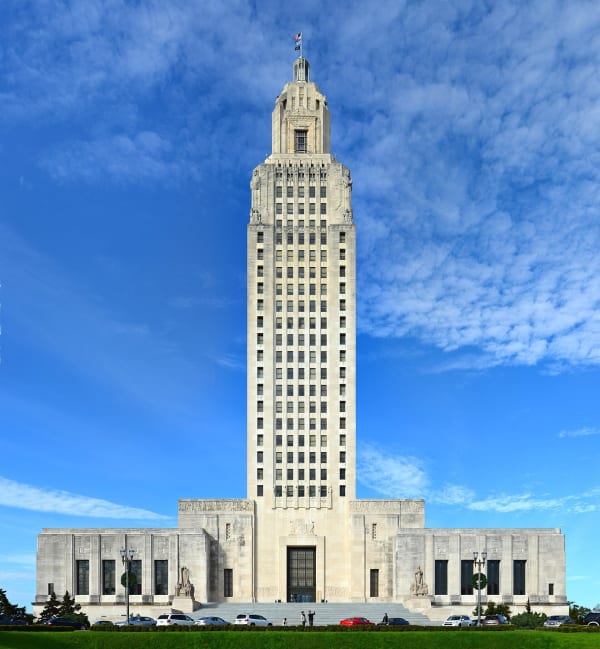
The Louisiana State Capitol seen from the front lawn, a pale limestone Art Deco tower rising from a low base against a blue sky with thin cloud.

Louisiana State Capitol

Baton Rouge

A 450-foot Art Deco tower Huey Long pushed through in 1930, finished in 14 months, and the hallway where he was shot in 1935; free to enter and ringed by 27 acres of grounds.

View details →
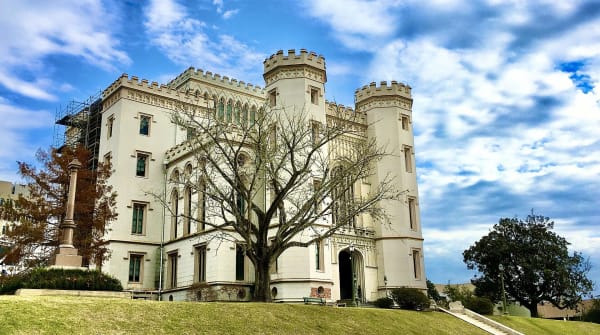
The white crenellated towers and pointed windows of the Old Louisiana State Capitol on its grassy rise, with a bare tree in front and scaffolding at the left corner.

Old State Capitol

Baton Rouge

James Dakin's 1850 Gothic castle on the river bluff, gutted in the Civil War, nearly demolished in 1991 and reopened in 1994 as a free museum of political history.

View details →

Scenic Drives through Baton Rouge, the Northshore & Plantation Country

Scenic Byway

The Great River Road in Louisiana: New Orleans to Baton Rouge

About 121 miles of the Louisiana Great River Road, from Congo Square past Destrehan and Whitney to Baton Rouge and the LSU Rural Life Museum.

121 mi · 3.2 hrs

Stories from Baton Rouge, the Northshore & Plantation Country

History

Eight Days in Baton Rouge

In June 1953 Black riders in Baton Rouge stayed off the city buses for eight days and ran their own free car pool. Two and a half years later Martin Luther King Jr. called its leader for advice.

3 min read

Baton Rouge, the Northshore & Plantation Country rewards the unhurried. Pick a base, fan out, and let the country between the headline stops surprise you.

← Explore more of Open Road Guide