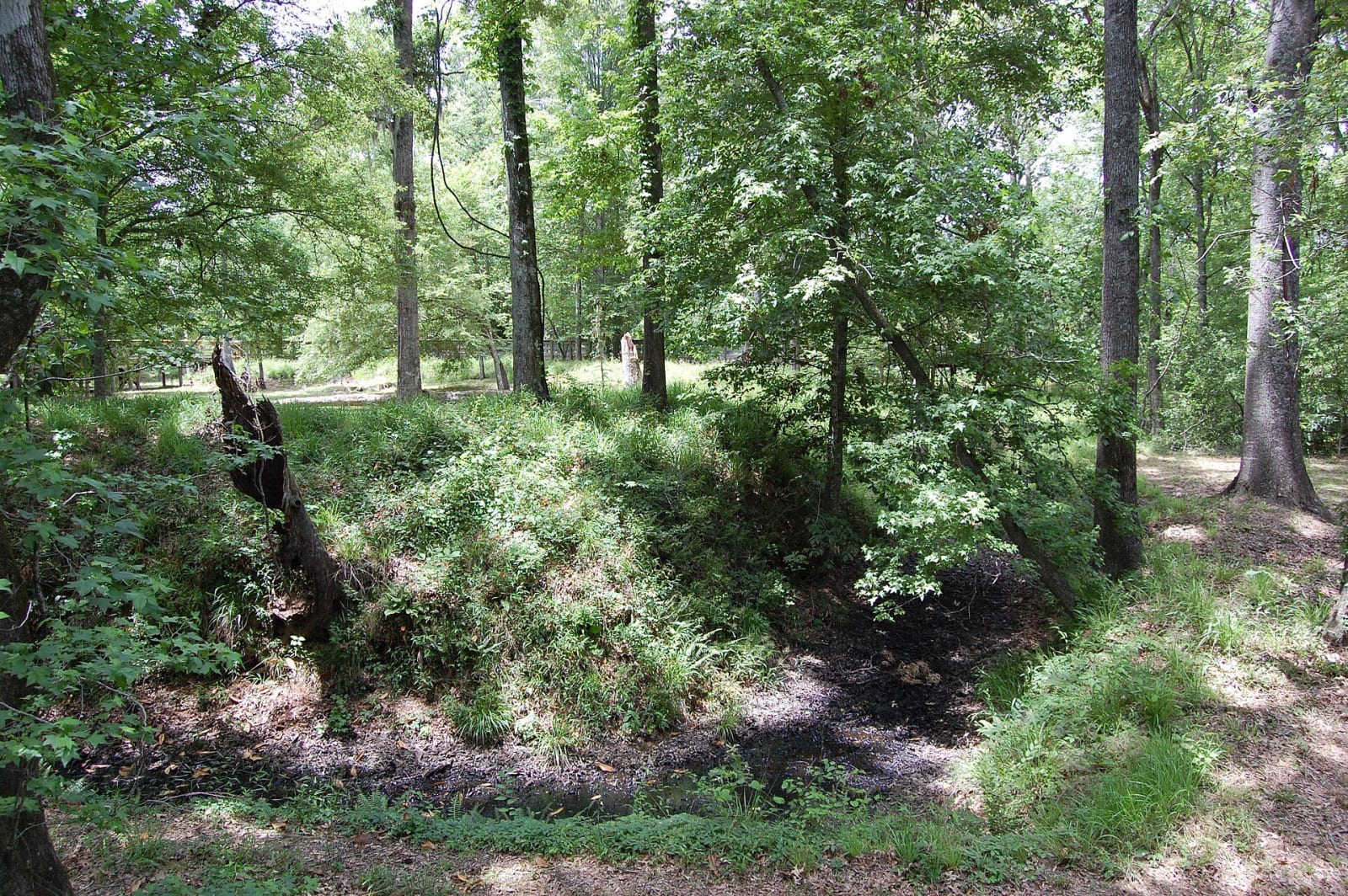
 Kkmurray / CC BY-SA 3.0 via Wikimedia Commons
The Story
Port Hudson was a Confederate stronghold on the Mississippi bluffs, and its siege lasted 48 days, ending on July 9, 1863. About 30,000 Union troops under Maj. Gen. Nathaniel Banks faced 6,800 Confederates under Maj. Gen. Franklin Gardner. The defenders nearly ran out of ammunition and were reduced to eating mules, horses and rats, and the Union side lost roughly 4,000 men to disease or sunstroke. Gardner surrendered after learning that Vicksburg had fallen.
The place matters for what Black soldiers did there. On May 27, 1863, the First and Third Louisiana Native Guards, two Black regiments, were sent into an attack on a fortified position along Telegraph Road. Their own officers had not planned to use them, and they advanced under rifle and artillery fire until forced back. Capt. Andre Cailloux, a free Black man of New Orleans, led them forward, giving orders in English and French, until he was killed. His death became a rallying cry for recruiting Black soldiers, and after the surrender the Port Hudson garrison served as a recruiting center.
The site, at 236 US-61 in Jackson, has been a National Historic Landmark since 1974. It keeps a six-mile hiking trail, a boardwalk through the earthworks and a museum on the siege. It is open daily from 9 a.m. to 5 p.m. and closed Thanksgiving, Christmas and New Year's Day. Admission is $6 for ages 7 to 61 and $4 for seniors, as listed in 2026.
Visitor Info
On the Map
Nearby
The closest stops worth working into your route
Historical markers nearby
Roadside plaques and monuments within a short detour