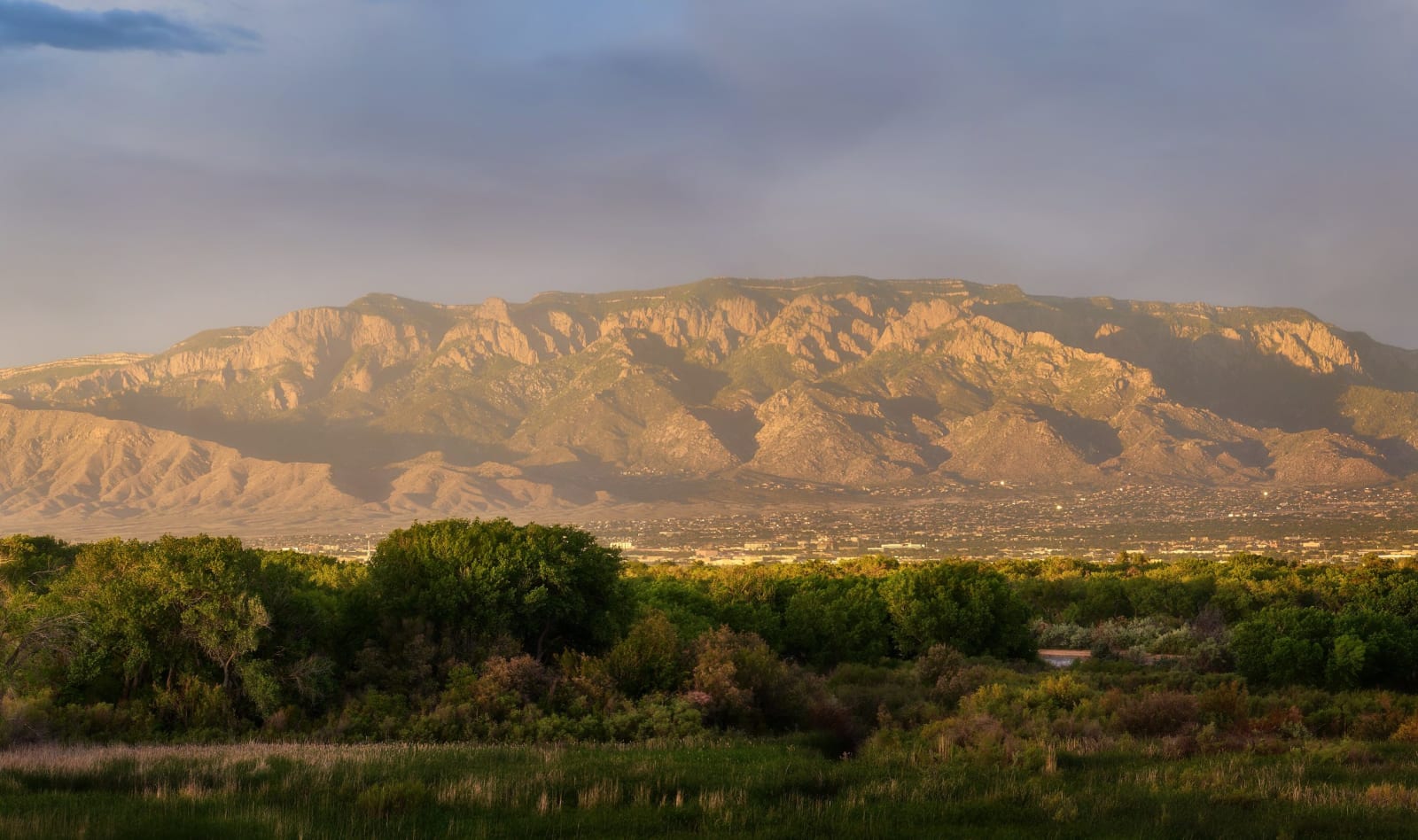
Albuquerque & the Middle Rio Grande
The Tiguex pueblos Coronado wintered among, Route 66 down Central Avenue, the Salinas missions left in the 1670s, sandhill cranes, and the Trinity Site.
The Tiwa pueblos along this stretch of the Rio Grande were the first Coronado's army wintered among, in 1540, and the first it went to war with when it seized their food and houses. Sandia and Isleta Pueblos are their living descendants. Albuquerque was founded beside the river in 1706 and named for a Spanish duke, and its Old Town plaza still sits at the center of the colonial grid.
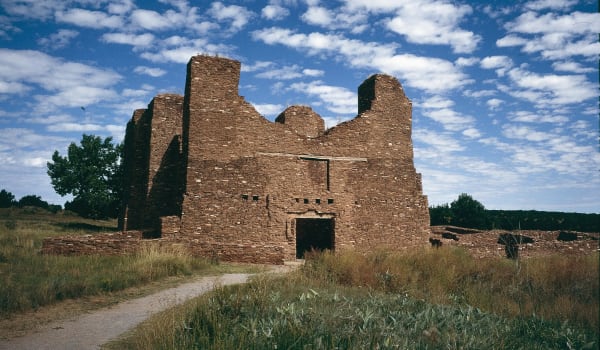
Route 66 came through twice. The first alignment ran north and south down Fourth Street; after 1937 the road was straightened to run east and west along Central Avenue, and the motels and neon signs are still there. East of the Manzano Mountains the Salinas Pueblo Missions stand roofless at Abó, Quarai and Gran Quivira, where Tompiro and Tiwa towns traded salt from the nearby lakes for centuries. Drought, famine, disease and Apache raids emptied all three by the late 1670s.
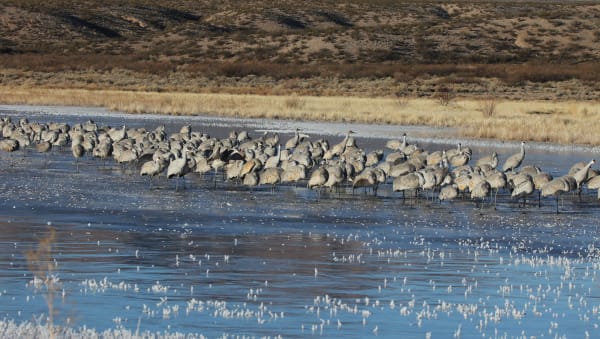
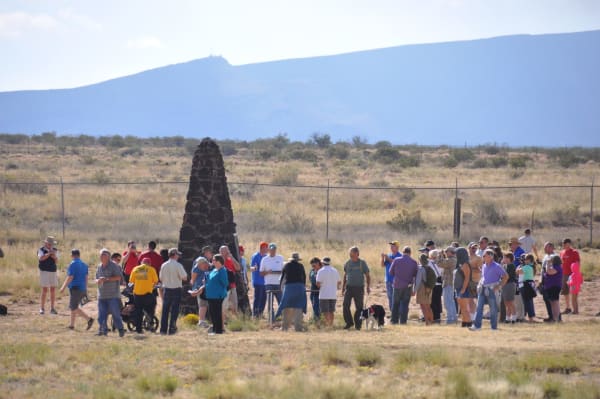
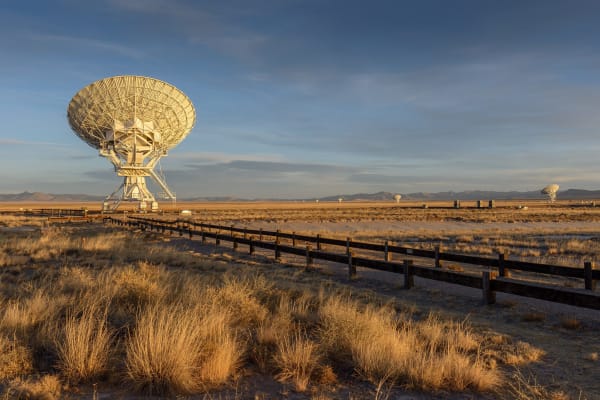
South of Socorro tens of thousands of sandhill cranes winter at Bosque del Apache. Beyond them lies the Jornada del Muerto, the dry shortcut of the Camino Real, and on its northern end, on July 16, 1945, the first atomic bomb was exploded at the Trinity Site. Out on the Plains of San Agustin west of Socorro, the twenty-seven dishes of the Very Large Array point at the sky.
What to See in Albuquerque & the Middle Rio Grande
5 places across the region, grouped by what they are.
Natural Areas
Historic Sites
Towns & Gateways
Attractions
Scenic Drives through Albuquerque & the Middle Rio Grande
Route 66: Albuquerque to Holbrook
About 234 miles of Route 66 and I-40 from Albuquerque's West Mesa to Holbrook, between two rivers both named Puerco: a 1933 truss bridge at one end, the Laguna mission and Mount Taylor in the middle, and the Church Rock uranium spill that ran down the second Puerco into Arizona.
Route 66: Glenrio to Albuquerque
Across the eastern plains from the ghost town on the Texas line through Tucumcari and Santa Rosa, on the 1937 cut-off that bypassed Santa Fe, to Albuquerque's Central Avenue.
Stories from Albuquerque & the Middle Rio Grande
Albuquerque & the Middle Rio Grande rewards the unhurried. Pick a base, fan out, and let the country between the headline stops surprise you.
← Explore more of Open Road Guide