 ballancio / CC BY 2.0 via Flickr
The Story
Lake Martin covers more than the Tallapoosa's old gorge. Alabama Power began buying land in 1916, built Martin Dam at Cherokee Bluffs from 1923 to 1926, and made what was then the largest human-made lake in the world. The water also closed over Kowaliga, a Muscogee place name that had become a Black community. John Jackson Benson was born enslaved on a plantation along Kowaliga Creek. Freed after the war, he searched Florida for the sister he had been sold away from, brought her home, worked in the Shelby County coal mines, and with his savings began buying the land he had worked as a slave. By 1898 he owned about 3,000 acres, with a sawmill, gristmill, cotton gin and brickyard.
His son William, educated at Fisk and Howard, founded the Kowaliga Academic and Industrial Institute in the mid-1890s, with Booker T. Washington among its later trustees, and the Dixie Industrial Company to give its students work. The school closed around 1925, and the next year Martin Dam was finished and the water began to cover the valley.
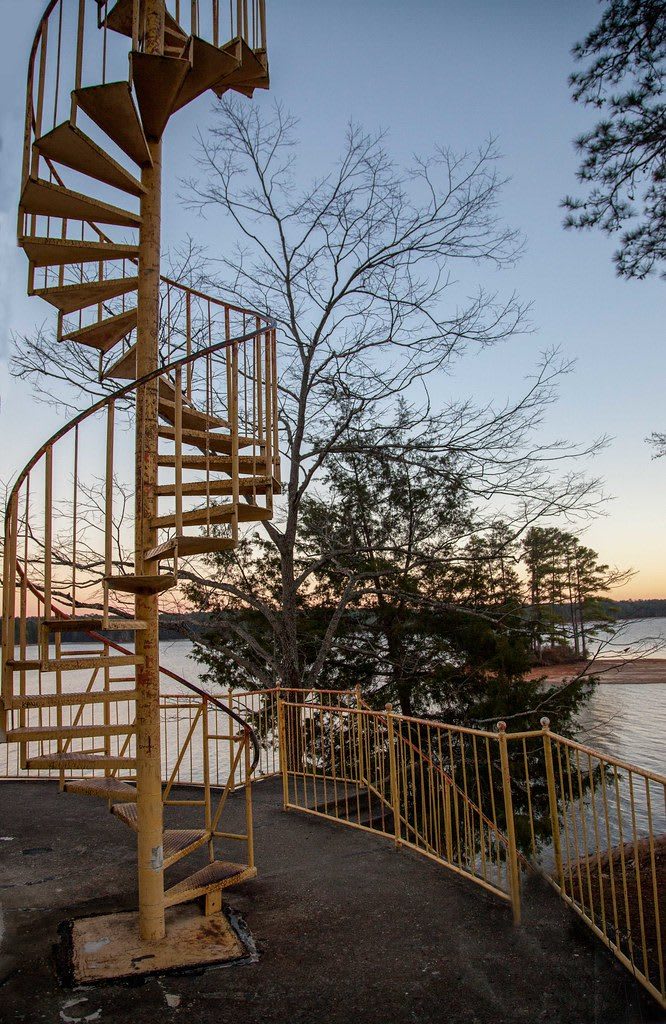
Wind Creek sits on the western shore south of Alexander City, on 1,445 acres of pine and hardwood. Its campground, with nearly 600 sites on peninsulas into the lake, is among the largest state-run campgrounds in the country. A grain silo built by a local farmer in 1915 stands at the water's edge with a viewing platform on top, and the Campfire and Alabama Reunion trails follow ridges and shoreline where bald eagles and ospreys hunt.
Visitor Info
On the Map
Nearby
The closest stops worth working into your route
Historical markers nearby
Roadside plaques and monuments within a short detour