 Eric Wincentsen / CC BY-SA 3.0 via Wikimedia Commons
The Story
Williams was the last town on Route 66 to lose its traffic to the interstate, and it did not go quietly. When the final Arizona segment of Interstate 40 opened around town on October 13, 1984, it ended a fight Williams had waged in court for years; the town dropped its lawsuits only after the state agreed to build three exits so travelers could still find their way in. The date is a point of civic pride — the plaque, the mural, the T-shirts all name it — because being last meant Williams had the most time to watch what the bypass did to towns that lost the road early.
The town had reinvented itself before. It grew up around the Santa Fe line after the tracks arrived in 1882, named for William Sherley "Old Bill" Williams, the trapper and scout (1787–1849) whose name the mountain south of town carries too. In 1901 a rail spur ran sixty miles north to the rim of the Grand Canyon, and Williams became the Gateway to the Grand Canyon — the place you boarded the train for the South Rim. Automobiles killed that trade; the last passenger train left in 1968 with three people aboard, and the line sat dead for twenty-one years.
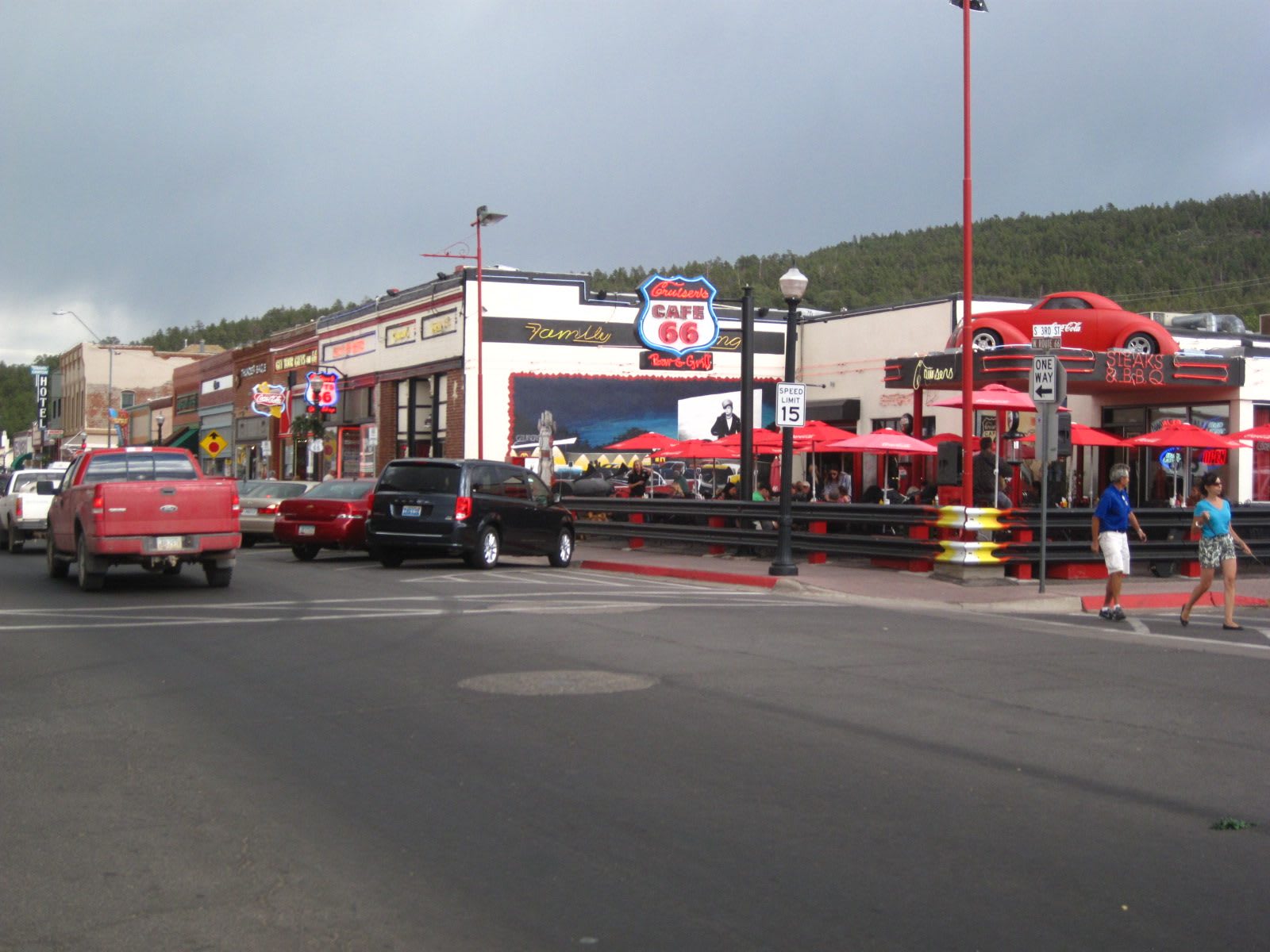
Then both of the town's identities came back at once. The Grand Canyon Railway resumed service on September 17, 1989, and it still climbs to the South Rim daily from the restored depot. Route 66's own revival arrived on the same tide. Today the historic district — much of it built around 1900, the Grand Canyon Hotel of 1892 among it — is a National Register district full of neon, diners, and curio shops, sitting at 6,770 feet in the ponderosa of the Kaibab forest.
Williams is the hinge of this high country: the Route 66 town that is also the rail gateway to the Canyon, an hour west of Flagstaff and the San Francisco Peaks. East, the road runs to Winslow; west, past Ash Fork, it breaks free of the interstate at Seligman and the longest surviving stretch of the Mother Road. Most travelers use it as a Grand Canyon basecamp. It earns a night on its own.
Visitor Info
On the Map
A story featuring this place
Go deeper into the history and character of this stop
Nearby
The closest stops worth working into your route
Historical markers nearby
Roadside plaques and monuments within a short detour