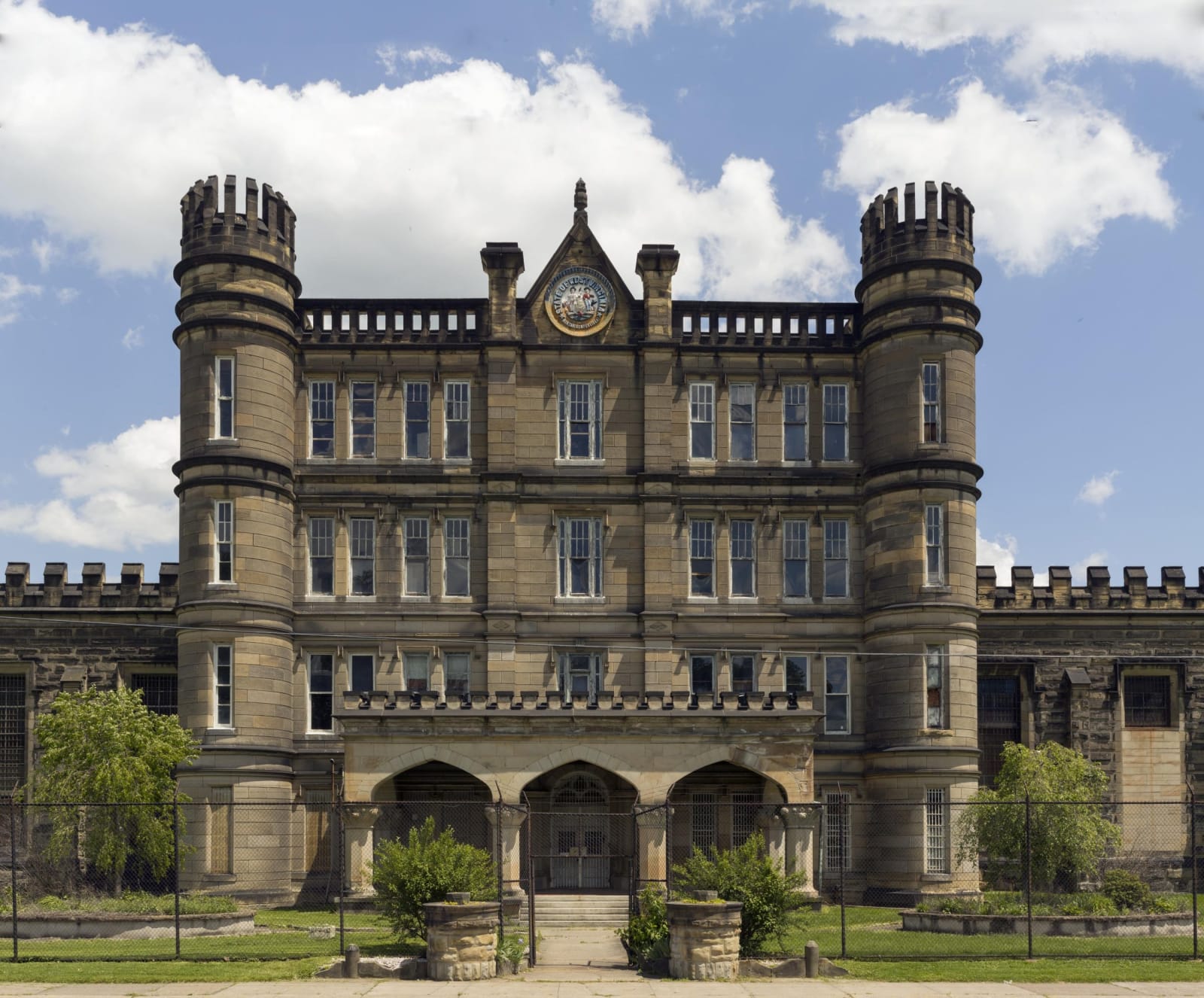
 Carol M. Highsmith / public domain via Library of Congress
The Story
West Virginia came into the Union in 1863 without a prison. Felons were held in the Ohio County jail until the legislature put up money in 1866 for a penitentiary at Moundsville, and the first part opened the next year. The castellated stone walls, buttressed and battlemented, run for about three blocks along Jefferson Avenue across from the ancient mound, with cells stacked in tiers inside on the Auburn plan.
Prisoners made brooms, whips and clothing for the state, later soap, paint, license plates and road signs. The labor leader Eugene V. Debs was held here in 1919 before he was moved to Atlanta. Between 1899 and 1959 the state executed ninety-four men inside these walls, eighty-five by hanging and nine in an electric chair built by a prisoner; the last was Elmer Bruner in 1959, and West Virginia abolished the death penalty in 1965. The chair is on the tour.
The prison was built for far fewer men than it came to hold. More than 2,000 were crowded in by the 1920s, and a second section that took thirty years to finish did not relieve it. Riots in 1973 and 1979 put the prison under court supervision, and on New Year's Day 1986 prisoners took officers hostage in a riot in which three inmates were killed. That year the state Supreme Court held that confining men in cells of about 35 square feet was cruel and unusual punishment, and the last prisoners left in 1995.
Visitor Info
On the Map
Nearby
The closest stops worth working into your route
Historical markers nearby
Roadside plaques and monuments within a short detour