 Carol M. Highsmith / public domain via Library of Congress
The Story
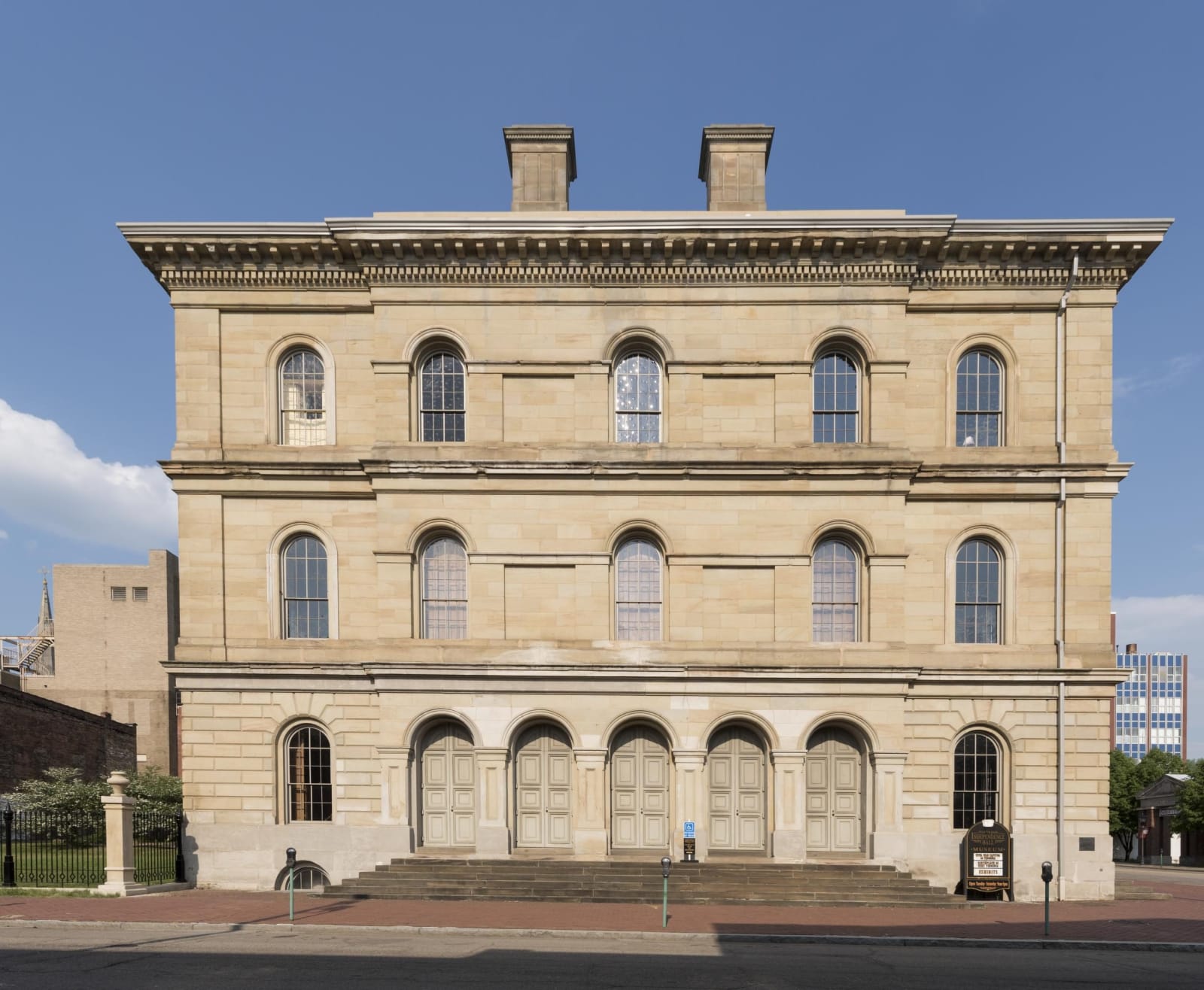
The sandstone building at Sixteenth and Market opened in April 1859 as Wheeling's federal custom house, with the post office and the federal court under the same roof. Ammi B. Young of the Treasury designed it in what he called the Italian palace style and set its floors on wrought-iron beams and girders over cast-iron columns, a fireproof frame that pointed toward the skyscraper.
Then it housed a breakaway government. On June 11, 1861, the Second Wheeling Convention met in the third-floor courtroom, declared the secession government in Richmond illegal, set up a Reorganized Government of Virginia loyal to the Union with Francis Pierpont as governor, and called for a new state. The constitutional convention sat in the same room through the winter of 1861-62. Slavery was the hard bargain. Congress would admit West Virginia only with the Willey Amendment, which freed children born after July 4, 1863, freed those then under twenty-one only when they reached twenty-one or twenty-five, and left older people enslaved. The state became the thirty-fifth on June 20, 1863, and its enslaved people were not all freed until a legislative act of February 3, 1865. A few blocks north, at Tenth Street, the city had kept a slave auction block.
The government moved on, and in 1907 the building was sold and carved up for a bank, a liquor store, a nightclub and offices. The state bought it in 1964, restored the public rooms to their 1860 look from the original drawings and opened the museum in 1979. The courtroom upstairs is the room to see.
Visitor Info
On the Map
Nearby
The closest stops worth working into your route
Historical markers nearby
Roadside plaques and monuments within a short detour