 Carol M. Highsmith / public domain via Library of Congress
The Story
Congress authorized a road from Cumberland, Maryland, to Wheeling in 1806, the first highway the federal government built. Crews made up mostly of Irish and English immigrants started in Maryland in 1811 and worked west through Pennsylvania and down the valley of Wheeling Creek. Mail began reaching Wheeling over the unfinished road in 1818, and the 131-mile route was done in 1821. Freight wagons and droves of livestock wore the roadbed out within a few years.
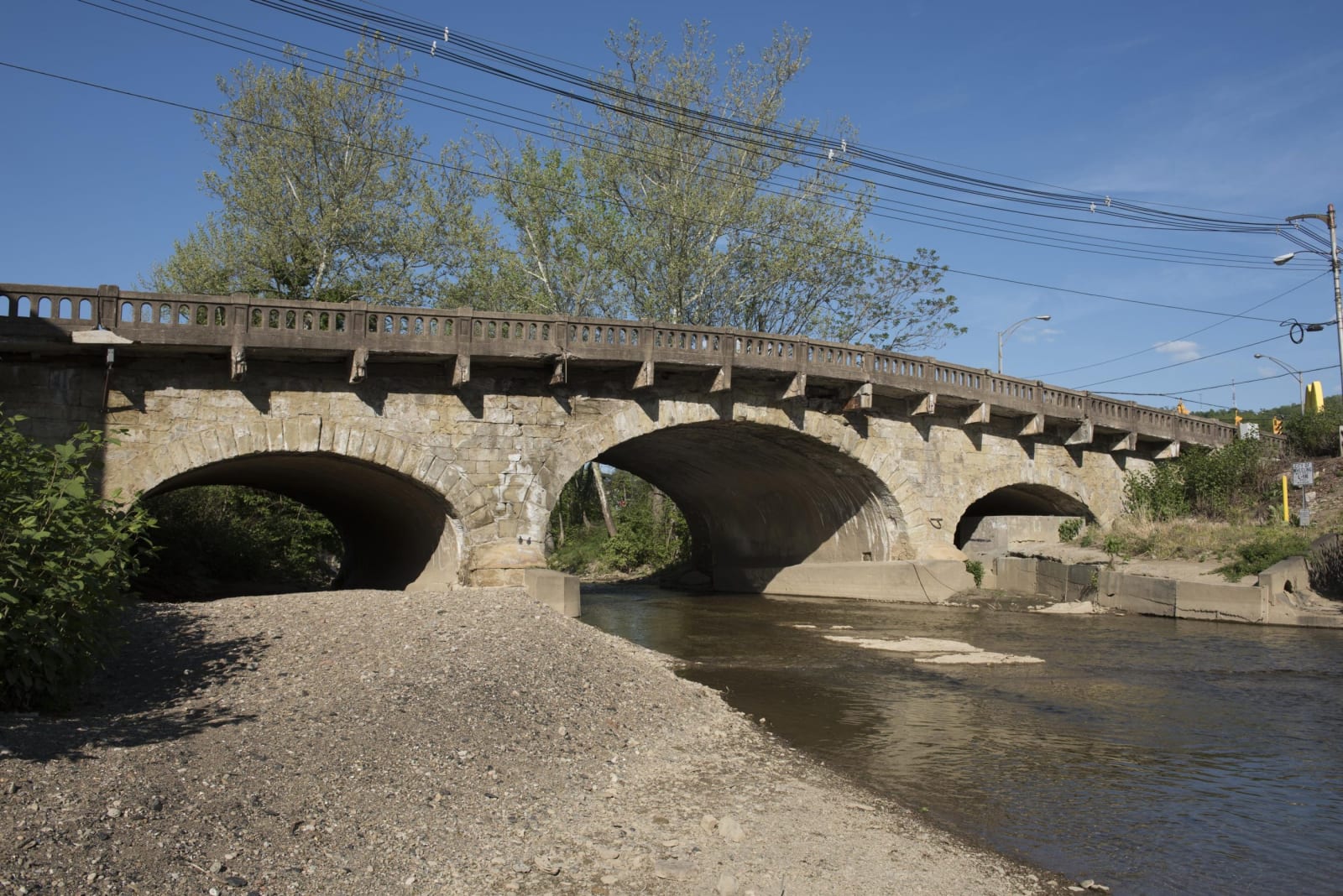
This bridge is the road's oldest survivor in the state, and the oldest bridge in West Virginia. Moses Shepherd built its three limestone arches over Little Wheeling Creek in 1817. He and his wife, Lydia Boggs Shepherd, were friends of Henry Clay, and that friendship helped secure the road's route to Wheeling. Lydia wanted it to pass their stone house, Shepherd Hall, so the route crossed the creek twice and Moses got the contract for both bridges; the other, at Triadelphia, came down in 1934. In 1820 the Shepherds raised a monument to Clay on their land, and the house and the bridge took the name Monument Place.
The parapets were replaced with concrete balusters in 1931 and the stone was sprayed with gunite in 1958, but the arches are the ones Shepherd built. From here, U.S. 40 follows the old road east past original mile markers to the stone inn at Roney's Point. The 16-mile West Virginia stretch was named the state's first All-American Road in 2002.
Visitor Info
On the Map
Nearby
The closest stops worth working into your route
Historical markers nearby
Roadside plaques and monuments within a short detour