 Unknown photographer, National Archives / public domain via Wikimedia Commons
The Story
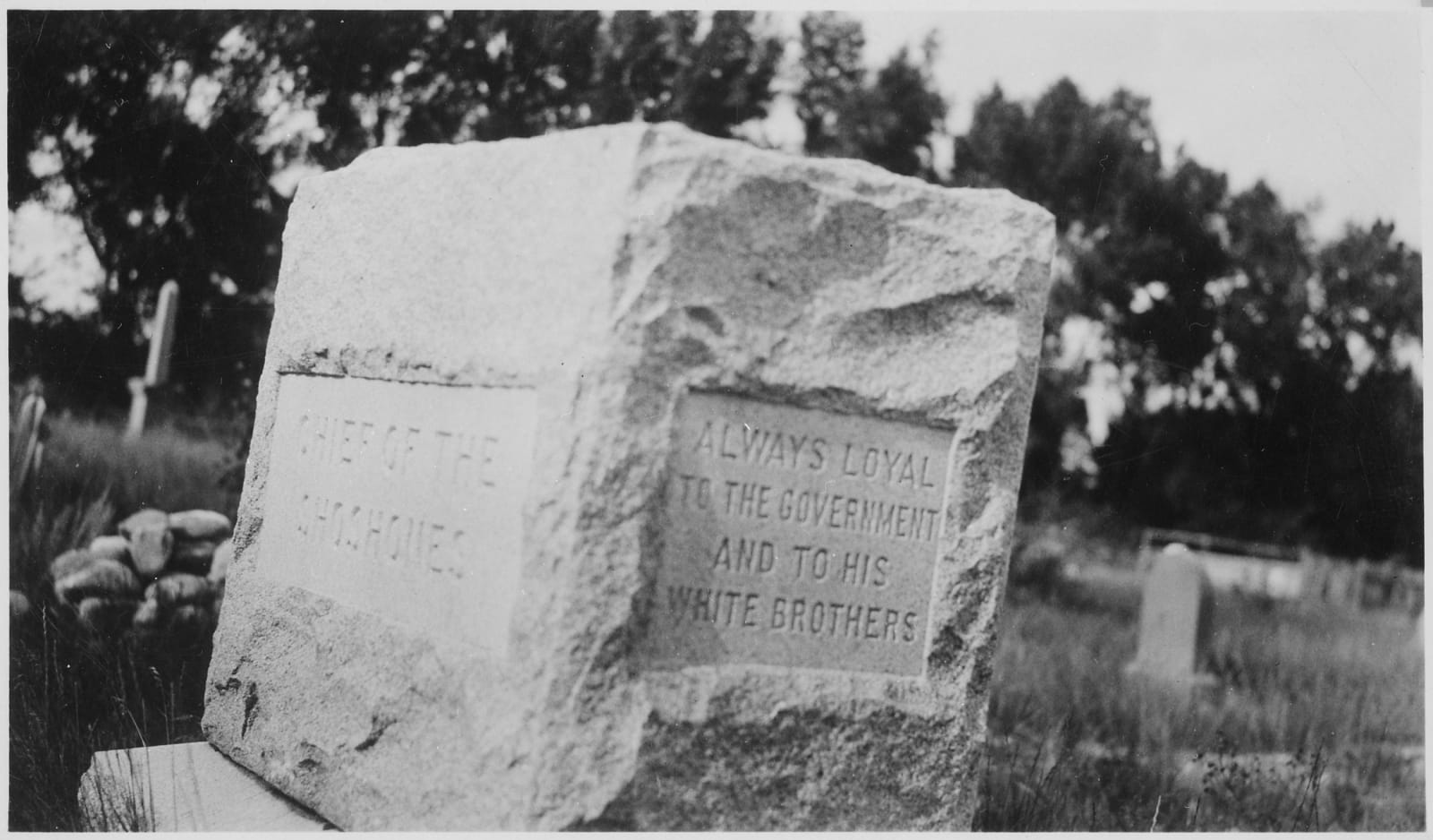
Washakie led the Eastern Shoshone from the 1840s until his death, and he died here at Fort Washakie on February 20, 1900, a very old man. The Army, which he had sided with against the Lakota and Cheyenne in the 1870s, buried him in the post cemetery with full military honors, a funeral it is said to have given no other Native leader, and the Episcopal missionary John Roberts, who had baptized him, presided. His gravestone praises his loyalty to the government and his friendship toward white men. It does not say that he had bargained to keep the Wind River country for his people while other nations lost everything, or that he lived to see them go hungry on it.
The fort began as Camp Augur near present-day Lander in 1869 and moved onto the reservation in 1871. It took Washakie's name in December 1878, served as an Army post until 1909, and was turned over to the Shoshone in 1913. The cemetery is on the north side of town by the Little Wind River, and across the road stands a fourteen-foot bronze of Washakie by the sculptor Richard Greeves, similar to the statue of him in the National Statuary Hall in Washington. Fort Washakie is a tribal community; visit the grave as you would any cemetery.
Visitor Info
On the Map
Nearby
The closest stops worth working into your route
Historical markers nearby
Roadside plaques and monuments within a short detour