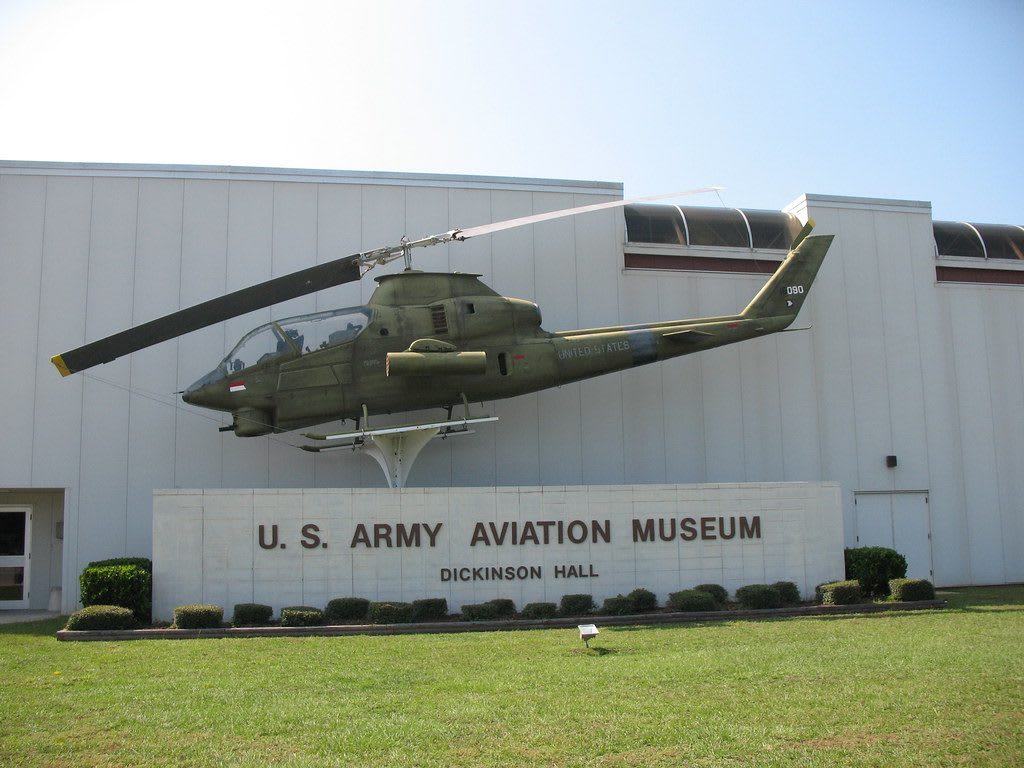
 James Emery / CC BY 2.0 via Flickr
The Story
This post began as worn-out farmland. During the Depression the federal government bought marginal farms along the Pea River for a land-use project, and a rumor that it meant to raise bears gave the tract the name Bear Farm. In 1942 the Army put up Camp Rucker, 1,500 buildings in 106 days, named for the Confederate colonel Edmund Rucker. Four infantry divisions trained on it, and German and Italian prisoners of war were held here. In 1955 the Army Aviation School moved in from Fort Sill and the camp became Fort Rucker. It was renamed Fort Novosel in 2023 for Michael J. Novosel Sr., a Medal of Honor aviator, and in 2025 renamed Fort Rucker again, now for Captain Edward W. Rucker, an aviator of the First World War.
Founded on paper in 1956, the museum survived a decade on volunteer effort. It opened in an old wartime building in November 1968 and moved into its permanent hall in 1989. The collection runs past 160 aircraft, about 50 on display, from a replica of the Wright brothers' Model B to the helicopters of today. Look for the Vietnam memorial to 4,347 Army aviation dead, Miss Clawd IV, still in the paint it wore the day it was shot down in Vietnam, and Super 68, a Black Hawk shot down at Mogadishu in 1993.
Fort Rucker is an active post. Everyone 16 and over needs a REAL ID-compliant photo ID or a second form of ID, and drivers need registration and proof of insurance. Call the post visitor center first.
Visitor Info
On the Map
Nearby
The closest stops worth working into your route
Historical markers nearby
Roadside plaques and monuments within a short detour