 Indy beetle / CC0 via Wikimedia Commons
The Story
Thomas Day was born free in Dinwiddie County, Virginia, in 1801, the son of a cabinetmaker, and educated by neighbors. He opened his first shop in Hillsborough in 1821 and by 1827 had moved to Milton, a tobacco and river-port town on the Dan, where he bought property for $550. He worked for the region's richest families, made furniture for Governor David Reid and for the student societies at the University of North Carolina, built stairs, mantels and coffins, and the pews of the Milton Presbyterian Church, where his family worshiped. When he married Aquilla Wilson, a free woman from Virginia, in 1829, state law barred her from entering North Carolina, and white townspeople, with the attorney general Romulus Saunders, backed his plea to the legislature to let her in.
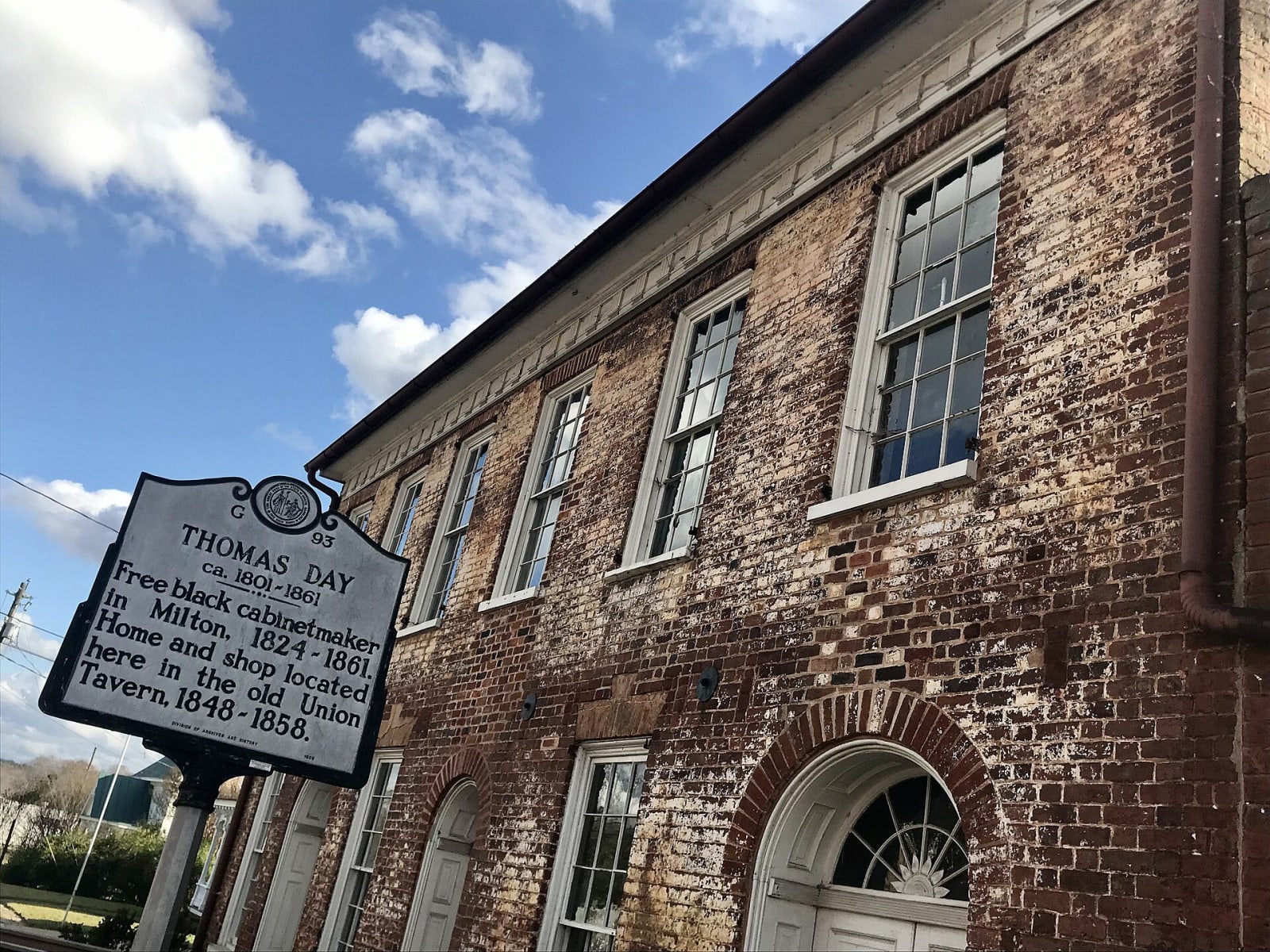
His shop ran on the labor of apprentices, some placed with him by the courts, and of enslaved people he owned; the 1850 census counts fourteen. In 1848 he bought the Union Tavern, made it his house and showroom, added a factory wing where a steam engine drove his power tools, and by 1850 the shop was the state's largest and turned out about a sixth of its furniture. The Panic of 1857 ruined him, and he sold off tools and enslaved people to pay debts that outlived him; he died in 1861.
The tavern, a National Historic Landmark, burned in 1989 and was restored by a preservation group. The state took it over in 2024, with the Milton State Bank across the road as the visitor center. Guided tours show pieces of his furniture.
Visitor Info
On the Map
Nearby
The closest stops worth working into your route
Historical markers nearby
Roadside plaques and monuments within a short detour