 Carol M. Highsmith / public domain via Library of Congress
The Story
Washington Duke built this house about 1852 and planted tobacco after his second wife died. Drafted into the Confederate Navy, he came home in 1865 to a stripped farm, but Union soldiers camped nearby had developed a taste for the area's bright leaf. With his children he packed smoking tobacco in a log building, labeled it Pro Bono Publico, and peddled it across eastern North Carolina from a wagon drawn by two blind mules. By 1873 the farm turned out about 125,000 pounds a year, and in 1874 the business moved to Durham beside the railroad.
The story turns on labor. In 1881, to compete with Bull Durham, the Dukes began making cigarettes and brought in Jewish immigrant rollers from New York, recruited through Moses Gladstein, who had just been fired for leading a strike. Black workers hauled the tobacco to their tables; in 1875 Black workers at the Bull Durham factory who asked for higher wages had all been fired. In 1884 the Dukes leased two Bonsack machines, each able to do the work of 48 hand rollers. The rollers formed a union local that July, saw their wages cut by two-thirds, and the last were gone by 1888. In 1890 the Dukes merged five firms into the American Tobacco Company, broken up by the Supreme Court in 1911.
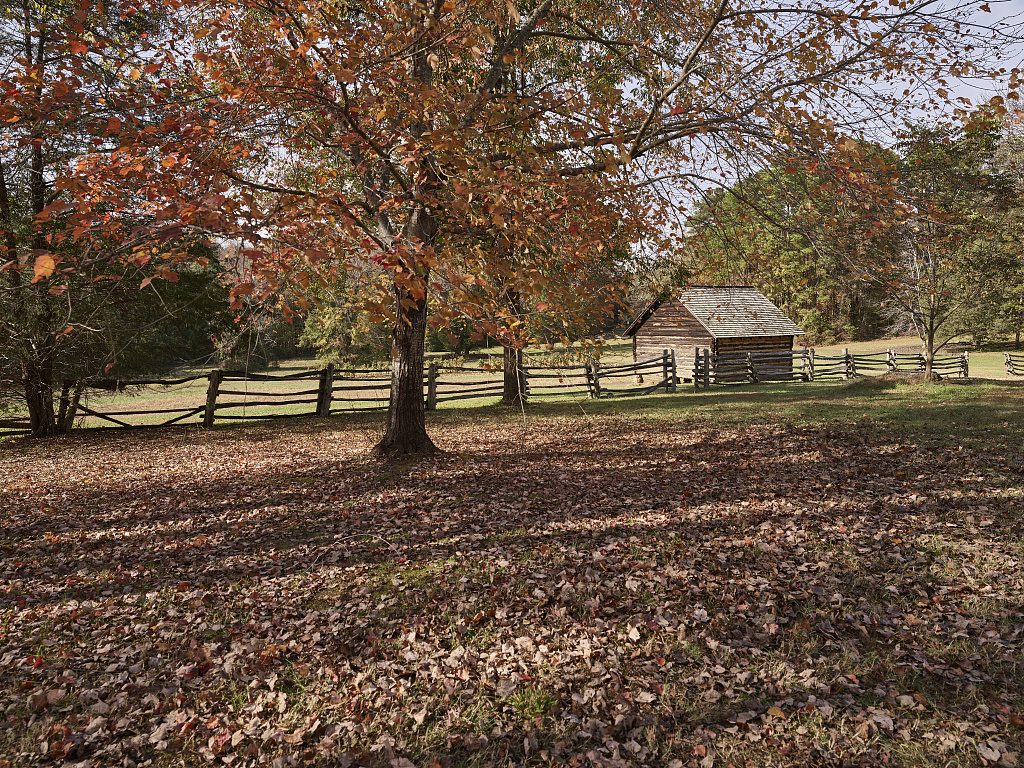
The homestead keeps the house, a rebuilt first factory, the third factory of 1869, a curing barn and a pack house. The visitor center holds a tobacco museum and a film.
Visitor Info
On the Map
Nearby
The closest stops worth working into your route
Historical markers nearby
Roadside plaques and monuments within a short detour