 Carol M. Highsmith / public domain via Library of Congress
The Story
James and Nancy Bennitt, as the family spelled it, settled on a 325-acre farm on the Hillsborough Road in 1846, growing corn, wheat and oats, raising hogs, and selling plug tobacco and liquor on the side. Their sons and a son-in-law died during the war years. In April 1865 Joseph E. Johnston, with Lee already surrendered, met William T. Sherman between their lines and suggested the farmhouse. On April 17 Sherman showed him the telegram announcing Lincoln's assassination before they talked. The next day they signed a broad agreement that would have recognized the existing state governments, restored political rights and granted a general amnesty; Washington rejected it, and Grant told Sherman to offer military terms only.
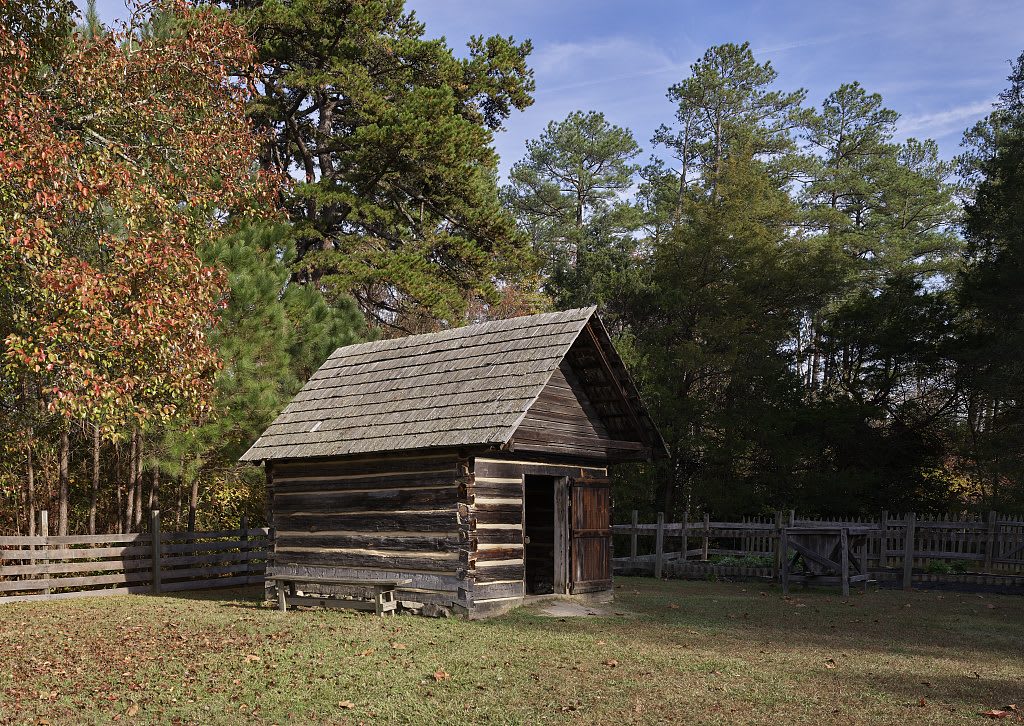
Jefferson Davis ordered Johnston to break up his infantry and fight on with the cavalry. Johnston refused, and on April 26 he signed a plain military surrender here covering 89,270 soldiers in the Carolinas, Georgia and Florida. Union troops camped in the area carried home a taste for the bright leaf tobacco they had found, and Durham's tobacco trade grew on it. The farmhouse and kitchen burned in 1921, leaving the stone chimney, and the buildings now standing are 1960s reconstructions based on wartime sketches and photographs.
Walk the old Hillsborough Road trace to the farm. Near the visitor center stands the 1923 Unity Monument, a piece of Lost Cause commemoration that casts the Confederacy as a co-equal government; at its dedication Julian Carr closed by saying of his Confederacy, "we lost but we won."
Visitor Info
On the Map
Nearby
The closest stops worth working into your route
Historical markers nearby
Roadside plaques and monuments within a short detour