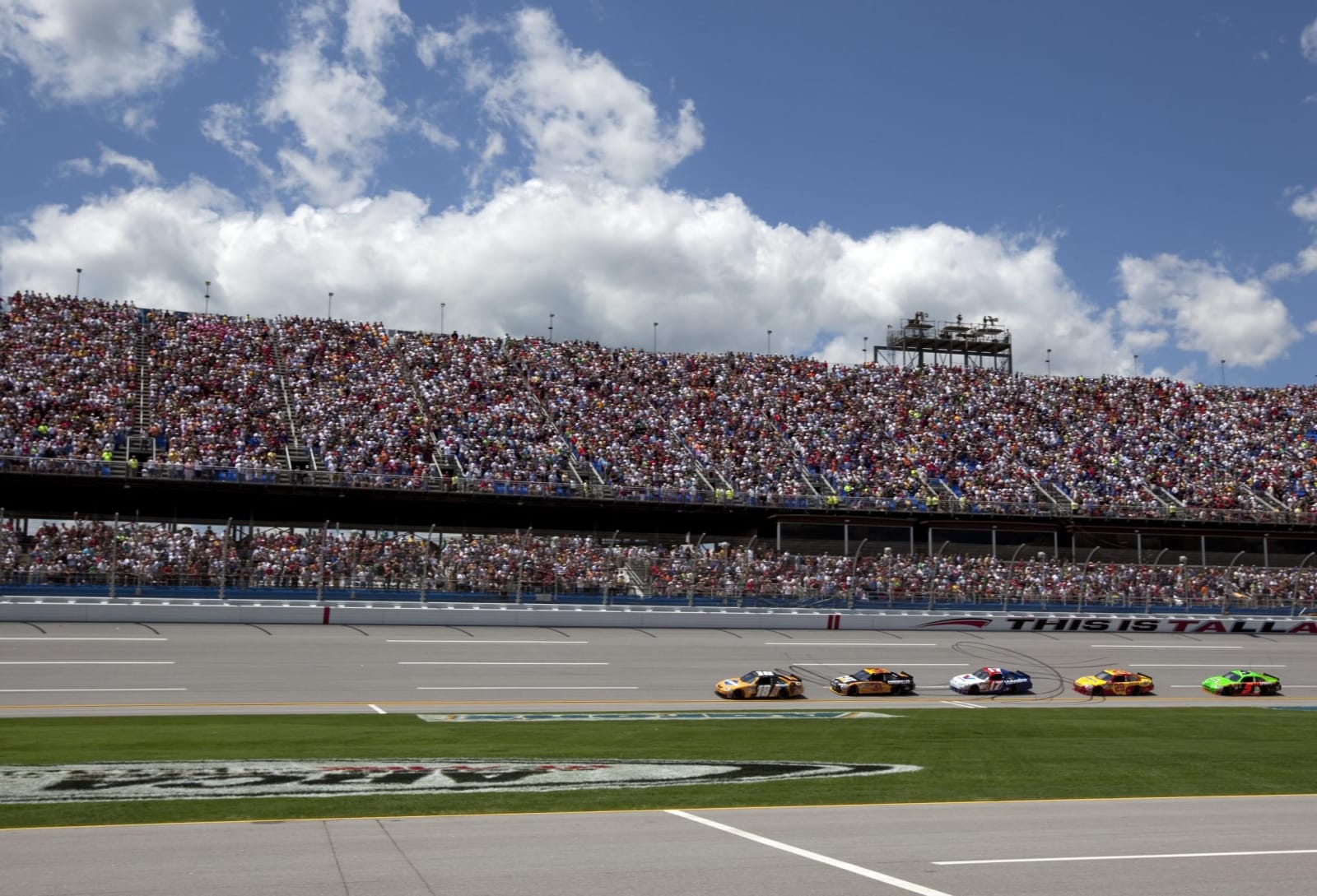
 Carol M. Highsmith / public domain via Library of Congress
The Story
Bill France Sr., NASCAR's founder, wanted a track in the middle of the Southeast that would outrun his own Daytona, and in 1968 he started building on two thousand acres off Interstate 20 that had been the Anniston Army Airfield in World War II; pieces of the runway still serve as infield parking. The 2.66-mile tri-oval, banked 33 degrees in the turns, is the longest track in NASCAR. Gov. George Wallace was France's political ally in the venture.
It opened in September 1969 as the Alabama International Motor Speedway under a cloud: Richard Petty led a drivers' boycott over tires that might not survive speeds near two hundred miles an hour, and France ran the race with the drivers who stayed. The track took the Talladega name in 1989. Brothers Bobby and Donnie Allison of Hueytown, the core of the "Alabama Gang," ran one-two in the first Winston 500 in 1971, Bill Elliott qualified at 212.809 mph in 1987, and after Bobby Allison's car tore into the catch fence that May, NASCAR brought in restrictor plates and the big packs and pileups Talladega is known for.
Most days the place is quiet. The International Motorsports Hall of Fame, on 35 acres France gave next to the track, opened its museum in 1983 and its hall in 1990, with record-setting cars, wrecks and a large research library, and runs tours onto the speedway. The two race weekends a year bring crowds of well over a hundred thousand.
Visitor Info
On the Map
Nearby
The closest stops worth working into your route
Historical markers nearby
Roadside plaques and monuments within a short detour