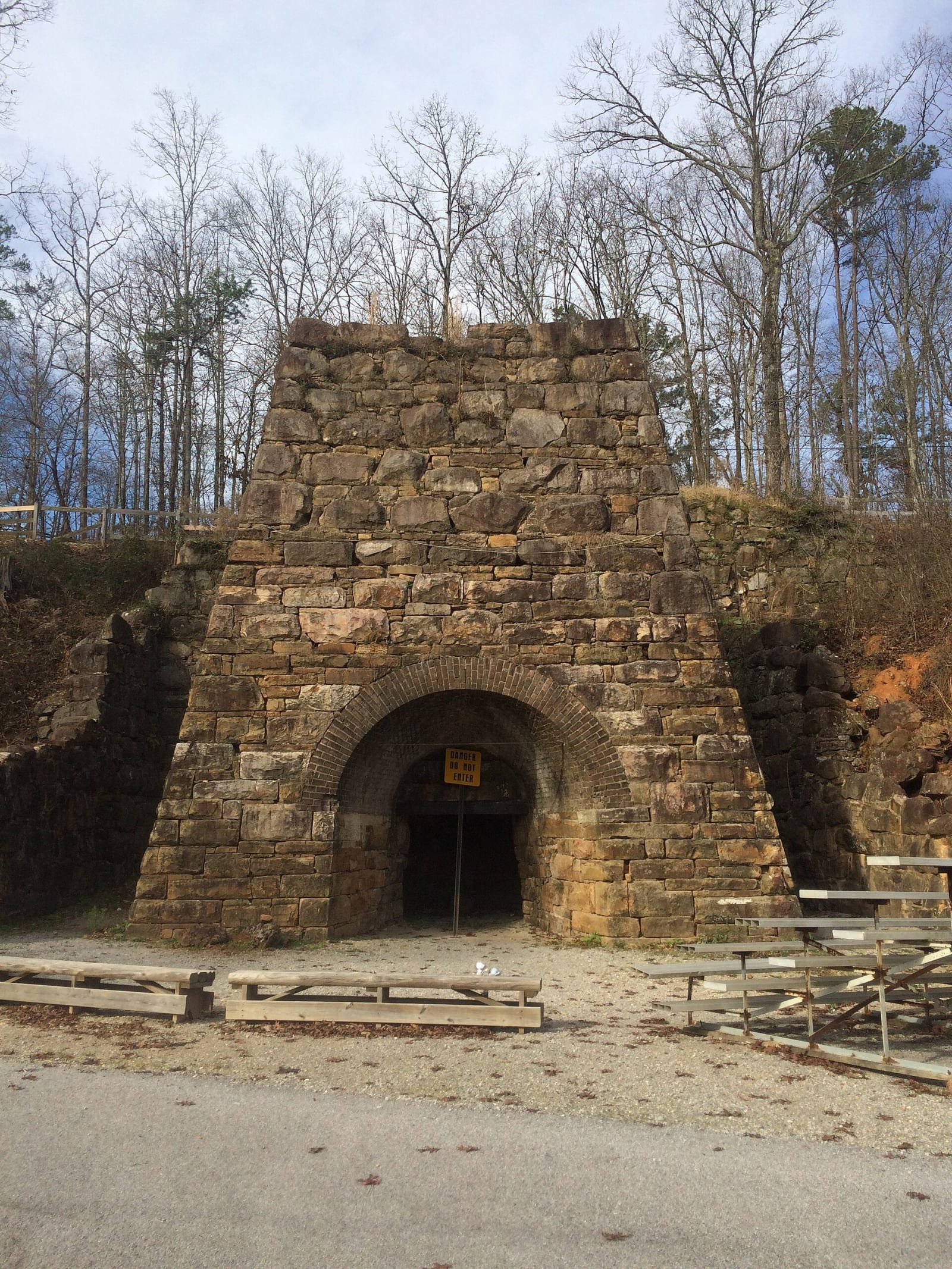
 dofftoubab / CC BY-SA 3.0 via Wikimedia Commons
The Story
The Coosa runs past Ten Islands a few miles from here, and in the fall of 1813 Andrew Jackson's Tennessee army built Fort Strother at the ford. The Creek Nation was in civil war: the Red Sticks, traditionalists who rejected the National Council's accommodation with settlers and the loss of land, had attacked Fort Mims in August. On November 3 Jackson sent John Coffee with 900 mounted men to Tallushatchee, a Red Stick town about 13 miles east near present-day Alexandria. They surrounded it and killed about 186 people, women and children among them; short of gunpowder, many defenders fought with bows. Davy Crockett, one of the attackers, described a house burned with men inside. Jackson took an orphaned infant, Lyncoya, into his own family near Nashville.
Fifty years later the Montgomery foundryman Alfred A. Janney chose this ore ridge for a Confederate furnace. Most of the work was done by enslaved people owned by a Dr. Smith of Tennessee, who had brought more than 200 of them to Alabama to keep them from being freed by the advancing Union army. Enslaved stonecutters shaped sandstone blocks, some over a ton, and stacked them 50 feet high.
The furnace probably never made iron. In July 1864 Gen. Lovell Rousseau's Union cavalry crossed at Ten Island Ford and burned everything at the site that would burn. The stack stands in a Calhoun County park, beside a museum whose Native American room shows more than 500 artifacts found nearby.
Visitor Info
On the Map
Nearby
The closest stops worth working into your route
Historical markers nearby
Roadside plaques and monuments within a short detour