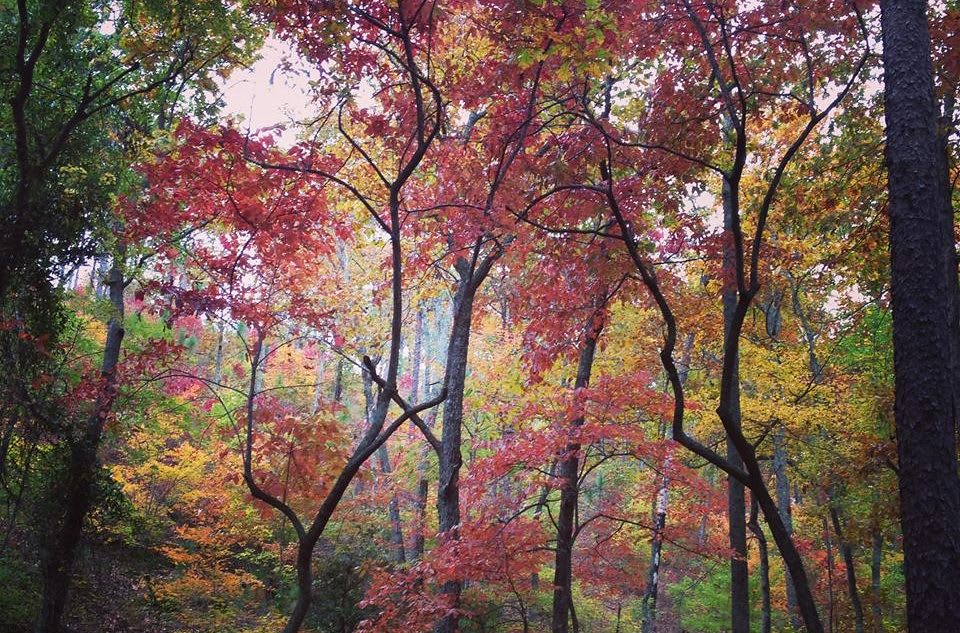
 Sarah Clardy / USFWS / public domain via Flickr
The Story
Longleaf pine is a tree of the coastal plain, but in east Alabama it climbs the ridges of a southern spur of the Blue Ridge, and the largest stand left north of the coastal plain grows here above Anniston. This was Creek and Cherokee country before the cessions of the 1830s. In 1917 the Army bought the land for Camp McClellan, and for the next 82 years Fort McClellan trained soldiers on it: troops for two world wars, the Women's Army Corps, military police and the Chemical Corps, which taught chemical, biological and radiological warfare here from 1951 and ran live-agent training in the 1960s. The fort closed in 1999.
In 2003 the Fish and Wildlife Service took about 9,000 acres of the old main post as a refuge to keep and restore it, with help from Jacksonville State University. The Army is still clearing unexploded ordnance, and about two-thirds of the refuge stays closed until that work is done. Closed areas are signed.
All access is through the east gate on Bains Gap Road. At the crest, Military Road runs the ridgeline as a one-lane gravel track with views over the valley, and the North Ridge Road Trail near the Moorman Overlook is the most walked. Listen in spring for Bachman's sparrows in the pines and look for brown-headed nuthatches; warblers and tanagers hold the higher hardwoods. The only restrooms are at the refuge office on Baby Bains Gap Road.
Visitor Info
On the Map
Nearby
The closest stops worth working into your route
Historical markers nearby
Roadside plaques and monuments within a short detour