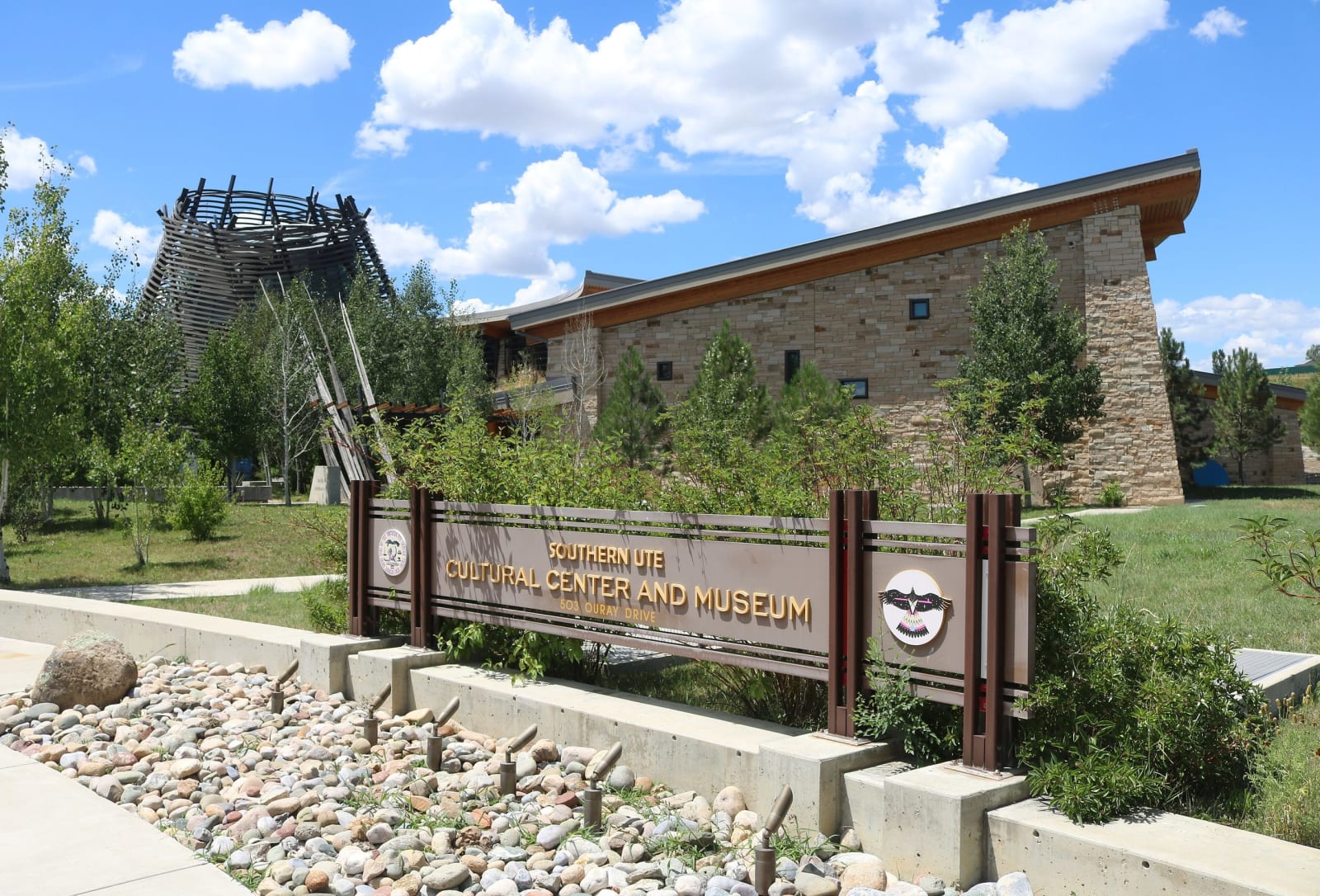
 Jeffrey Beall / CC BY 4.0 via Wikimedia Commons
The Story
The Southern Ute Indian Tribe kept its museum for forty years in a building of under a thousand square feet, opened in 1971. By the 2000s the tribe, which had taken control of the natural gas beneath its reservation and become one of the wealthiest tribes in the country, set out to build something worthy of what it held. The new Southern Ute Cultural Center and Museum opened in Ignacio in 2011, about ten years in the planning, at a cost of some $38 million.
The architect was John Paul Jones of the Seattle firm Jones & Jones, and the design came out of long consultation with tribal members, who had a say in everything from the round plan to which way the doors face. The roof lifts in two wings like an eagle's, the entrance faces east to greet the sunrise, and one wing holds classrooms for cultural teaching. The 54,000-square-foot building is surrounded by gardens.
The permanent gallery tells the Utes' history in their own voices, from the thousands of years when Ute bands ranged across Colorado, Utah and beyond, through the treaties and removals, to boarding schools and life on the reservation now, with tribal members' own photographs and belongings among the 1,500 objects in the collection. Its climate control and security allowed the Smithsonian to lend the tribe pieces from its collections. Ignacio, named for the Southern Ute leader of the late nineteenth century, is the tribal capital; the Bear Dance, which marks the new year as the bear wakes from hibernation, is held there each spring.
Visitor Info
On the Map
Nearby
The closest stops worth working into your route