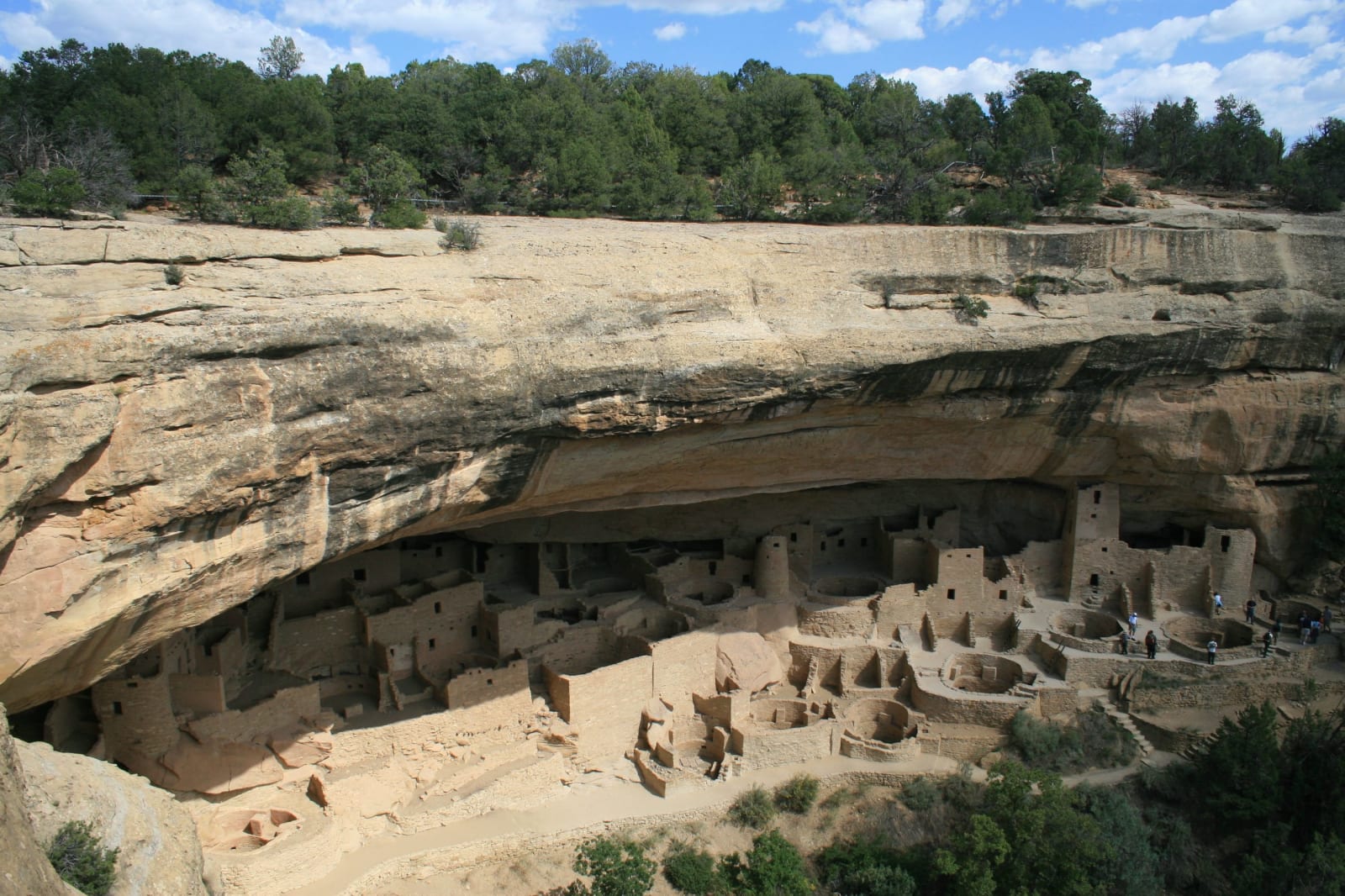
 Andreas F. Borchert / CC BY-SA 4.0 via Wikimedia Commons
The Story
In 1897 the Colorado Federation of Women's Clubs took up the protection of the cliff dwellings, and in 1900 its committee became the Colorado Cliff Dwellings Association, led by Virginia McClurg as regent and Lucy Peabody as vice-regent, under the motto Dux femina facti. The women mapped the dwellings, built a wagon road up the Mancos Canyon and a shelter at Spruce Tree House, and lobbied Congress from 1901. Then they split. McClurg wanted the ruins leased to the association or made a state park under its control; Peabody went to Washington and pushed for a national park. The quarrel was carried on in the newspapers, and Peabody's side won. Congress created the park on June 29, 1906.
The boundary Congress drew lay mostly on the mesa top and missed most of the great cliff dwellings, Cliff Palace among them, which stood on the reservation of the Weeminuche band of Southern Utes. The act protected ruins within five miles of the park, and the Utes held out for years in hope of settling other grievances before agreeing, on May 10, 1911, to an exchange: the cliff-dwelling country went into the park and the band took land near Ute Mountain instead. Congress ratified it in 1913. The Ute Mountain Utes have never been easy about how that land left them.
The park's road climbs from the Visitor and Research Center at the entrance off US-160 to Chapin Mesa, where rangers lead tours into Cliff Palace and Balcony House in season. Wetherill Mesa, with Long House and Step House, is reached by a separate road open in summer. Cliff Palace and Long House are each more than a hundred and fifty rooms; every visit inside them is on a ranger's schedule.
Visitor Info
On the Map
Nearby
The closest stops worth working into your route