 Carol M. Highsmith / public domain via Library of Congress
The Story
People lived on this bend of the Ohio for thousands of years, and the last Shawnee had been forced out by the end of the 1700s. William Smeathers, or Smothers, settled here in 1797 at a landing called the Yellow Banks for the color of the riverbank. The town was laid out in 1817 as Owensborough, for Col. Abraham Owen, and shortened its name in 1893.
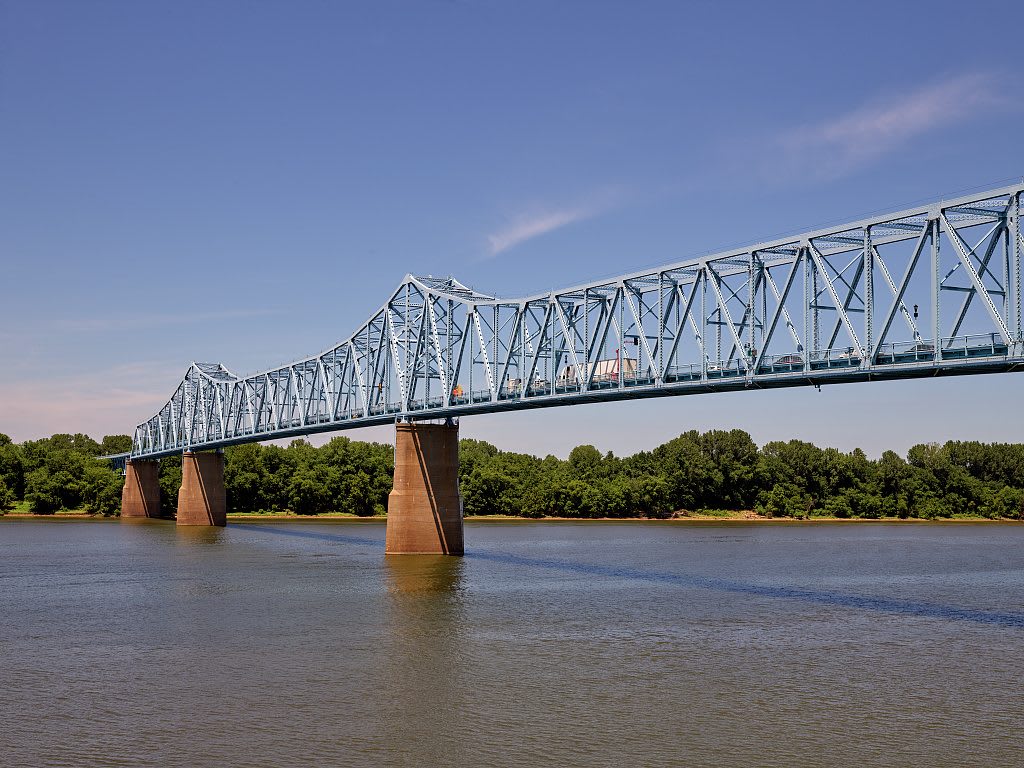
The park named for him was rebuilt in a long downtown riverfront project and reopened in August 2012 with a new fountain and playground. A memorial honors Col. Charles E. Shelton, a Daviess County native shot down over Laos during the Vietnam War, and all American prisoners of war. Within sight of the park, the continuous-truss Owensboro Bridge crosses the river to Indiana.
Owensboro is also where the United States held its last public execution. In June 1936 Lishia Edwards, 70, was raped and strangled in her home on East Fifth Street, and Rainey Bethea, a Black laborer in his twenties, confessed. Prosecutors charged him only with rape, because Kentucky law then allowed a public hanging in the county seat for that crime, while murder meant the electric chair at Eddyville. After a three-hour trial and minutes of jury deliberation, he was hanged at dawn on August 14 on a lot near the county garage, a few blocks from this riverbank, before a crowd estimated at 20,000. The legislature ended public executions in 1938, a bill sponsored by Charles W. Anderson Jr., the first Black member of the Kentucky General Assembly.
Visitor Info
On the Map
Nearby
The closest stops worth working into your route
Historical markers nearby
Roadside plaques and monuments within a short detour