 Carol M. Highsmith / public domain via Library of Congress
The Story
John James Audubon came down the Ohio to Henderson in 1810 with his wife, Lucy, to make money, and for a while he did, trying one business after another. In 1816 he sank about $15,000 into a steam-powered saw and grist mill by the river, a project of delays and breakdowns he later called that infernal mill. There was not enough timber to saw or wheat to grind. By 1819 the business had failed, he was jailed for debt until he took bankruptcy, and the family lost nearly everything.
The Audubons held nine enslaved people in their Henderson household, none named in the accounts that record them, and sold them as their money ran out; in early 1819 Audubon took two enslaved men down the Mississippi by skiff and offered them for sale in New Orleans with the boat. The museum here is the place to weigh that against the art. A year after leaving Henderson he resolved to paint every bird of the country at life size, the work that became The Birds of America.
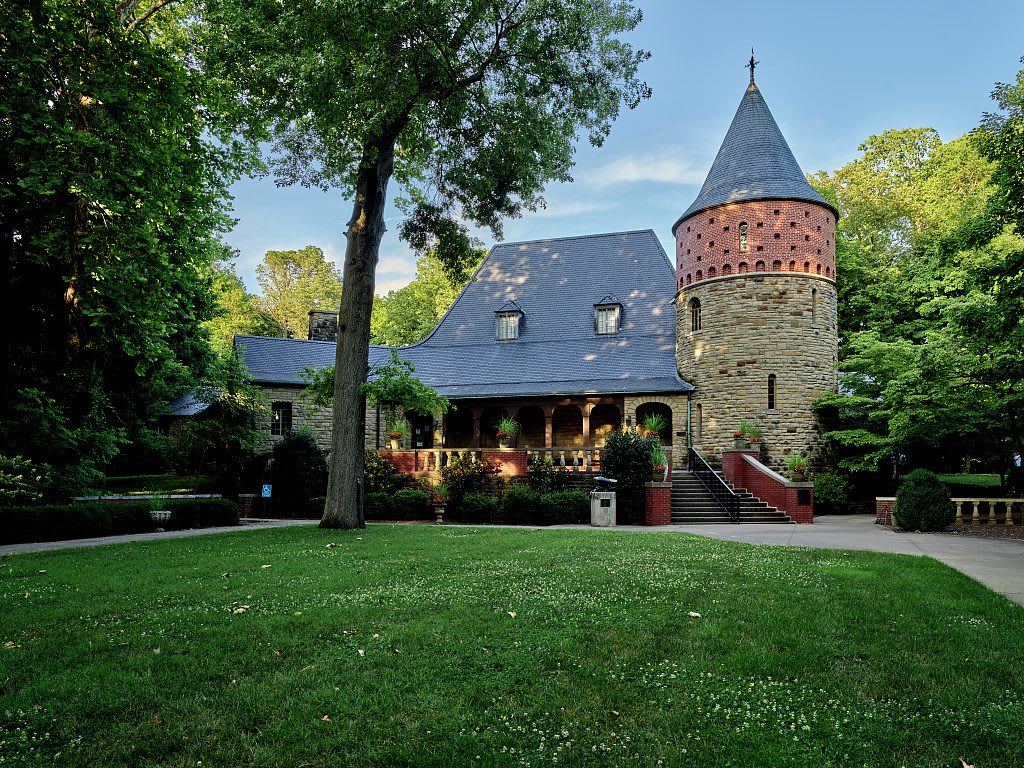
The park came later, in the woods called Wolf Hills. Starting in 1934, about 200 men of CCC Company 1540, most from West Virginia, drained swamps, built two lakes and cut the trails, and WPA crews built the Norman Revival museum, which opened on July 16, 1938 and is on the National Register. A 338-acre state nature preserve protects much of the woods, and a nature center added in the 1990s sits beside the museum.
Visitor Info
On the Map
Nearby
The closest stops worth working into your route
Historical markers nearby
Roadside plaques and monuments within a short detour