 Carol M. Highsmith / public domain via Library of Congress
The Story
The congregation began in 1873 as the First Colored Baptist Church, the first Black church in Birmingham, meeting at Twelfth Street and Fourth Avenue before it moved to this corner of Sixteenth Street and Sixth Avenue in 1880. The city condemned its first brick building, and the present church went up in 1911, a mix of Byzantine and Romanesque with two domed towers over a large basement auditorium. Black Birmingham came here to hear W. E. B. Du Bois, Mary McLeod Bethune, Paul Robeson and Ralph Bunche.
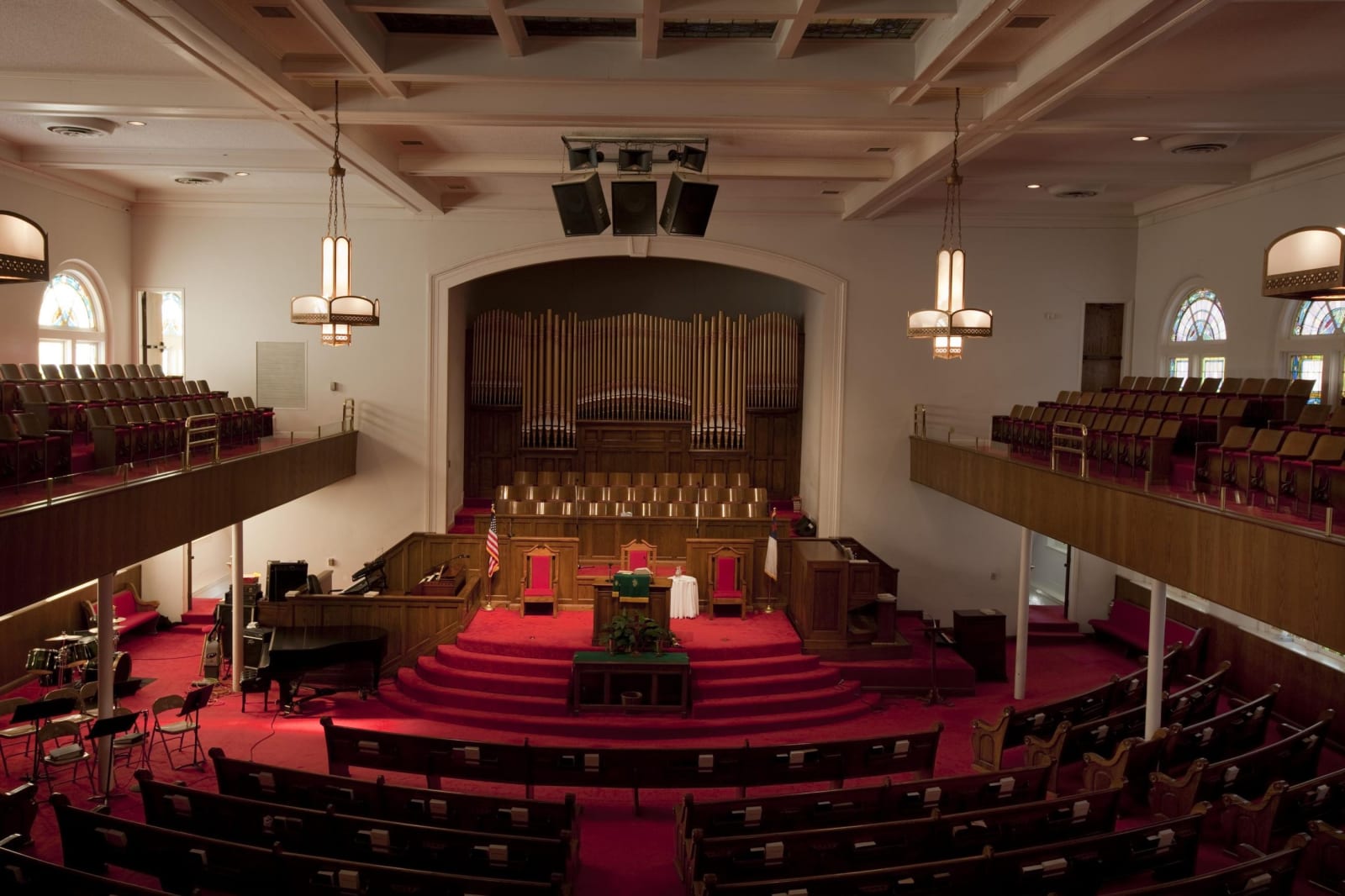
By the 1960s the church was the movement's staging ground. Mass meetings filled it, marchers gathered here before crossing to Kelly Ingram Park, and on May 2, 1963, children walked out its doors in small groups to be arrested. At 10:22 on the morning of Sunday, September 15, 1963, a bomb set by Ku Klux Klan members went off at the church. It killed Addie Mae Collins, Cynthia Wesley and Carole Robertson, all 14, and Carol Denise McNair, 11, who had just finished Sunday school and were in the basement dressing room before the eleven o'clock service. Twenty-three other people were hurt.
Justice came late. J. Edgar Hoover blocked prosecution and the FBI closed the case; Attorney General Bill Baxley reopened it, and Robert Chambliss was convicted in 1977, Thomas Blanton Jr. in 2001 and Bobby Frank Cherry in 2002. Herman Frank Cash died before he could be tried. The four girls were awarded the Congressional Gold Medal in 2013. The church is still a working congregation and part of the Birmingham Civil Rights National Monument.
Visitor Info
On the Map
Nearby
The closest stops worth working into your route
Historical markers nearby
Roadside plaques and monuments within a short detour