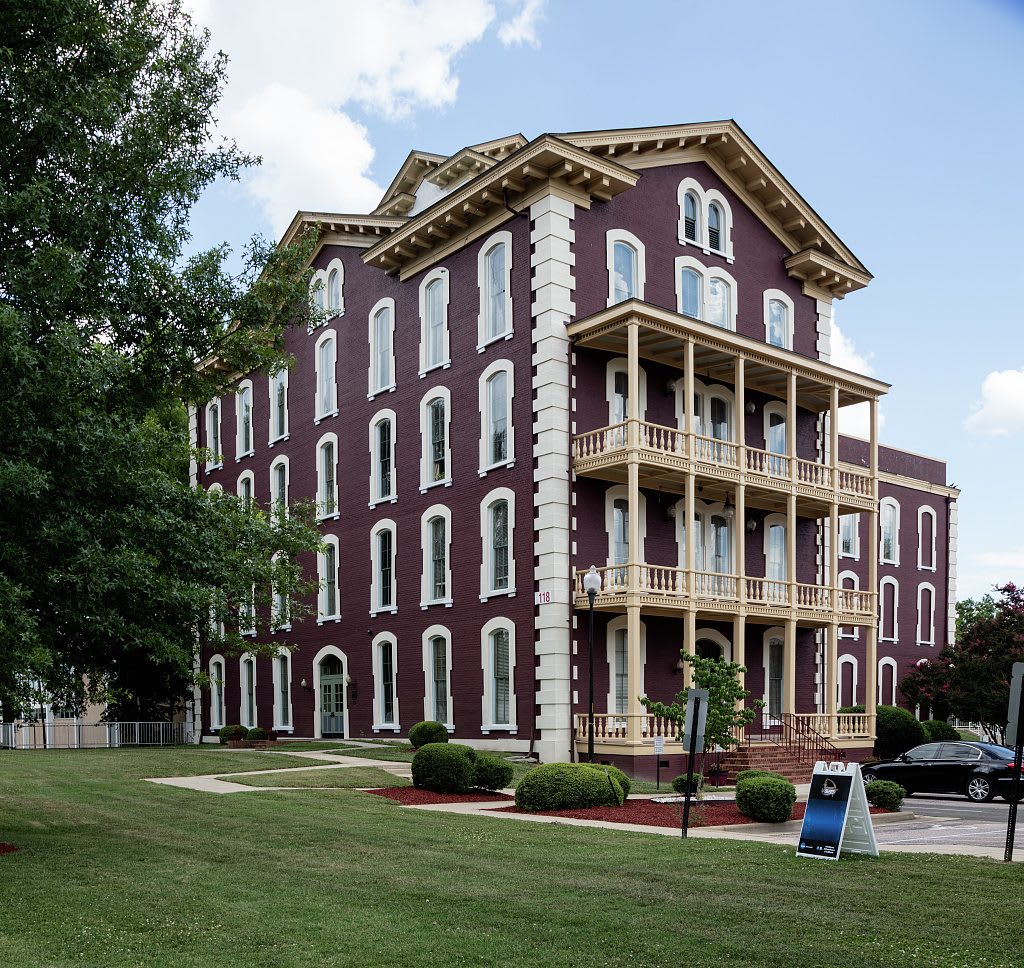
 Carol M. Highsmith / public domain via Library of Congress
The Story
Shaw began on December 1, 1865, as a theology class for freedmen that the Baptist minister Henry Martin Tupper taught in a Raleigh hotel, the oldest historically Black college in the South to begin classes. In 1870 it moved here, onto land that had belonged to a Confederate general named Barringer, and took the name of the donor Elijah Shaw. Estey Hall, finished in 1873 with Vermont money, was the first building in the country put up for the higher education of Black women. Shaw added the Leonard Medical School, the South's first four-year medical school for Black doctors, in 1882, and a law school in 1888; both closed in the 1910s.
On Easter weekend of 1960, two months after the Greensboro sit-ins, Ella Baker brought the protest leaders here. A 1927 Shaw graduate and then the executive director of the Southern Christian Leadership Conference, Baker persuaded it to put up $800 and sent the call to campuses across the South. More than a hundred student delegates came. James Lawson of Nashville gave the keynote and faulted older groups for moving too slowly, and Martin Luther King Jr. spoke to a crowd of 1,600 at Memorial Auditorium. King hoped for a student wing of his own organization; Baker urged the students to keep their own, and they formed the Temporary Student Nonviolent Coordinating Committee, the group that went on to the Freedom Rides and Mississippi.
Shaw is a working campus a few blocks south of the Capitol. Estey Hall's brick and white trim face South Street, and the grounds are open to walk.
Visitor Info
On the Map
Nearby
The closest stops worth working into your route
Historical markers nearby
Roadside plaques and monuments within a short detour