 Carol M. Highsmith / public domain via Library of Congress
The Story
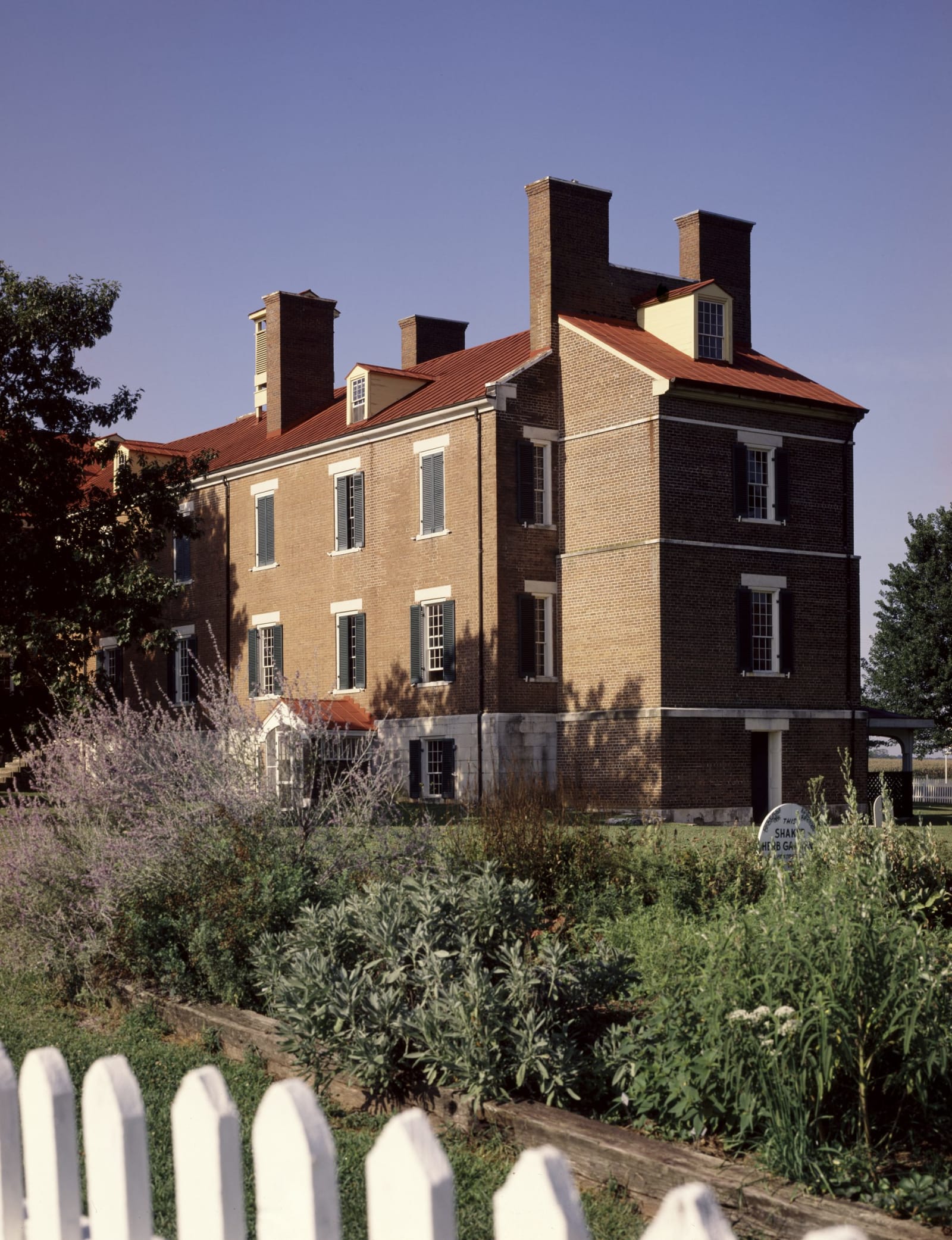
The Shakers settled this corner of Logan County in 1807 and stayed 115 years, the longest of any western Shaker community. At its height South Union held more than 200 buildings on 6,000 acres. Its members lived celibate and in common, held the sexes and the races equal, and made seed, preserves, brooms, silk and furniture with a Southern hand, since many converts came from the Upper South. The three-and-a-half-story Centre House, built between 1822 and 1833, is the museum now.
The war came straight down their road. The state road through the village linked Bowling Green with Russellville, and the railroad crossed the farm, so troops of both armies passed for three years. Eldress Nancy Moore kept a diary of it from 1861 to 1864: cavalry calling for breakfast for hundreds, fences burned for campfires, and 223 members trying to stay neutral. Union neighbors could not understand men who refused to bear arms, and secessionists had no patience for abolitionists in their midst.
After the war the Shakers hired about a dozen freedmen at their mills and let them build cabins on the land. In August 1868 a white mob burned those cabins. When the Shakers offered a reward for the attackers, the mob came back and burned the mills, a loss near $70,000. The village closed in 1922, and its goods were sold at auction. A museum opened in 1960 and moved onto the site in 1972; it now keeps a group of original Shaker buildings on several hundred acres of the old farm.
Visitor Info
On the Map
Nearby
The closest stops worth working into your route
Historical markers nearby
Roadside plaques and monuments within a short detour