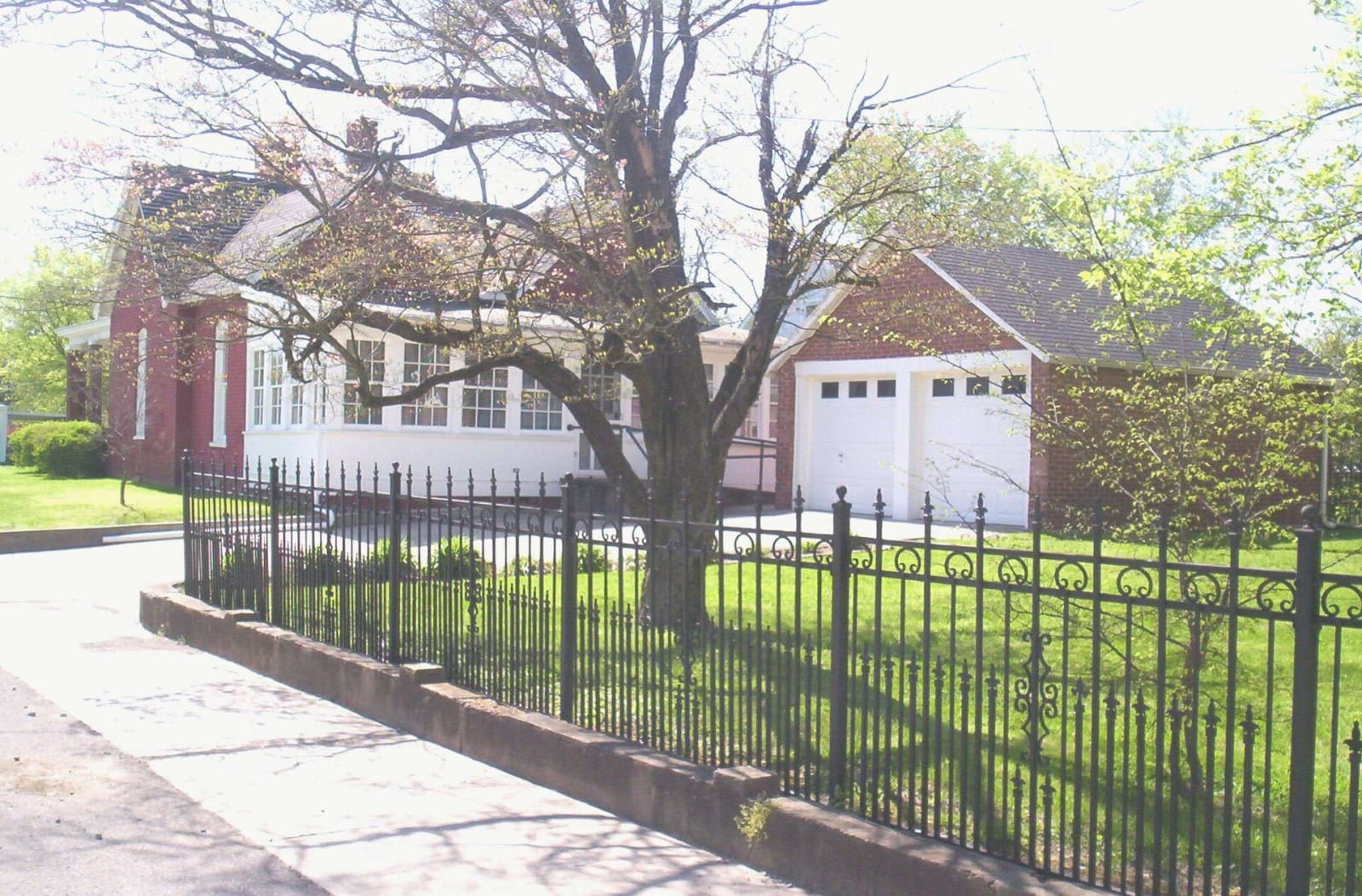
 Randy Pritchett / public domain via Wikimedia Commons
The Story
Guthrie is a railroad town on the Tennessee line, and Robert Penn Warren was born here on April 24, 1905, in a small brick railroad cottage on Cherry Street. He finished the Guthrie school at fifteen, crossed into Tennessee for high school in Clarksville, and went on to Vanderbilt in 1921, where he fell in with the Fugitive poets. He spent most of his adult life outside the South, and he died in Vermont in 1989.
The country around Guthrie runs through the work. His first novel, Night Rider (1939), took on the Black Patch tobacco wars, when growers in this dark-fired tobacco belt rode at night against the big buying companies and the farmers who would not join them. All the King's Men won the Pulitzer for fiction in 1947, and he won it twice more for poetry, in 1958 and 1979. In 1986 he became the first Poet Laureate of the United States.
On race he changed in public. In 1930 he contributed "The Briar Patch," an essay defending segregation, to the Agrarian manifesto I'll Take My Stand. In 1956 he recanted in Segregation: The Inner Conflict in the South, and in 1965 he published Who Speaks for the Negro?, interviews with Black civil rights leaders including Martin Luther King Jr. and Malcolm X. The house, saved by a local committee, holds period furniture, his mother's secretary desk, family photographs and a full shelf of his books. A memorial marker stands in the Warren family plot in Guthrie.
Visitor Info
On the Map
Nearby
The closest stops worth working into your route
Historical markers nearby
Roadside plaques and monuments within a short detour