 Carol M. Highsmith / public domain via Library of Congress
The Story
People have lived on Sapelo for at least 4,500 years, and the shell ring on the north end, a ceremonial earthwork from the Archaic period, is among the most unusual archaeological features on the coast. Spanish Franciscans kept the mission of San Josef on the island from about 1573 to 1686. When the Muscogee (Creek) agreed to the English colony in 1733 they reserved Sapelo as hunting ground, and they ceded it in 1757.
Thomas Spalding gathered nearly the whole island into one plantation by 1843, growing Sea Island cotton and sugar cane and building in tabby, and in the 1850s he and his children held 385 people in slavery here. After the war freedpeople bought land, the William Hillery Company as early as 1871, and built communities at Raccoon Bluff, Shell Hammock, Belle Marsh, Lumber Landing and Hog Hammock, and organized the First African Baptist Church in 1866. After 1934 R. J. Reynolds Jr., who owned the rest of the island, consolidated the Black landholdings into the single community of Hog Hammock.
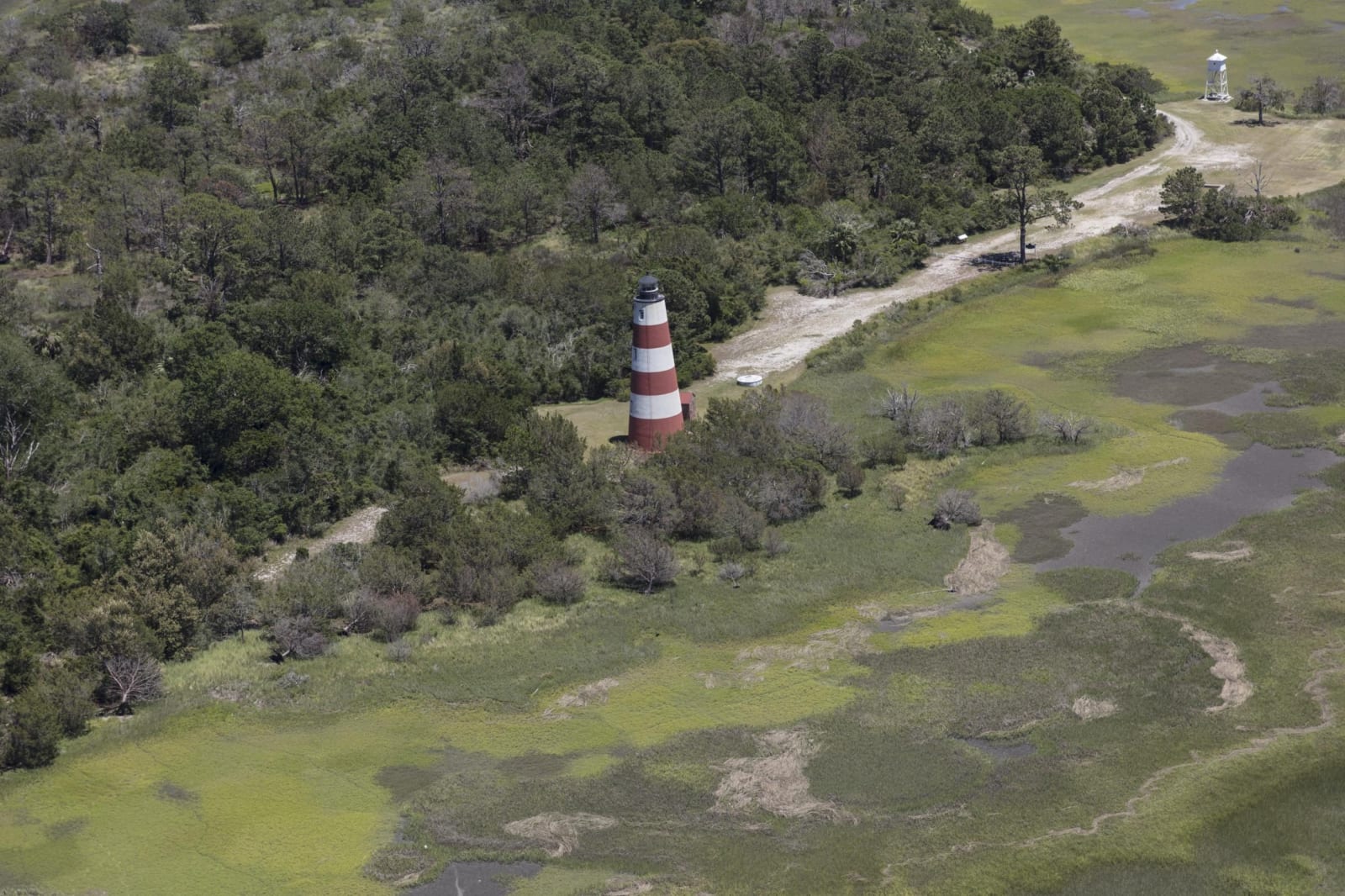
Hog Hammock's 434 acres are the only private land on the island, and most of its residents descend from the people Spalding enslaved; Cornelia Walker Bailey spent her life defending its Geechee language and West African heritage. Visits begin at the mainland visitor center at Meridian, with exhibits and a short nature trail, then a thirty-minute ferry. State-run guided tours take in Hog Hammock, the Reynolds Mansion, Nanny Goat Beach and the 1820 lighthouse. Book ahead, and treat the community as the home it is.
Visitor Info
On the Map
Nearby
The closest stops worth working into your route
Historical markers nearby
Roadside plaques and monuments within a short detour