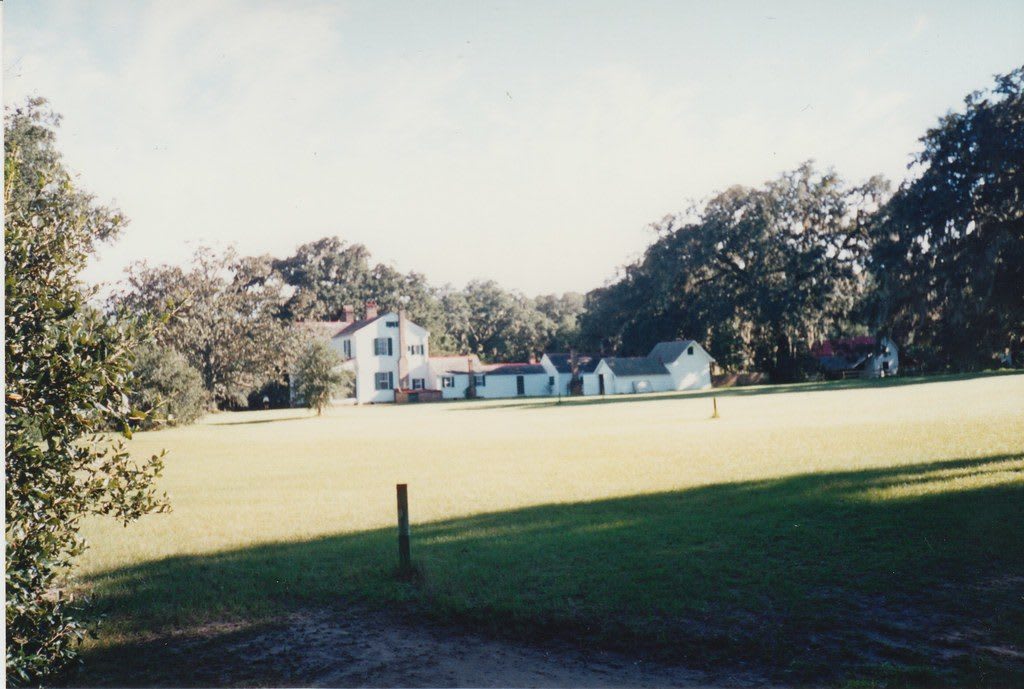
 brx0 / CC BY-SA 2.0 via Flickr
The Story
From 1806 William Brailsford of Charleston bought land in the cypress swamps along the Altamaha River, and the people he enslaved carved rice fields out of the marsh. Under Brailsford and his son-in-law James M. Troup the holdings grew to 7,300 acres, and 357 enslaved people worked them. Archaeologists working here in the early 1990s found the site of an early settlement of the enslaved, and they argue that the task system used on rice plantations, along with planters who stayed away for fear of malaria, left rice workers more room for their own lives than on upland cotton plantations.
After the Civil War rice planting declined without enslaved labor and under repeated hurricanes, though the family kept a crop going until 1913. Troup's daughter Ophelia and her husband, George Dent, built the plain two-story frame house in the 1850s and named it Hofwyl after a school he had attended in Switzerland; it sits on the ground rather than raised, unusual for the low country. Their descendants Gratz, Miriam and Ophelia Dent turned the place into a dairy that ran until the early 1940s, and the last Ophelia Dent left the property to the state when she died in 1973.
The visitor center has a model of a working rice plantation and a short film; a trail then leads out to the house, kept as she left it, for a guided tour. Another trail follows the edge of the marsh where the rice once grew, past remnants of the levees.
Visitor Info
On the Map
Nearby
The closest stops worth working into your route
Historical markers nearby
Roadside plaques and monuments within a short detour